
Sandycove’s Forty Foot Apparitions: Sightings, Folklore & Visitor Guide
Sandycove’s Forty Foot is one of Dublin’s most storied coastal places: a bracing sea pool, a long tradition of winter bathing, and a shoreline that has collected stories for generations. Among those stories are reports of seaside apparitions—shape-like sightings at dusk or in fog that locals and visitors sometimes describe in hushed tones. This article separates what is documented from what belongs to oral tradition, offers plausible natural explanations for many sightings, and gives practical, safety-first advice for anyone planning to visit the Forty Foot with curiosity rather than fear.
Sandycove, the Forty Foot and the lore of seaside apparitions
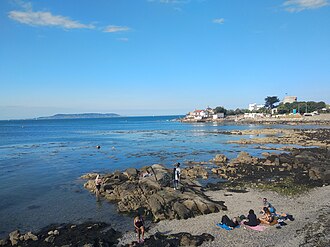
The Forty Foot is an exposed rocky promontory and bathing spot on Dublin Bay. Its long use by swimmers and its dramatic skyline make it an evocative setting for stories. Apparition accounts often share a similar atmosphere: twilight, reflective sea, and a sense of fringe-of-vision movement. These elements—location, light and human expectation—are the raw ingredients of seaside folklore.
Book a Haunted Hidden Dublin walking tour of Sandycove and the Forty Foot — learn the stories and visit safely. https://www.hiddendublintours.com/tours/
Reported sightings: common descriptions and local oral traditions
Accounts from locals and visitors are varied but often consistent in tone. Typical descriptions include shadowy human shapes on the rocks or along the promenade, pale figures seen briefly at the waterline, or movement that vanishes when approached. Witnesses commonly report seeing these forms at dawn, dusk, or on foggy nights—moments when visibility is reduced and the mind fills gaps in perception.
Oral tradition at Sandycove blends the practical and the poetic. Fishermen, swimmers and seaside walkers have passed down tales of lost sailors, grieving figures on the headland, and the more ambiguous “something” that appears just beyond the lamplight. These stories persist in part because the Forty Foot is a liminal place: where land meets sea, light meets dark, and memory meets weather.
Folklore vs documented history: what is verifiable and what belongs to legend
Documented elements
Certain facts about the Forty Foot are verifiable: it is a well-known bathing spot, frequented year-round by hardy swimmers; it sits on a rocky coastal shelf with tidal currents nearby; and it has been a visible landmark for locals for many decades. Public records, maps and local histories confirm its place in Dublin life as a recreation area and community gathering point.
Folklore and legend
Apparitions and ghost stories fall into folklore. They are part of the oral record rather than the official or archival one. Legends around the Forty Foot have evolved with retellings, shaped by theatre, journalism, and personal memory. Where a documented event exists—such as a maritime accident—that history may become entwined with imaginative elaboration. It is important to treat evocative stories as cultural material: meaningful to people, but not the same as verifiable historical fact.
If you are curious about related Dublin legends and the ways history and folklore intersect, our material on darker sites like Kilmainham Gaol, Dublin Castle and St Michan’s Church Crypt explores similar overlaps between record and rumor.
Natural and psychological explanations for sightings
Light and optical effects
Coastal light scatters differently over water and rock. At low sun angles or under streetlamps, reflections can create silhouettes or doubling of shapes. Mist and haze further diffuse light, producing ambiguous outlines that look briefly like figures.
Sea spray, fog and bioluminescence
Sea spray and fog change contrast and depth perception. Bioluminescent plankton, while uncommon in Dublin compared with warmer seas, can occasionally create glowing patches in waves that might be misinterpreted as moving light or eyes. Foam, wet rock and the sheen of seaweed can also create ephemeral glints that register as animate movement.
Movement at the edge of perception and expectation
Human perception is biased to recognise faces and figures. In low visibility the brain often resolves ambiguous stimuli into familiar forms—a psychological effect called pareidolia. When people arrive expecting a story, or have heard spooky tales beforehand, their attention is attuned to spooky interpretations. Fatigue, alcohol, or the echoing soundscape of wind and surf can amplify the sense that something is present.
Environmental and human activity
Boats, fishermen, bathers and walkers frequently occupy the bay and the promenade. A distant light on a boat, a figure hunched against a breeze, or a bathing cap disappearing into a wave can be misperceived as an apparition when seen quickly or peripherally.
Practical visitor information: best times to visit, transport and photography tips
Best times depend on your objective. Daylight visits are ideal for photography, landscape appreciation and safe access to the rocks. Early morning or late afternoon provide dramatic light without the higher risks of darkness. If you are interested in the folkloric atmosphere, avoid going alone after midnight—many accounts arise from situations where visibility and company are poor.
Transport links: Sandycove is reachable by DART from central Dublin; the station is a short walk from the Forty Foot. Local buses and taxis also serve the area. Give yourself time to navigate car parking, which can be limited on fine days.
Photography tips: use a tripod for dusk shots and set realistic expectations for night photography—long exposures will show movement and can make scenes look ghostlier than they were. Respect local swimmers and avoid flash that could startle bathers.
Local etiquette: keep noise to a minimum, do not block access to the promenade or the pool, and be mindful of residents and people using the area for exercise or contemplation. Many stories are best heard with restraint and respect for place.
Safety, legal and ethical considerations for night visits and ‘ghost hunting’ behaviour
Safety must be paramount. The Forty Foot is exposed to waves, slick rock and strong currents. Even experienced swimmers use caution. Avoid venturing onto wet rock at night; slips can result in serious injury. If you plan a night visit, go in a group, tell someone where you are going, bring a reliable torch, and wear suitable footwear.
Legal considerations: the promenade and public spaces are subject to local bylaws. Do not trespass on private property, and avoid interfering with lifeguard or emergency operations. Aggressive or intrusive behaviour toward residents or other visitors is unacceptable.
Ethical considerations: if you intend to record others, seek consent. Treat stories and eyewitness accounts with sensitivity—many narratives are personal and meaningful to those who tell them. Respect memorials, if any, and do not disturb natural features or wildlife in the name of research.
How to experience Sandycove safely with Haunted Hidden Dublin
A guided walking tour is the safest and most informative way to experience Sandycove with an emphasis on folklore, history and safety. Our Haunted Hidden Dublin guides combine local knowledge with practical guidance: where to look for landscape features, how to interpret sightings in context, and when to pause for photo opportunities without creating hazards.
Group bookings are available for private parties and educational groups. If you are organising a group visit and need specialised arrangements, our private tours page has details on tailored options. Private group bookings
Book a Haunted Hidden Dublin walking tour of Sandycove and the Forty Foot — learn the stories and visit safely. https://www.hiddendublintours.com/tours/
For operators and community groups interested in deeper engagement with Dublin’s dark heritage, including preservation and interpretation, see our practical guide to funding and partnership opportunities to support responsible storytelling: Grant Sources for Dublin Dark Heritage Projects.
Concluding thoughts
The Forty Foot’s apparitions live at the meeting point of sea, weather, human perception and story. Many sightings can be plausibly explained by natural and psychological causes; others persist as meaningful local legend. Whether you come for folklore, landscape, or a bracing dip, approach the Forty Foot with curiosity, respect and safety in mind.
FAQ
Are the Forty Foot apparitions at Sandycove documented or purely folklore?
Reports of apparitions are part of local oral tradition and contemporary witness accounts rather than formal archival documentation. The Forty Foot itself is a documented place of bathing and local life; apparition stories belong to folklore and personal testimony.
When are sightings at the Forty Foot most commonly reported?
Sightings are most often reported at dawn, dusk or in foggy conditions—times when light is low and perception is easily influenced by reflections, spray and expectation.
Is it safe to visit the Forty Foot at night and what precautions should visitors take?
Night visits carry additional risk due to slippery rock, tidal change and reduced visibility. If you visit at night, go with others, inform someone of your plans, wear sturdy footwear, bring a torch, and avoid venturing onto wet or exposed rock.
Do you offer guided tours that include Sandycove and the Forty Foot, and can I book for a group?
Yes. Haunted Hidden Dublin runs guided walks that include Sandycove and the Forty Foot with a focus on stories, context and safety. Individual tours can be booked on our tours page, and private group bookings are available via our group tours page. Book a tour • Private groups