
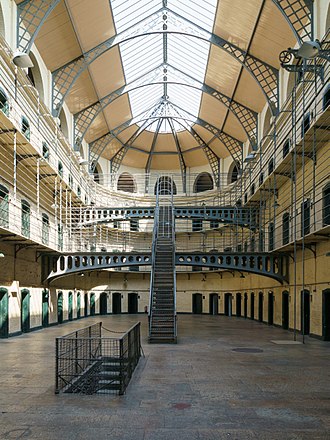
Kilmainham Gaol sits at a peculiar crossroads of Irish memory: a decommissioned prison, a museum of political struggle, and a place where the architecture itself seems to hold voices. After dark, that combination of real history, emotional weight and dramatic spaces has produced a thick atmosphere of stories—some grounded in archival records and eyewitness testimony, others shaped by folklore, tour narratives and the human hunger for the uncanny. This article separates what is documented from what is legendary, and offers practical guidance for visitors who want to explore Kilmainham’s after-hours inmate legends responsibly.
Plan your visit and view available Haunted Hidden Dublin tours and schedules.
Why Kilmainham Gaol attracts after-hours legends
Kilmainham’s long life as a place of confinement, punishment and political execution gives it an inherently charged atmosphere. Stone corridors, narrow cells, the exposed stone yard where prisoners met their fate and the museum displays of uniforms, letters and personal effects all encourage reflection on suffering and resistance. At night, those features read differently—shadows fall across ironwork, echoes lengthen and the site’s status as a national shrine amplifies emotional responses.
Places that house intense human drama—particularly where death, protest and state violence intersect—tend to attract stories. Kilmainham’s reputation has grown through repeated retellings in newspapers, guidebooks, oral histories and now social media. That mixture of history, memory and dense architecture is the engine behind after-hours legends.
Documented history: the gaol’s role, notable inmates and recorded events
Distinguishing documented history from folklore starts by outlining the facts that are on record. Kilmainham Gaol was a functioning prison that held a range of inmates: common-law prisoners, political prisoners, and those detained during times of unrest. It is a national site intimately connected with Ireland’s modern political history. Leaders of the 1916 Easter Rising were among those executed at the gaol, and the site later became a place of commemoration.
The historical record for Kilmainham is strongest where institutional archives exist: prison registers, official correspondence, execution records, and newspaper reports of arrests and trials. These sources provide names, charges, dates of incarceration and documented incidents such as executions, hunger strikes and notable disturbances. They also demonstrate the gaol’s changing role across the 19th and 20th centuries.
Notable inmates and activities
Political prisoners—ranging from Fenian activists in the 19th century to leaders of the 20th-century independence movement—feature prominently in Kilmainham’s documented history. The personal papers, trial documents and contemporary journalism that survive give clear evidence of who was held there and why, and of major events that took place within or adjacent to the gaol. Those records are the backbone for understanding the site’s significance beyond anecdote.
Firsthand accounts and archival records: what is verifiable
Verified sources at Kilmainham include official registers, letters written by prisoners, contemporary press accounts and later oral histories recorded by historians. These materials can confirm a prisoner’s presence, dates of confinement, disciplinary measures and, in some cases, personal recollections of daily life within the walls.
Eyewitness material from the gaol’s operational period—witness statements, memoirs and contemporary journalism—provides the most reliable firsthand accounts. Archival testimony from staff and visitors can corroborate specific unusual incidents. Modern eyewitness accounts about after-hours experiences are a different category: they may be sincere, but they sit outside the institutional records and require careful evaluation.
From fact to fable: common inmate legends and how they developed
Certain motifs recur in Kilmainham legends: footsteps in empty corridors, distant singing or chanting, cold spots, apparitions in the stone yard and the sense of a presence near particular cells. These stories follow familiar patterns seen at many historic sites where intense suffering occurred.
Several mechanisms explain the evolution from fact to fable. First, the architecture amplifies sensory experiences—hard surfaces echo, drafts create sudden temperature changes, and lighting at night can play tricks on the eye. Second, a site’s commemorative function encourages empathetic projection; visitors who learn about executions or hunger strikes are primed to feel the past physically. Third, tour narratives, guidebook anecdotes and media reports repeat striking stories until they become accepted lore.
Finally, the emotional investment of descendants and the public can transform mundane noises or shadows into meaningful signs. That does not make these reactions dishonest; it means they occupy a different epistemic category than documentary evidence.
Eyewitness reports, paranormal claims and how to evaluate them
Modern eyewitness reports fall into a spectrum: well-documented, corroborated accounts at one end; personal experiences influenced by memory and expectation at the other. When evaluating such claims, consider the following:
- Context: What time of night? Who else was present? Were cameras or other recording devices used?
- Environmental factors: Old buildings have drafts, settling noises and electrical quirks. Acoustic and lighting conditions affect perception.
- Witness reliability: Fatigue, alcohol, suggestion and group dynamics can shape testimony.
- Corroboration: Independent, contemporaneous accounts carry more weight than later retellings.
Paranormal claims rarely appear in the institutional records that document the gaol’s operations. They are primarily part of oral tradition and modern storytelling. Taking them seriously as cultural phenomena—without treating them as equivalent to archival fact—lets visitors appreciate their role in the site’s living memory while maintaining historical rigor.
Visiting responsibly: tour formats, access, ethics and safety after dark
Access to Kilmainham Gaol after-hours is controlled. The site is a protected national monument and museum, and any private or after-dark visit must be authorised. Unauthorized entry is illegal and disrespectful to the site’s function as a place of remembrance.
Tour formats vary: daytime guided tours focus on history and interpretation; occasional late or themed events may be staged with museum agreement. Private tours can sometimes arrange extended access or tailored storytelling, but they require formal booking and compliance with museum rules.
Ethics matter. Kilmainham is both a historic building and a commemorative site where people were executed and families were bereaved. Visitors should avoid sensationalising tragedy, keep noise to a minimum, follow photography restrictions and respect any areas designated as memorial spaces. Personal curiosity does not justify trespass or disrespect.
How to experience the stories: booking a private Haunted Hidden Dublin tour and visitor tips
To explore Kilmainham’s after-hours inmate legends responsibly, choose an authorised format: a museum-approved late event, a guided evening programme, or a private group tour arranged through a reputable operator. Haunted Hidden Dublin specialises in contextual, research-informed storytelling that separates documented history from folklore while delivering an atmospheric experience suited to sensitive sites.
Practical tips for a focused visit: arrive early to collect context from exhibits and staff; bring layered clothing for chilly corridors; use a flashlight only when permitted; ask your guide about what is documented and what is part of oral tradition; and consider a private group booking if you want more time or a tailored narrative.
Book a private Kilmainham Gaol after-hours group tour with Haunted Hidden Dublin: https://www.hiddendublintours.com/group-tours-dublin/
We also recommend exploring related Dublin dark heritage sites to broaden your understanding of the city’s overlapping legends and histories. For contextual reading and other routes, see our guides to Dublin Castle, St Michan’s Church, the Dorset Street Workhouse, and the Baldoyle Estuary. Operators and researchers may find practical support through resources such as Grant Sources for Dublin Dark Heritage Projects.
Whether you prefer a sober historical tour or a more atmospheric evening walk, book through recognised channels, be mindful of the gaol’s commemorative role, and treat anecdotes as part of a living cultural conversation rather than substitute history.
FAQ
Is Kilmainham Gaol actually haunted or are the stories mostly folklore?
Claims of haunting at Kilmainham are primarily part of contemporary folklore and eyewitness testimony. The site’s documented history—prison registers, execution records and contemporary accounts—does not include verifiable supernatural events. That said, the emotional intensity of the place, its architecture and commemorative meaning produce experiences often described as encounters with the past. Appreciating that distinction—between cultural experience and archival fact—helps visitors understand why haunt stories persist.
Can visitors go inside Kilmainham Gaol after-hours or book private evening tours?
After-hours access to Kilmainham is restricted and must be authorised by the museum or managed partners. Private group bookings and special events can sometimes secure extended or evening access, but they require formal arrangements. Haunted Hidden Dublin coordinates private tours and can advise on what is feasible and respectful; see our private groups page to inquire.
How much of the gaol’s after-dark reputation is supported by historical records?
The gaol’s reputation as a site of political imprisonment and execution is well documented. Specific after-dark phenomena—voices, apparitions or physical manifestations—are not substantiated in institutional archives. Those reports exist mainly in oral tradition and modern witness accounts rather than in the prison’s registers or official correspondence.
What should I expect on a Haunted Hidden Dublin private tour focused on Kilmainham Gaol legends?
Expect a guided, research-informed experience that clearly separates documented history from folklore. Tours are designed to be atmospheric but respectful, drawing on archival material, eyewitness testimony and the broader cultural context of Dublin’s dark heritage. If you book a private group tour, you can request emphasis—historical, folkloric or a balanced mix—and discuss practicalities such as timings, access and sensitivities.