
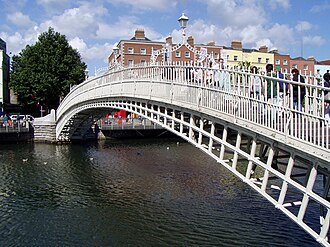
Bridges of Whispers: Minor Dublin Crossings and Their Eerie Tales
Bridges of Whispers: Minor Dublin Crossings and Their Eerie Tales
Dublin’s best stories are often told in the gaps between landmarks: the narrow pedestrian bridges, the cast-iron spans over quiet millstreams and the canal footbridges that most visitors pass without a second look. These minor crossings collect layers of everyday history and the unease that grows where people, water and memory meet — the perfect setting for half-remembered whispers and local legends that persist in the city’s oral landscape.
Walking route overview: map, timing, transport links and safety considerations
Book a Haunted Hidden Dublin walking tour
Route idea (self-guided): a compact loop of 6–8 minor crossings spanning inner-city canals and lesser-known Liffey tributaries. Expect 2–3 kilometres of easy walking, 1.5–2 hours at a relaxed pace with stops for stories and photographs. The route is designed to keep you on public paths and well-travelled streets while showcasing bridges that rarely appear in guidebooks.
Suggested transport: central Dublin bus routes and Luas stops place the loop within easy reach of the city centre. Start and end points are accessible from mainline rail stations via a short walk. Safety notes: many crossings are narrow and lack significant lighting outside dusk hours; wear sensible footwear, bring a torch for evening visits and watch for slippery surfaces after rain.
Selected crossings and their histories
Below are concise profiles of five minor crossings frequently included on local walking routes. Each profile separates what is documented in civic records and local newspapers from the folklore that attaches itself to the place.
1. The Cast-Iron Footbridge near a former mill
Documented history: This small cast-iron span marks a former industrial access point beside an old mill race. Municipal maintenance records and historic maps note a footpath at this location that served workers and residents; the bridge itself is a later replacement of a timber crossing.
Local legend: Residents tell of a pale figure seen pacing the rail at dusk and of soft, persistent tapping on the ironwork. These accounts circulated orally for decades and have become part of neighbourhood storytelling rather than being supported by archival reports.
2. Canal footbridge by a quiet lock
Documented history: The canal here served commercial barges; the footbridge provided access for lock-keepers and towpath users. Engineering records confirm periodic refurbishment when canal trade declined and recreational use increased.
Local legend: A lock-side apparition said to appear when the water is still — described as a woman in period clothing — appears in oral accounts and social media posts. While evocative, such descriptions are personal testimonies and not corroborated by official records.
3. Narrow Liffey pedestrian span off the main quays
Documented history: Lower-profile than the city’s iconic bridges, this span was built to connect two residential lanes and appears on city plans as a municipal footbridge. Council minutes note repairs and safety assessments over several decades.
Local legend: Tales here commonly mention footsteps and whispering voices that seem to pass under, not above, the bridge — an auditory phenomenon that has inspired pieces like our exploration of bell and sound phenomena in churches. See more on spectral sound stories at Hidden Bell-Tower Chimes.
4. A modest stone crossing near an old public washhouse
Documented history: Historical references to the adjacent washhouse and communal bathing facilities exist in municipal records and local histories; the stone crossing was part of the access network for those services.
Local legend: Rumours of sightings connected to the washhouse’s more tragic moments are passed on in local memory. For a wider look at washhouse-related apparitions across the city, consult our piece on Victorian washhouses and bathhouses: Victorian Washhouses & Bathhouse Apparitions in Dublin.
5. The college-area footbridge with overnight stories
Documented history: The footbridge links residential blocks to a university precinct; its construction features in planning notices and student accommodation maps. Maintenance records are held by the institutions and the local authority.
Local legend: Night-time rumors often involve student-era anecdotes of apparitions in stairwells and corridors, themes that recur around colleges. These are largely oral traditions; see related accounts in Student Accommodation Ghost Anecdotes Around Dublin Colleges.
Spotlight on folklore vs. fact: methods for distinguishing oral tradition from archival evidence
Separating legend from documented history is part detective work, part community listening. Practical steps:
- Check contemporary newspapers and council minutes for recorded incidents (repairs, accidents, public notices).
- Compare old maps and ordnance surveys to trace when a crossing first appears as a crossing rather than a path or ford.
- Speak with long-term residents and local historians to capture oral memory, and treat those accounts as cultural testimony rather than archival fact.
- Corroborate dramatic claims (drownings, deaths, official investigations) with parish registers, coroners’ reports or reputable local histories before treating them as established facts.
Oral tradition is valuable: it tells us how communities remember and imagine their places. But clarity matters — in this guide we label each element either “Documented history” or “Local legend” so you can tell the difference at a glance.
Visitor practicalities: best times to visit, lighting, access, photography and seasonal notes
Best times: late afternoon into early evening gives atmosphere with safe light levels; weekends are busier. Night visits can be atmospheric but take extra care with lighting, stay on public routes and avoid isolated areas.
Lighting and access: several minor bridges have minimal street lighting. Bring a small torch for evening photography and wear anti-slip shoes after rain. Many bridges are narrow; give way to others and avoid blocking pedestrian thoroughfares.
Photography: long exposures near water can create evocative images. Respect private property signs and avoid using drones in built-up areas without permission. If your aim is to capture atmosphere, overcast weather and golden-hour light often work best.
Seasonal notes: winter can be icy on cobbles and ramps; spring and autumn offer the richest soundscape as vegetation and flowing water change character. Summer evenings may be busy with local foot traffic.
Pairing the walk: nearby pubs, museums and other dark-history stops to extend your route
Extend the bridge loop with complementary stops: a traditional pub with a long memory (for stories and warmth), a local museum with social-history exhibits, and a graveyard or former institutional site that features in public records. These locations help contextualise both the documented past and the folklore that grows up around crossings.
For operators and guides thinking of packaging such a route commercially, practical resources — including pricing strategies — can help you design ticket tiers and small-group experiences; see our guide How to Price Ticket Tiers for Small Dublin Ghost Walks — Practical Guide for Operators.
How to experience it with Haunted Hidden Dublin
Haunted Hidden Dublin runs guided formats that bring these minor bridges to life: small-group evening walks that pair documented history with the best local legends, and private tours tailored for groups who want a deeper archival focus or a ghost-story evening in pubs along the route.
Highlights of the guided experience include curated archival anecdotes, safe, well-lit stopping points for storytelling, and contextual links to wider city lore — from bell-tower sound stories to apartment stairwell apparitions. We also tailor walks for student groups or specialist interest groups; see related resident reports and student anecdotes at Apartment Block Stairwell Apparitions and Student Accommodation Ghost Anecdotes Around Dublin Colleges.
If you prefer to join a guided walk, please consider booking in advance to secure a spot. Book a Haunted Hidden Dublin walking tour and walk with experienced guides who respect both historical evidence and the power of local storytelling.
Have a private group or special requirement? We offer bespoke tours that focus specifically on these bridges and the archival research behind them — ideal for societies, university groups or private events. Learn more or enquire at our private bookings page: Private group tours.
FAQ
Are the hauntings and tales on these bridges historically documented or mostly folklore?
Most of the dramatic haunting tales are oral tradition — stories passed between neighbours and retold in local pubs or online. Some incidents (accidents, repairs, notable events) appear in newspapers or council records; these are labelled here as “Documented history.” Our approach is to present evidence where it exists and clearly mark folklore as community memory rather than archival fact.
How long is the suggested walking route and is it suitable for people with limited mobility?
The suggested loop is about 2–3 kilometres and typically takes 1.5–2 hours with stops. Many parts are on paved paths, but some minor bridges and ramps can be narrow or have steps. If you have limited mobility, contact us to discuss route adjustments or a private tour that can prioritise accessible crossings.
Is it safe to visit these minor bridges at night and what precautions should I take?
Visiting at night can be atmospheric but requires caution: bring a torch, travel in a group, stay on well-lit public streets, and avoid isolated ramps. Our guided walks are planned with safety in mind: clear stopping points, well-lit routes and professional guides who know the area.
Do you offer private group tours that can focus specifically on these bridges?
Yes. We offer private and bespoke formats that concentrate on minor crossings, archival storytelling, or a mix of history and folklore. For private bookings and tailored itineraries, see our group tours page: Private group tours.