
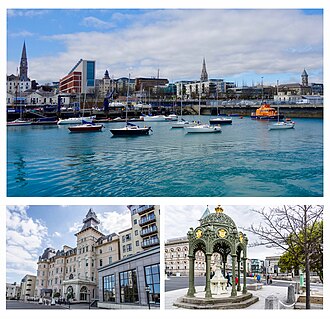
Dún Laoghaire Harbour Apparitions: History, Sightings and Where to Watch
Dún Laoghaire’s harbour wears its past on its stonework and in the hush of evening tides: long piers, echoing bollards, and rows of cast-iron lamps that throw long, solitary shadows. For visitors arriving by train or car the waterfront reads as both a maritime achievement and a setting for quieter, darker stories. The close contact between sea and town—where rescue, loss and labour overlapped—gave rise to memory and, in many accounts, to apparitions that claim to linger in the lee of the piers.
Why Dún Laoghaire’s waterfront inspires ghost stories
Coastal towns make easy soil for legend. Salt, weathered stone and the constant movement of vessels create an atmosphere in which absence—lost crews, unnamed graves, empty boots—feels close to the surface. Dún Laoghaire’s harbour is a working maritime landscape but also a site of intense Victorian engineering and social change. The long piers and promenades, built to protect vessels and encourage seaside leisure, are equally stages where accidents, rescues and funerals took place. Such events are kept alive in local memory and often acquire a supernatural gloss over generations.
Documented maritime tragedies and incidents that underpin the legends
When separating legend from the kernel of history, start with what is recorded. Local newspapers, lifeboat and harbour logs, and municipal records document shipwrecks, collisions, drownings and dramatic rescues that occurred in and around the harbour. These are the verifiable incidents that later retellings draw on: a harbour tug or fishing boat run aground, a ferry mishap in rough winter weather, or a local rowing crew caught out by an unexpected tide.
Lifeboat records and the Royal National Lifeboat Institution (RNLI) archives are particularly valuable for researchers because they detail launches, casualties and awards for bravery. Local newspaper archives preserve contemporaneous reports, coroner inquests and eyewitness testimony. Museum collections and the National Library of Ireland hold charts, photographs and shipping notices that make the historical picture clearer without resorting to hearsay.
Notable apparition accounts and where they were reported
Apparition stories around Dún Laoghaire typically fall into a few patterns: solitary figures on the piers, phantom lamps or lanterns bobbing where no light should be, and the sense of sudden cold or presence near old boat houses or steps. Many of these accounts enter the public record as interviews in local papers or as letters to editors; others remain oral—stories passed from harbour workers, fishermen and long-term residents to visitors.
Newspaper mentions tend to be cautious in tone, reporting what an eyewitness claimed without endorsing it. Oral tradition can be more elaborate, linking a spectral image to a specific tragedy. That layering—documented incident, reported sighting, and then enriched local retelling—creates the texture of Dún Laoghaire’s apparition lore. When reading such accounts, note whether the report references a specific, documented event or is framed as memory and anecdote.
The harbour through time: Victorian expansion, the piers and changing seafaring life
Dún Laoghaire’s modern harbour owes much to 19th-century engineering, when large-scale pier-building and the improvement of lochs and mariners’ facilities transformed local life. The piers were not only sea defences but pilgrimages of labour: dockyards, workshops and slipways were full of men whose lives depended on the tides. Those occupational rhythms—regular departures and returns, plus occasional failed ones—help explain why the waterfront became a focus for memory.
As seafaring technology and commerce changed through the 20th century, some professions declined while new uses—tourism, ferries and leisure boating—arrived. Buildings once used to mend nets, house lifeboats or store coal altered their function; when familiar shapes change, stories about earlier occupants sometimes become more animated, and apparitions are among the motifs that fill that imaginative gap.
Best places and times to spot reported apparitions
If you want to experience the harbour’s darker stories responsibly, choose vantage points that are safe, public and well-lit. The East and West Piers both provide long sightlines and places to pause without crossing private property. The promenade and the area around the lifeboat station are often where local reports concentrate—parts of the waterfront that have a practical relationship to the sea and its dangers.
Timing matters. Late autumn and winter evenings—when weather is more changeable and the light falls early—are when many witnesses say sensations and sightings feel strongest. Fog and low cloud can intensify visual effects, but they also reduce safety and visibility; clear, still nights create atmospheres that are both eerie and safer for visitors. Daylight walks have their own reward: you can see the features that gave rise to stories and examine plaques, old steps and harbour fittings that underpin the narratives.
How to separate folklore from history
A practical approach keeps your curiosity honest. Start with primary records: local newspaper archives (physical or digitised), harbour authority logs, lifeboat records, and municipal coroner notes. Museums and libraries are the best places to verify whether a shipwreck or a drowning took place where oral tradition says it did. Where claims are unsupported by records, treat them as folklore—valuable for understanding community memory, but not as historical fact.
Compare accounts: eyewitness reports recorded soon after an event are generally more reliable than memories told decades later. Look for consistency across sources (multiple independent reports, official logs) before accepting dramatic details. Finally, understand that folklore often tells truths about loss and labour even when the literal facts are uncertain; that emotional truth is part of the harbour’s cultural history.
Responsible visiting: safety, respect and photography etiquette
Visiting the waterfront to explore darker stories carries responsibilities. The piers and steps can be slippery; tides move quickly. Never go beyond safety barriers or onto rocks and groynes that are signposted as restricted. Use designated paths and public viewpoints. If you intend to photograph at night, bring a torch, dress warmly and avoid flash use that might alarm residents or disturb wildlife.
Respect the people who live and work by the harbour. Many apparitions are connected to real tragedies in local memory; tell these stories sensitively. Avoid sensationalising recent family losses. If a conversation with a local arises, listen before assuming what you know—local oral history can be a window into complex community experience.
Plan your visit: a recommended self-walk and why a guided or private tour helps
A simple self-guided loop: arrive at the station, walk down to the main promenade, follow the harbour edge to the lifeboat station and the base of the East Pier, return along the promenade past the ferry terminal, and finish with a short detour to the West Pier for sunset views. Keep to public walkways and allow time to read plaques and notices that explain historic incidents.
A Haunted Hidden Dublin guided or private tour adds context because our guides draw on archival research and oral histories to distinguish documented events from later embellishments. We link the visible harbour features to the incidents, lifeboat launches and social changes that generated stories in the first place. For groups, consider a private booking for a deeper dive into maritime records and local memory:
Book a private Haunted Hidden Dublin group tour for Dún Laoghaire and surrounding histories
Further reading and related walks
Dún Laoghaire is part of Dublin’s broader spectral geography. If you want to widen your exploration, our pieces on nearby urban hauntings and how they connect to civic history may interest you: a stroll through leafy spaces and public gardens that host their own reports and records, such as Iveagh Gardens Ghostly Sightings: A Visitor’s Guide to History, Legends & Where to See Them. For tales of patrolling figures and watchmen, see Watchmen Legends: Phantom Night-Watch Stories to Walk in Dublin. Bridges and small crossings carry a disproportionate number of stories too—try Bridges of Whispers—and sound-based phenomena are explored in Hidden Bell-Tower Chimes. For contemporary residential accounts, see Apartment Block Stairwell Apparitions.
FAQ
Are the Dún Laoghaire harbour apparitions real or just local folklore?
There are documented maritime incidents—shipwrecks, drownings and recorded rescues—that underpin many stories. Apparition accounts are a mix: some are eyewitness reports that made it into local newspapers or interviews, while others are oral traditions that evolved over generations. Treat verified records as history and personal or oral reports as folklore that reveals how communities remember loss and change.
When is the best time to visit the harbour if I want to see or feel these sightings?
Late afternoon into evening in autumn and winter produces the atmosphere many witnesses describe, but also reduced visibility and colder weather. For safety and context, consider a late-afternoon walk that runs into dusk rather than a late-night exploration. Guided tours often choose times that balance ambiance with safety and access to historical detail.
Does Haunted Hidden Dublin run tours that include the Dún Laoghaire harbour stories?
Yes. Haunted Hidden Dublin’s public and private tours include Dún Laoghaire harbour material where relevant. Our guides combine archival research with local oral history to present both the documented incidents and the folklore that grew around them. To join a scheduled walk or to request a private group booking, see our tour pages.
Is it safe to explore the pier and shoreline at night, and are there access restrictions?
Safety depends on conditions. Many piers and shoreline sections are open to the public during daylight, but some areas are restricted or hazardous at night, especially in rough weather. Always heed signage, avoid clambering on rocks or going beyond safety barriers, and consider going with a guide. If you’re photographing after dark, be mindful of residents and wildlife, and carry appropriate lighting.