
Victorian Washhouses & Bathhouse Apparitions in Dublin: History, Hauntings and Where to Visit
Dublin’s Victorian washhouses and communal bathhouses sit at the intersection of social reform, public health and intimate domestic labour — and that intersection has long been a fertile ground for stories. On the one hand these were practical institutions responding to overcrowding and disease; on the other hand they are places where privacy, grief and strenuous physical work left strong impressions that later generations have turned into ghost stories. This article separates archival fact from folklore, describes what survives in the modern city, and offers practical guidance for visiting with care.
Documented history: The rise of public washhouses and bathhouses in Victorian Dublin
Victorian-era Dublin, like many industrial cities, confronted overcrowding, poor sanitation and outbreaks of disease. Municipal and philanthropic responses included the creation of public washhouses and communal bathhouses intended to improve hygiene among working-class families who lacked indoor facilities.
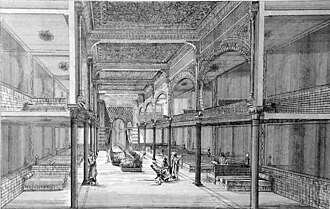
These institutions were typically financed by a combination of civic funds, charitable donations and parish initiatives. Their design focused on durability and function: robust masonry, large windows for ventilation, tiled interiors for easy cleaning, and boilers to heat water. Interiors often featured rows of wash-boards or sinks, communal tubs, drying yards and service areas where laundry could be boiled and rinsed.
The social role of washhouses was complex. They offered a place for essential domestic labour and could be spaces of social contact, mutual aid and information exchange, especially for women who did much of the washing. They also reflected social hierarchies: fee structures, rules of use and management arrangements could exclude or stigmatise particular groups.
Where they were and what remains: Identifying surviving sites and traces in the modern city
Many original washhouses and small bathhouses have been lost to redevelopment, but traces survive across older districts of the city. When you walk the Victorian parts of Dublin you can expect to find:
- Converted buildings with tell-tale architectural features — tall chimneys, long rows of skylights, robust brick or stone walls and larger-than-usual windows.
- Backcourts, yards or lane-ways that once served as drying areas or access points for laundries.
- Reused interiors now functioning as storage, workshops or residential conversions where tiles, drains or arched boiler rooms remain visible.
- Historic plaques, maps or local heritage displays in museums or community centres that reference public washhouses.
On a walk you will rarely encounter intact “period” washhouses open as historic exhibits; more often you will trace footprints — surviving walls, reused fittings and the social geography that placed these institutions near rivers, docks, markets and working-class housing. Our tours also point out nearby sites that intersect with washhouse history, such as coaching inns, late-19th-century tenements and cinema-era buildings referenced on our Old Picture-House Hauntings walk.
Apparitions and folklore: Common ghost stories linked to washhouses and how they developed
Stories linked to washhouses and bathhouses tend to cluster around themes of loss, shame and sudden death. Common motifs include:
- The figure of a woman in damp clothes, eternally returning to complete unfinished laundry.
- Cold spots, the scent of soap or wet linen where no water is present.
- Apparitions associated with tragic child deaths, drownings in communal tubs or fatal boiler accidents.
- Footsteps in empty washrooms, whispers from empty drying-yards and lantern light behind boarded windows.
These narratives develop over time through oral tradition, newspaper retellings and the imagination of later generations. They often merge social memory — the hardships and indignities of life for many Victorian Dubliners — with haunting imagery. It is important to be clear: these are folkloric accounts. They are valuable as cultural expressions of how communities remember difficult pasts, but they are not the same as archival records.
Contemporary sources and testimonies: What is verifiable and what is anecdotal
Evidence for the existence and operation of Victorian washhouses is straightforward in the documentary record: municipal reports, health board minutes and newspapers of the day discuss public baths and laundry initiatives as part of public health campaigns. Architectural surveys and maps also locate many such buildings.
By contrast, reports of apparitions and supernatural events are primarily anecdotal. They appear in oral histories, local storytelling, and occasional newspaper features that are often written many years after the events they describe. Some modern eyewitness accounts exist — people reporting sensations, unexplained sounds or figures — and these form part of a living tradition of urban legend. These testimonies are meaningful as personal experiences and cultural artifacts, but they do not substitute for documentary verification.
Where possible, our tours and research point guests to verifiable sources — surviving architectural features, archival references and contextual history — while also recounting how folklore has grown from those foundations. For those interested in the practical side of presenting dark history, see our reflections on organising and funding such walks in Funding Dark-History Tours in Dublin.
Practical visiting guide: safety, photography, best times, accessibility and responsible tourism
Visiting historic washhouse sites requires sensitivity. Many are on private property, in residential areas or in fragile buildings. A few practical tips:
- Respect property boundaries. If a site is on private land or clearly signed as no-access, do not enter. Many remnants are visible from public streets.
- Photography: always ask permission before photographing people or interiors on private property. Use a flash sparingly in fragile interiors to avoid damaging surfaces.
- Best times: late afternoon light can be atmospheric and clearer for architectural detail; evenings lend atmosphere but check local lighting and safety. Some of our themed walks, including nighttime routes like the Docklands Back-Alleys After-Dark Trail in Dublin, are designed for low-light storytelling and local guidance.
- Accessibility: many surviving washhouse remnants are reached via cobbles, steps or narrow lanes. Check ahead for mobility needs and consider joining a guided walk where routes are chosen for accessibility when possible.
- Responsible tourism: these sites reflect hardship. Approach stories with respect for the people they concern, avoid sensationalising trauma, and consider supporting local heritage groups that preserve these histories.
Join a Haunted Hidden Dublin tour: how our guided walks bring these histories and stories to life
On a Haunted Hidden Dublin walking tour you’ll see surviving architectural traces, hear documented context about public health and Victorian social life, and also explore how oral tradition and modern testimonies shaped the city’s ghost stories. Our guides make clear what is drawn from archives and what derives from folklore, and we point to related themes on other walks — from traveller tales at the Haunted Coaching Inns of Dublin to audio production tips in Budget Soundscape Tips for Dublin Ghost Podcasts and Tour Audio for those creating their own interpretations.
If you are planning a private group visit — academic researchers, heritage societies or a private party interested in a focused washhouse-themed walk — we offer bespoke group bookings. Learn more about private and group arrangements here: Private group tours and bookings.
Responsible listening: how to treat oral histories and eyewitness accounts
Oral histories, recorded testimonies and local reminiscence are invaluable for understanding how communities remember washhouses. Treat these sources as expressions of experience rather than empirical proof. When we present an eyewitness account on a tour we make clear whether it comes from an archive, a recorded interview or contemporary report, and we encourage listeners to consider the social context that produced the story.
Where possible, we work with community groups to preserve testimonies and to ensure that presentations are sensitive, locally informed and historically grounded.
Conclusion
Victorian washhouses and bathhouses in Dublin are more than atmospheric backdrops for ghost stories. They are physical traces of social history: responses to living conditions, focal points for community life, and sites where intense private labour often left public legacies. The ghost stories attached to them are part of how Dubliners have processed that past. If you want a guided, responsible introduction that differentiates archival fact from folklore while letting the city’s atmospheres speak for themselves, consider joining one of our walks.
FAQ
Are Victorian washhouses in Dublin open to the public or on private land?
Many original sites are no longer in public use and some are on private property. You can view many remnants from public streets and lanes, but interiors and courtyards may be private. Guided walks point out visible remains and, where access is available, arrange lawful entry or show appropriate viewpoints.
How much of the ghost lore is based on historical records versus later storytelling?
The operational history of washhouses is well documented in municipal records, maps and contemporary reports. Ghost lore typically emerges later through oral tradition, local newspapers and retelling. We separate these clearly on our tours: archival facts form the framework; folklore reflects community memory and later imaginative reworking.
Is this topic suitable for family audiences or is it more adult-oriented?
The subject matter can be presented for families with older children if handled sensitively. Some stories touch on illness, poverty and death; we adapt our tone for different audiences and recommend checking the tour description or asking about content beforehand.
Can I book a private group tour focused on washhouses and bathhouse stories?
Yes. We offer private and bespoke group tours that can focus on washhouse history, folklore or a broader thematic route. For details and booking, please visit our private groups page: Private group tours and bookings.