
Docklands Back-Alleys After-Dark Trail in Dublin — Night Walk & History
When the workday lights fade along the River Liffey and the cranes stand like sleeping sentinels, Dublin’s Docklands reveal a different face: narrow alleys, hidden quays, and hushed corners that carry the imprint of maritime labour and the whisper of stories people have told for generations. The Docklands back-alleys after-dark trail (Dublin) is designed for curious walkers who want a guided, practical route that pairs verifiable dockside history with the local folklore that grew up around it. This article offers a tour-ready plan you can follow alone or on a Haunt-ed Hidden Dublin guided walk.
Book the Docklands After-Dark Trail with Haunted Hidden Dublin — secure your spot on a guided evening walk that balances safety, storytelling, and photographic opportunities.
Why explore the Docklands back-alleys after dark?
The after-dark Docklands feel intimate in a way daytime Dublin rarely is. Shadows deepen textures on brick and iron, puddles mirror old gas lamps and modern LED swathes, and sound travels differently across water and through narrow passageways. This trail suits night photographers, history-minded visitors, ghost-story enthusiasts, and locals who want to see a familiar neighbourhood from a new angle.
It’s also practical: the route avoids busy roads, is compact enough for a two- to two-and-a-half-hour walk, and focuses on places where the history is visible in architecture and layout rather than relying on hearsay alone.
Practical planning and safety
Best times: start a trail after civil twilight and aim to finish before late-night transport services close. Early evening—when the last light lingers and the night settles—is ideal.
Transport: the Docklands are accessible by tram, bus and short taxi rides from the city centre. Check night service timetables in advance and plan both arrival and return legs.
Lighting and visibility: bring a compact torch or headlamp with a red filter option to preserve night vision and avoid blinding companions. Many alleys are reasonably lit, but puddles and uneven cobbles can be hidden by glare.
Weather: the Dublin evening can be changeable. Waterproof outer layers, non-slip footwear, and a warm mid-layer are recommended. Small foldable umbrellas can be more nuisance than help in narrow alleys—prefer a hood and waterproof coat.
Personal safety: walk in small groups when possible, tell someone your plan, and keep valuables concealed. Follow local guidance about restricted areas near working quays and construction sites. If you join a Haunted Hidden Dublin walk, guides maintain group cohesion and local knowledge of safe access points.
The recommended after-dark route
Start point: begin near the culturally active hub of the Docklands where public transport drops you close to the riverfront. The route moves from lively quays into narrower side alleys that once led directly to warehouses and gangways.
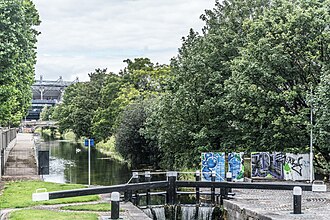
Checkpoint 1 — River-edge approach: the trail opens with a river-edge stretch where you can view the scale of the docks and the line of former warehouses that shaped trade routes.
Checkpoint 2 — Narrow alleyways: move into an alley network that once gave dockworkers direct access to specific warehouse doors. Look for surviving iron bollards, drainage channels cut into flagstones, and low doorway thresholds that tell you how goods moved.
Checkpoint 3 — Hidden quay entrances: small steps and arched openings reveal former slipways and private quay access. These points make excellent low-light photographs as the industrial silhouettes reflect in the water.
Checkpoint 4 — Converted warehouses and bridges: finish at a cluster of repurposed buildings and a pedestrian bridge. This area shows the Docklands’ modern reinvention and offers a safe, open place to conclude the walk.
Estimated timing: allow two to two-and-a-half hours at a relaxed pace with photo stops. If you prefer a shorter evening, a one-hour condensed route focuses on the most atmospheric alleys and quay viewing points.
Map notes: carry an offline map or download a simple route sheet. Some alleys have limited signage; the trail uses well-trod passages and avoids private yards or clearly marked worksites.
Documented history along the trail (clearly recorded)
Documented history here refers to visible, verifiable layers: the dockworkers’ patterns, warehouse functions, and the transport infrastructure that served the port.
Dockworkers and labour: the alleys clustered off the main quays were practical shortcuts used by stevedores, cart drivers and labour teams. Doorways on narrow lanes often align with internal warehouse layouts designed for rapid loading and unloading.
Warehouses and trade routes: many structures were built for storing imported raw materials and exported goods. Their heavy masonry, loading bays and internal timber frameworks reflect industrial needs, not decorative taste. Look for ventilation slits and hoist beams—functional features rather than ornamentation.
Recorded events: the Docklands have been the setting for labour disputes, maritime accidents and significant commercial shifts. These incidents shaped working practices and the built environment. Where plaques or interpretive signs exist, they summarise events that influenced local development.
Local lore and folklore stops (labelled as folklore)
Folklore: Alley of the Weeping Lamp — a tale told locally about a lamp that flickers whenever a ship leaves for a long voyage. The story evolved as a sailors’ lament ritual and likely grew from the regular sight of dimming lights and wet-weather reflections in puddles.
Folklore: The Warehouse Watcher — a common yarn about a solitary figure seen on upper gantries who later disappears. This sort of story usually arises from working-night silhouettes, scaffolding shadows and imaginations fed by long hours at the quays.
Folklore: Echoes in the Tunnel — narrow passages produce strange echoes that became attributed to past voices. Acoustic oddities easily generate supernatural explanations; the origin is typically the physical shape of the alley rather than an inexplicable presence.
These tales are best enjoyed for atmosphere. For fuller context on Dublin folklore and how stories travel, see related pieces such as Celtic Crossroads: Pagan Folklore Echoes in Dublin’s Outer Districts and modern urban spreads like Eerie Voicemail Myths: How Recent Urban Legends Are Spreading in Dublin.
Key features and photo-worthy stops
Bridges: pedestrian bridges frame the river against a skyline of cranes and converted buildings, offering reflective compositions after rain.
Converted warehouses: look for preserved loading doors, ironwork and timber beams. Soft night illumination gives them a cinematic presence without artificialising their history.
Hidden quay entrances: narrow steps and arched gateways are small set pieces that photograph well with low-angle lighting.
Architectural details: drainage channels, cobbled patches and old signage painted onto brickwork reveal the working life of the docks more convincingly than any tale.
Making it a guided experience
Ticketing: Haunted Hidden Dublin offers scheduled evening walks. Tickets are limited to maintain an intimate experience and ensure safety on narrow paths.
Group sizes and narration: small groups allow live narration so guides can adapt pacing and commentary. Audio delivery is available for larger groups or when quieter, immersive soundscapes are preferred—see our practical tips on audio gear in Budget Soundscape Tips for Dublin Ghost Podcasts and Tour Audio.
Commercial add-ons: some evenings pair the walk with themed refreshments or a post-walk talk inside a converted warehouse. Accessibility options include shorter route edits and avoiding steps where possible—contact the tour provider ahead for specifics.
Booking and variations
Public evening walks run on scheduled nights. Private groups, themed nights (photography-focused, folklore-focused), and family-friendly edits are available on request. For private events and group arrangements, we recommend early booking to secure preferred dates and accessibility accommodations.
Book the Docklands After-Dark Trail with Haunted Hidden Dublin — choose a public date or request a private arrangement.
For tailored events and corporate or family bookings, see our private group options: Private group tours and bespoke Docklands evenings.
Final notes
The Docklands back-alleys after-dark trail (Dublin) is rewarding because it mixes the tangible evidence of maritime and industrial life with the stories people have created to make sense of that environment. Keep a measured skepticism about dramatic claims, enjoy the mood of the streets, and respect private property and working quays.
Book the Docklands After-Dark Trail with Haunted Hidden Dublin to join a guided evening that balances safety, scholarship and the best of local storytelling.
FAQ
Is the Docklands back-alleys after-dark trail safe to walk alone?
Walking alone is possible if you take basic precautions: plan your route, tell someone where you’ll be, carry a torch, and avoid restricted or active worksites. For the safest and most informative experience, consider joining a guided Haunted Hidden Dublin walk where guides keep the group together and know local access points.
How long is the trail and what should I bring for an after-dark walk?
The recommended route takes about two to two-and-a-half hours at a leisurely pace. Bring waterproof layers, sturdy footwear, a compact torch or headlamp, and a charged phone with an offline map. A small tripod or a camera with good low-light capability helps if you plan night photography.
Are the ghost stories on the trail based on documented events or folklore?
Distinguish clearly: many alleyway stories are local folklore—oral tales that grow from working patterns, acoustic quirks, or atmospheric details. The route also highlights documented history such as warehouse functions, dockworker practices and recorded incidents where interpretive signs exist. Guides label each story accordingly so you can enjoy both kinds of narrative with clarity.
Can I book a private group tour of the Docklands after-dark trail and how do I arrange it?
Yes. Private group tours, themed evenings and bespoke itineraries are available. For group bookings and custom requests, use our private groups page to enquire and reserve: Private group tours and bespoke Docklands evenings.