
Smithfield After Dark: Ghost Legends & Late‑Night Sightings in Dublin
Smithfield’s broad cobbles, old market buildings and candlelit pubs make it one of Dublin’s most atmospheric places after dark. Over the years the square and its lanes have collected stories—some rooted in recorded events, others shaped by hearsay and late-night imagination. This guide helps visitors separate documented history from folklore, compiles the local ghost legends and recent late-night sightings people still talk about, and gives practical tips and a short walking route so you can explore responsibly and with context.
Book a Haunted Hidden Dublin Smithfield walking tour to hear these stories from an expert guide
Why Smithfield draws night-time stories: market history and urban change
Smithfield was historically a working-market quarter with a busy horse and cattle trade, mills and later distilleries and warehouses. Those economic layers left behind unusual buildings, narrow alleys and cellars—perfect settings for stories that linger after sunset.
Urban change in the late 20th and early 21st centuries—redevelopment, gentrification and a revived nightlife—meant that old buildings acquired new uses while older memories remained. When familiar daytime places feel different at night, the contrast encourages tales about who or what might still inhabit them.
What’s documented vs what’s legend: how to read Smithfield’s dark tales
When you hear a Smithfield ghost story, it helps to separate three layers:
- Documented history — verifiable facts found in archives, newspapers and building records (fires, accidents, closures).
- Local folklore — patterns of repeating stories and motifs shared by residents and workers (figures in doorways, unexplained noises) that have no single documentary origin but are part of community memory.
- Legend and embellishment — narrative additions that develop over time, often for theatrical effect or to explain an eerie sensation.
Good walking guides point out what can be checked in records and what remains oral tradition. If you want context on how Dublin place-names carry ghost stories you can read more in our piece on Ghostly Names in Dublin Street Names: History, Legend & Where to See Them.
Local ghost legends and reported late-night sightings
Smithfield’s stories are mostly oral—what pub staff, market traders and night-shift workers tell each other. Common themes include:
- Figures on the square — silhouettes reported in the plaza or near lampposts, often described as pausing then vanishing when approached. These are typically evening or early-morning accounts from passers-by.
- Cold spots and the sense of being watched — late-night visitors sometimes describe sudden drops in temperature or a brief, strong feeling of unease in narrow alleys or by old doorways.
- Sounds and footsteps — the creak of old beams, distant footsteps in empty cellars, or the impression of voices in unused spaces. Sound travels oddly between market buildings and undercroft spaces, which can create realistic but natural explanations.
- Smells with memory — whiffs of coal smoke, tallow or spirits in places where the industry has long gone; sometimes taken as a sensory echo of the past.
Some accounts name recurring figures—a solitary man in a coat, a woman in period dress—but these descriptions tend to vary. For perspectives on comparable urban legends and hidden spaces in Dublin, our articles on Hidden Vaults & Crypt Folklore in Dublin — Visitor Guide and Dublin’s Old Watchtowers: History, Urban Legends & Where to See Them explore how built features feed narratives.
Notable places to visit in Smithfield after dark
Smithfield Square
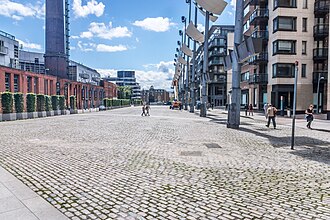
The wide square itself is the obvious starting point. At night the space is quieter and the old lamplight and modern lighting create contrasting shadows. What you’ll actually encounter: groups socialising, occasional street performance, and the way sound and light change the square’s scale—factors that often create the impressions behind reported sightings.
Bow Street and the Old Jameson Distillery
Bow Street retains its intimate, cobbled character. The old distillery buildings and former industrial façades are inviting to the imagination, and many late-night stories centre on this stretch. While the distillery’s history is well documented, the idea of “distillery spirits” blends fact and playful folklore. For other sites where industrial heritage becomes atmosphere, see Ships, Memorials and Spectres.
The market area and surrounding lanes
Behind the main façades are alleys and former service yards. These spaces are where people report cold patches, echoes and the sensation of being followed—often explained by building acoustics, wind funnels or the presence of late-night staff. Remember that some spaces are private or in-use at night; respect signage and boundaries.
Suggested short evening walking route and timing
This short route is designed to be manageable in 40–60 minutes and suitable for solo visitors or small groups. It focuses on atmosphere, local stories and safe, public spaces.
- Start at Smithfield Square — arrive about 8:30–9:00pm when the light is low but foot traffic still visible. Spend 10 minutes observing the square from different angles.
- Walk east along Bow Street — pause at the distillery frontage and listen: it’s a good spot to notice how sound changes between buildings (10–15 minutes).
- Explore two adjacent lanes — choose short side-streets off the square for their building lines and lamplight; avoid private yards (10–15 minutes).
- Finish at a well-lit pub or tram stop — end in a public place to debrief and warm up. A full circuit, with stops for photos and stories, typically takes under an hour.
Timing tip: start earlier in winter to avoid late cold and to have more pedestrian presence. On weekends the square can be busier; weekdays offer quieter, possibly spookier settings.
Practical tips: safety, photography, public transport and accessibility
Safety
Smithfield is generally safe for visitors, but standard urban precautions apply: stay in well-lit areas, keep valuables secure, travel in groups if you feel more comfortable, and be mindful of busy streets. Respect private property and do not enter locked yards or basements.
Photography
Low light is part of Smithfield’s appeal. For handheld shots use a camera with good high-ISO performance or a wide aperture lens. A compact tripod or a stable surface helps for long exposures—ask permission if setting up in front of a business or doorway. Avoid intrusive flash photography when other patrons are nearby; it ruins atmosphere and can alarm residents.
Public transport and accessibility
Smithfield is served by regular public transport and is walkable from several central areas. Sidewalks around the square are generally level, but some lanes are uneven cobbles—wear sturdy shoes and allow extra time if mobility is a concern. Many historic buildings are not fully accessible; check in advance for venue access or join a guided tour that can advise on accessibility options.
How a guided Haunted Hidden Dublin tour enhances the experience
Guides bring layers of context—documented incidents, oral tradition, and architectural reading—that help you interpret sensations and stories. A guide can point out archival facts versus local legend, explain how building features create auditory illusions, and share multiple versions of a story so you can judge their plausibility.
For visitors wanting a tailored experience, we offer private group bookings that can start later or adjust route and pacing; see our private options for groups at https://www.hiddendublintours.com/group-tours-dublin/. For a standard guided experience, Book a Haunted Hidden Dublin Smithfield walking tour to hear these stories from an expert guide and join a small group to explore safely with an informed narrator.
Further reading and related walks
If you want to broaden your Dublin ghost-context, our pieces on urban folklore elsewhere are good reads: Drimnagh Castle Midnight Tales for castle lore, and Dublin’s Old Watchtowers for how defensive structures shape stories.
Book a Haunted Hidden Dublin Smithfield walking tour to hear these stories from an expert guide
FAQ
Are the ghost stories in Smithfield based on facts or just folklore?
Many stories are a mix. Some are rooted in documented events—accidents, fires or industry—which get reframed in oral memory. Others are folklore: repeated motifs and local anecdotes without archival proof. A good guide will point out which is which.
Is Smithfield safe to visit late at night and what precautions should I take?
Smithfield is generally safe, but exercise normal urban caution: stay in lit areas, travel in company if you prefer, keep belongings secure, and avoid trespassing. Use public transport or licensed taxis for late departures.
Can I join a Haunted Hidden Dublin group tour to hear these stories?
Yes. Our public tours visit Smithfield and explain the mix of history and legend. Book online to reserve a spot and check start times so you can arrive before dusk for the best atmosphere.
Do I need to book a private tour for a late-night visit or is the regular tour sufficient?
The regular guided tour covers Smithfield in early evening and suits most visitors. If you want a specifically late-night or bespoke route, a private group booking is the best option—contact us to arrange timing and focus.