
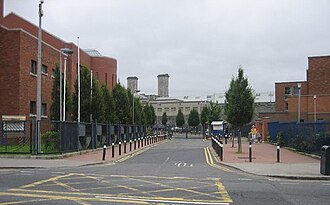
Phibsborough after-dark feels like a neighbourhood folded inward on itself: canals and railway arches, narrow terraces and lamp-lit junctions create an intimate, slightly uncanny atmosphere perfect for an evening walk. This self-guided haunt trail balances verifiable, documented history — industrial change, social shifts and recorded incidents — with local folklore and ghost stories. Read on for a practical route, what you can confidently claim as history, which tales are local legend, and how to experience the area respectfully after dark.
Book a guided Phibsborough after-dark tour with Haunted Hidden Dublin
Quick route overview & logistics
Start: Phibsborough Luas stop (or Phibsborough Road near the Five Lamps junction). End: Cross Guns Bridge or return to Phibsborough stop. Distance: roughly 2–3 kilometres, depending on minor detours. Estimated time: 60–90 minutes at a relaxed, exploratory pace with stops for observation and photography.
Best evening windows: just after dusk until late evening offers the best light for atmosphere and safer pedestrian activity. Weekend evenings are busier around pubs; midweek offers quieter streets. Public transport links are good: the Luas and several bus routes serve Phibsborough, making it easy to start or finish your walk without driving.
Documented dark history
What you can rely on: Phibsborough was shaped by industrial and transport change. Canals, railway infrastructure and factory sites altered the landscape and social fabric over the 19th and 20th centuries. Large terraces of workers’ housing, merchant premises and railway arches once housed industry and small manufacturing. Economic change, slum clearances and later redevelopment left physical traces — mixed housing, bricked-up entrances, and the industrial edges that feel “dark” today when viewed after dusk.
Recorded events: local newspapers and municipal records document industrial accidents, fires and crime incidents in and around industrial yards and railway lines. These are part of Phibsborough’s factual history and explain some of the derelict corners and memorials you’ll pass. Where a specific incident is recorded it is described as such in local archives; this article does not invent dates or attributions where none are preserved.
Interpreting history vs. embellishment: it is easy to read social hardship and industrial decline as inherently “haunted.” That interpretation can be a useful storytelling device, but when tracing a route you should make clear what is documented — such as the presence of mills, railway sidings, or recorded public order incidents — and what is interpretive narration used to illuminate social context.
Local legends and ghost stories
Phibsborough has its share of oral tales: unexplained footsteps along the canal towpath, spectral figures glimpsed beneath railway arches, and legendary figures associated with particular lanes and pubs. These stories often have roots in everyday anxieties — accidents, poverty, sudden deaths — that communities convert into folklore.
Labeling the unverified: where a story lacks archival confirmation it should be presented as legend or local lore. For example, a recurring tale about a spectre near a particular terrace is best framed as “local legend” unless you can point to verifiable contemporary reports or official records. That keeps walking narratives atmospheric without misrepresenting fact.
Some tales circulate beyond Phibsborough and are shared across Dublin neighbourhoods. If you enjoy comparing local folklore, see our pieces linking ghost stories in nearby areas like Smithfield After Dark and broader urban myth mapping in Ghostly Names in Dublin Street Names.
Key stops on the trail (what to look for at night)
Canal towpath
Why visit: the Royal Canal’s quiet surface and long, shadowed stretches make it the atmospheric spine of the walk. Documented history: the canal is part of Dublin’s transport past, used for freight movement tied to nearby industry. What to look for: old mooring points, warehousing facades, and subtle changes in the towpath where industry once met water.
Practical notes: sections can be dimly lit; bring a headlamp or a steady torch. Respect anglers and residents. Night photography: long exposures work well here; use a tripod and be mindful of other walkers.
Victorian terraces and lanes
Why visit: tight terraces and narrow laneways reveal social history — housing for workers, local shops and the gradual layering of reuse. Documented elements: architectural details, datestones and municipal repair plates are reliable indicators of era and use. Legend: stories of recurring apparitions in a particular lane are common; mark these as local tales unless backed by records.
Accessibility: narrow pavements and uneven flags mean watch your step. Many terraces are private residences — do not stray into gated yards or climb over walls for a better photograph.
Railway arches & industrial edges
Why visit: these structures show the transportation networks that transformed Phibsborough. Documented significance: railway infrastructure physically and economically reshaped neighbourhoods. What to look for: cut-stone archwork, old loading bays and traces of signage. After dark they form silhouetted frames that are atmospheric but often on private or commercial property.
Permissions: many arches are leased to businesses or used as storage. Do not attempt to enter or photograph from inside without permission.
Pubs and meeting spots
Why visit: pubs are where oral history lives. Bartenders, long-time locals and regulars are often the keepers of the best variations of local legend. Documented reality: pubs were social anchors through industrial shifts and are good places to learn about recorded changes in the area.
Etiquette: be courteous and buy a drink if you plan to chat for an extended time; avoid loud group storytelling that disturbs other patrons or residents.
Safety, etiquette & permissions
Night-walking safety: walk with a companion if you can, stay on well-used paths, and share your route with someone. Keep a charged phone and wearable light. Be aware that canal edges and uneven cobbles can be hazardous after dark.
Respect residents and private property: Phibsborough is a living neighbourhood. Do not block doorways, climb fences, or enter underpass areas that are fenced or signposted. Photograph from public ways only, or ask permission where private property owners are present.
Legal considerations: avoid trespass, which is an offence. Do not disturb businesses operating at night or interfere with heritage features. Responsible storytelling: when repeating local tales, state clearly whether an account is documented, reported by residents, or local legend. That nuance matters to listeners and to the people who live in the places you describe.
Wrap-up: extensions and guided options
If you want to broaden your evening explorations, nearby sites offer complementary dark-history experiences, from watchtower narratives to vault folklore — explore our guides on Dublin’s Old Watchtowers and Hidden Vaults & Crypt Folklore in Dublin. For a site further afield with a castle’s atmospheric presence, see Drimnagh Castle Midnight Tales.
Prefer a narrated experience? Our guides at Haunted Hidden Dublin provide contextualised, evidence-aware night tours that separate documented history from folklore while preserving atmosphere. Book a guided Phibsborough after-dark tour with Haunted Hidden Dublin to join a scheduled small-group walk.
Organising a private group or a tailored corporate event? We also offer private group tours; contact us for bespoke routes and scheduling at private group bookings.
FAQ
Is the Phibsborough after-dark haunt trail safe to do alone at night?
It is possible, but not ideal. Walking with a companion increases safety and enjoyment. Stick to well-lit, well-used sections such as the main canal towpath and populated streets, keep valuables out of sight, and let someone know your route and estimated return time.
How long does the self-guided trail take and is it suitable for families?
Plan 60–90 minutes for the core loop at a relaxed pace. Families with older children can enjoy the walk, but parents should assess canal edges and uneven pavements. For younger children, consider a daytime visit or take a shorter section of the route.
Will I need special permissions to visit any of the stops on the trail?
Most of the trail uses public pathways and streets. You should not require special permission to view canal banks, public terraces, or parades. However, do not enter railway arches, business yards or fenced areas without explicit permission from the owner or operator.
Do you offer guided or private Phibsborough night tours and how do I book?
Yes. We run scheduled guided night tours and can arrange private group experiences. To join a scheduled walk, book a guided Phibsborough after-dark tour with Haunted Hidden Dublin. For private or corporate bookings, visit private group bookings.