
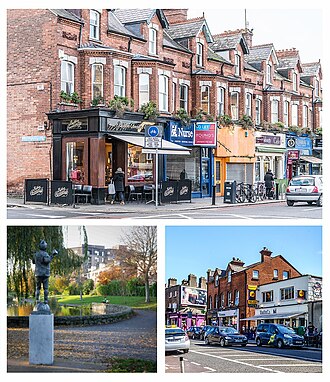
Rathmines after-dark offers a blend of soft streetlight, Victorian facades and the kind of stories that gather under elm branches and inside low-ceilinged pubs. The district’s mix of civic buildings, churchyards and long-lived public houses creates fertile ground for legends; visitors feel the layers of urban life more keenly at night, when ordinary details can take on the scale of narrative. This guide pairs verifiable local history with the most persistent Rathmines after-dark legends, and gives a practical 60–90 minute walking route you can follow to experience both the facts and the folklore responsibly.
Why Rathmines after-dark?
By day Rathmines is a lively suburb with shops, cafes and a busy main road. After dark, the same streets quieten into a Victorian tableau: terraces step back from the pavement, lamp light pools on pavements, and civic monuments acquire an expectation of witness. That atmosphere is why so many oral stories—apparitions, melancholy sounds, the sense of a past presence—concentrate here.
The neighbourhood’s mixed architecture and long residential occupancy mean there are many plausible anchors for legend: old churchyards and memorials, grand terraces that once held prosperous families, and pubs operating on the same site for generations. Where architecture invites attention, imagination follows.
What the records say: verifiable history of Rathmines
Rathmines developed from a village on the outskirts of Dublin into a well-established urban suburb as the city expanded. The built environment—terraced houses, ornamental civic buildings and public parks—reflects waves of urban development and investment over the nineteenth and twentieth centuries.
Documented history is found in property records, municipal archives and newspaper accounts. Those sources explain why certain buildings look the way they do, why a memorial stands where it does, and how transport and commerce shaped the area. Where possible, local plaques and official listings identify architecturally significant structures and protected terraces; these are factual markers you can verify on site or through municipal heritage services.
It’s useful to separate three kinds of things you’ll encounter: the physical record (architecture and civic monuments), archival fact (documented events visible in public records) and oral memory (stories passed between residents). This piece respects those distinctions and flags when a claim belongs to folklore rather than to the written record.
Common night legends and how to read them
Certain themes recur in Rathmines narration. Apparitions, mournful sounds, and watchman tales are among the most persistent. These themes are common across many older urban districts—what matters is how each local variant connects to verifiable context.
Apparitions: Reports often describe a figure in period dress, a fleeting silhouette on a terrace landing, or a presence in an old garden. These should be read as oral tradition unless corroborated by contemporary records describing an incident at a specific place. In many cases a family tragedy or a well-known resident becomes the seed for repeated sightings.
Mournful sounds: Accounts of distant crying, footsteps on empty stairs, or the clink of chain and key usually reflect the sensory triggers of a quiet night—traffic muffled by distance, building creaks, or wildlife—amplified into story. Local newspapers or coroner’s inquests will contain the kinds of documented incidents that sometimes underlie these tales; where no record exists, treat the story as folklore.
Watchmen tales: Stories about phantom night-watchmen or lost porters belong to a broader Dublin tradition of night-watch narratives. If you’re interested in how these legends travel around the city, our piece on Watchmen Legends: Phantom Night-Watch Stories traces similar motifs and where they appear in Dublin’s memory.
Suggested 60–90 minute evening route
This loop is designed to be practical, respectful and doable in an evening. It focuses on public spaces and licensed stops; do not enter private property without permission. The route is intentionally flexible so you can adjust pace and duration.
Start: Village centre and civic hub
Begin where Rathmines’ commercial and civic life overlaps: the village centre and the old town hall area. At dusk this is a good orientation point to note building styles and the contrast between shopfronts and residential terraces. Look upward: cornices, ironwork and lamp brackets often reveal the area’s prosperity at the time they were installed.
Churchyards and memorials (10–15 minutes)
Walk to the nearest public churchyard or memorial. These spaces are often scapegoats for folklore, but they are also the most documentable: inscriptions, burial registers and memorial plaques provide verifiable stories about individuals and events. Read what is carved in stone first—then listen to local oral accounts with that context in mind.
Victorian terraces and lanes (15–25 minutes)
Choose a stretch of terrace-lined street. Watch for lift-entrances, service gates and coach-house conversions; these features tell of changing household structures and urban modernization. Residents’ recollections of a house can inspire ghost tales, but property records will show who lived where and when—useful if you want to trace how a story may have emerged.
Prominent public buildings (10–15 minutes)
Pass civic buildings and former institutional sites. These often host the most durable legends because public memory associates events—accidents, policing incidents, community dramas—with official places. Where available, check blue plaques or municipal signage for factual anchors to local narratives.
Notable pubs and licensed stops (15–20 minutes)
End your route in a pub or two. Historic pubs are both commercial venues and story-keepers: bartenders and regulars will often be the living archive of an area’s oral history. Enjoy the atmosphere, ask staff about local tales, but remember that hospitality spaces are businesses—observe opening hours, buy a drink if you stay, and be courteous.
Haunted pubs and buildings: enjoy them responsibly
Pubs and buildings with reputations for haunting are best experienced as places of social memory. Anecdotes told by staff or locals are valid as cultural expression, but they rarely equal documentary proof. Ask whether a story is a family memory, a long-standing local yarn, or tied to a documented incident.
When a building’s legend mentions an event that might have left a paper trail—an accident, a notable death, a public dispute—archive records or newspaper archives are the sources that can confirm details. If no such record is available, treat the story as folklore: meaningful as community narrative, not as verified history.
Practical visitor tips
Best times: Aim for an early evening walk when streets are lit and pubs are open—roughly the hour after sunset through late evening. This balances ambience and safety.
Safety: Stick to well-lit public areas, keep to the pavement, and travel in small groups if possible. Rathmines is generally safe, but standard urban precautions apply—secure valuables, be aware of surroundings, and use licensed taxis or public transport to return to central Dublin.
Photography etiquette: Flash-free photographs are considerate at night. Avoid photographing people without permission, and be especially cautious around private residences—gates, yards and front windows are private, even if a house looks historic.
Respect for residents: Noise and late-night loitering can disturb people who live locally. Keep voices moderate, do not climb gates or walls for a better view, and follow instructions if a property owner asks you to move on.
Join a guided experience
Guided walks add context, local insight and access to stories you might not find on your own. Our Haunted Hidden Dublin tours combine storytelling with historical framing: guides point out archival details, explain how a legend likely emerged, and take you to insider stops that are best visited with someone who knows the local memory.
Book a Haunted Hidden Dublin tour to explore Rathmines after dark and gain a deeper, safer experience of the neighbourhood’s nighttime stories.
For private groups, corporate nights or special events, you can also arrange a tailored walk. If you’re organising a friends’ night out or a themed event, consider our private option for a customised route and timing at Book a private Rathmines night walk for your group.
What a guided tour adds
Guides contribute three things that make a difference: local orientation (the best places to stand and why), historical triangulation (what the records say versus what people remember), and narrative stewardship (how to enjoy a story without exploiting people or property). A guide will also point out connections to other Dublin narratives—if you’re curious about night-watch legends, for instance, our Watchmen Legends piece explores related tales across the city.
Guided walks are ideal if you want to compare Rathmines stories with other Dublin sites; for example, visitors often ask about reported station apparitions and harbour sightings—see our pieces on the Connolly Station phantom porter stories and Dún Laoghaire Harbour Apparitions, or our guide to Iveagh Gardens Ghostly Sightings for how parks appear in urban folklore. Even small crossings and bridges carry tales worth comparing—see Bridges of Whispers for similar motifs.
If you want the extra depth and a safer evening out, Book a Haunted Hidden Dublin tour to explore Rathmines after dark and let a local guide help you read the streets.
FAQ
Are the Rathmines after-dark stories true or just folklore?
Many stories are folklore: orally transmitted accounts that may have grown around a kernel of fact. Some legends are anchored to documented events that can be checked in archives or newspapers; others are communal narratives that express local memory rather than literal history. Treat them as cultural evidence: meaningful, not always factual.
Is Rathmines safe to explore at night on my own?
Rathmines is generally safe, but use standard urban caution—stay in well-lit areas, travel in groups when possible, and keep valuables secure. Guided tours offer an extra layer of safety and local knowledge about the best routes and times.
Will a guided tour take me inside pubs or private buildings mentioned in the legends?
Guides can often introduce you to pub owners and bring you to licensed interiors when permission is given, but access to private homes is not part of a public tour. Always respect opening hours and the business needs of pubs and cafes; buying a drink or a small purchase is the polite way to enjoy interior stops.
Can I book a private Rathmines night walk for a group or special event?
Yes. For bespoke group bookings and special events, please enquire about private options. We offer tailored routes, flexible timing, and customised storytelling for groups—see our private booking page for details and to arrange a walk.