
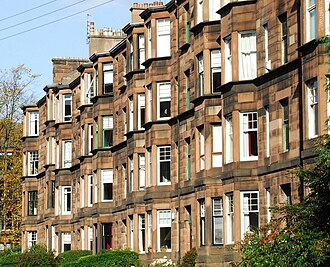
Dublin’s 19th‑century tenements are magnetic: layered stone façades, narrow stairwells, and the echo of lives lived close together. They attract phantom stories because they were places of intense human experience — overcrowding, grief, resilience — and because those experiences are easy to translate into the language of hauntings. This guide walks the line between documented social and architectural history and the folklore that grew from it, offering practical routes and context for walkers who want to see the streets where both history and legend were made.
Life in the tenements — documented 19th‑century conditions and social history
The basic facts are straightforward and grim: as Dublin industrialised and populations concentrated in the inner city, houses that had once been single‑family homes were subdivided into many small rooms. A single family might occupy one room; multiple families could share a single house. Overcrowding, poor sanitation and inadequate ventilation created conditions in which infectious diseases spread easily and child and adult mortality were high.
Contemporary reports, reformers’ accounts and later historical studies show how rents, employment instability and inadequate public health provision combined to make tenement life precarious. Local philanthropic efforts and civic reform movements eventually improved building standards and sanitation, and some of the surviving structures were stabilised or conserved as part of heritage programmes.
When you walk these streets today you can often see traces of change: Georgian doorcases reconfigured into tenement entries, patched brickwork where floors and partitions were removed, and the later municipal façades that attempted to bring order to chaotic housing. Places like Henrietta Street retain architectural features that make the social history visible, even where interiors have been repurposed or restored for modern use.
How hauntings form: from tragedy and rumor to legend
Haunting narratives grow where two things coincide: an emotionally charged past and a living storytelling culture. Tenements supplied both. High mortality, family breakdown, and sudden tragedies are fact; how those facts became phantoms is the realm of folklore and social psychology.
Rumour and the penny press played a role. Sensational newspaper reports of fires, evictions and deaths were copied and retold, often without full verification. Oral tradition did the rest: neighbours swapped stories, embellishment crept in, and a particularly arresting image — a child’s blanket, a woman on the stairs — hardened into a recurring apparition.
Distinguishing evidence from folklore means checking records where possible and treating eyewitness accounts with caution. Eyewitness testimonies are valuable cultural documents; they tell us about what communities saw and felt. But in most cases, there is no contemporaneous documentation that proves a supernatural event. The responsible approach is to present both kinds of material — the archival and the anecdotal — clearly and separately.
Key tenement sites to visit (what’s authentic, what’s reconstructed)
Henrietta Street
Henrietta Street is one of the most tangible places to begin. Several large Georgian houses on this street were converted into multi‑occupancy dwellings; conservation work has preserved façades and some interiors in ways that let you visualise both grander beginnings and tenement later life. Where rooms have been interpreted for visitors, curatorial notes distinguish original fabric from later interventions, so you can see what is authentic and what is a reconstruction for interpretive purposes.
North King Street and the north inner city
The North King Street area and the surrounding north inner city retain lanes and staircases that evoke the density of 19th‑century living. Many original houses were lost to redevelopment, but surviving fragments and rebuilt façades stand next to newer blocks. Walking here requires a tuned eye: look for blocked doorways, narrow windows that once served single rooms, and communal stairwells that were the axis of daily life.
Mountjoy, Drumcondra façades and surviving tenement fragments
Further north, around Mountjoy and Drumcondra, you’ll find surviving façades and reconstructed sections that hint at the neighbourhood patterns of tenement living. Some street frontages are preserved primarily as architectural fragments; interiors are often private or repurposed, so respect property boundaries and use public viewing points or managed tour stops to understand these places.
If your route passes burial grounds or churchyards, pause and read the stones. Burial grounds like the Cabbage Garden carry both documented mortality records and local stories; for more on burial ground legends see our guide to the Cabbage Garden burial ground legends, Dublin.
Reported phantoms and their origins — case studies
When we catalogue reported phantoms from tenement areas, three recurring types appear. Presenting each as folklore or eyewitness tradition, and then offering historical context, helps separate the story from the social reality that likely produced it.
1) The crying child on the landing. Multiple witnesses in different parts of the city have reported hearing a child’s sobbing from a stairwell with no visible source. Folklore framing: an abandoned or long‑deceased child whose grief anchors it to the building. Historical context: high infant and child mortality, combined with the acoustics of narrow staircases and the human tendency to infer agency from ambiguous sounds, can produce such experiences.
2) The gaunt woman at dusk. Stories of a spectral woman who appears at twilight at a tenement doorway or looking from an attic window are common. Folklore framing: a bereaved mother or tenant who never left. Historical context: women in tenement households often bore the brunt of domestic labour and grief; evocative images of women on doorsteps or at windows were common Victorian motifs that later retellings borrow from.
3) Shadows on the stairs or fleeting figures in alleyways. These are the most frequent modern reports on walking tours: a feeling of being watched, a shadow that darted across a passage. Folklore framing: restless spirits moving through the city’s liminal spaces. Historical context: urban lighting levels, reflective surfaces, and psychological priming on a “haunted” walk can all explain such sightings without invoking the supernatural.
For richer, neighbourhood‑rooted tales you can compare these tenement narratives with stories from Thomas Street or the Liberties. See our piece on the Thomas Street apparitions: Ghost stories of the Liberties for a flavour of how local legend interacts with place.
Practical walking route and tour options — sample 60–90 minute route
Sample 60–90 minute route (managed, public tour format): start at Henrietta Street for an architectural and social history introduction; move east into the North King Street area to examine surviving stairwells and tenement façades; follow lanes to a nearby burial ground like the Cabbage Garden for context on mortality and commemoration; finish near a municipal‑era block at Mountjoy where reform efforts left visible traces.
Haunted Hidden Dublin offers both public walks of approximately 60–90 minutes and private group bookings for tailored experiences. Public walks are ideal for solo travellers and small parties; private tours allow deeper archival dives and flexible itineraries for schools, historical societies or corporate groups. Accessibility varies by stop — many historic doorways and staircases are narrow, and some locations require pavement walking. Evenings at twilight amplify atmosphere but consider safety and local residents’ privacy when choosing a time.
Responsible visiting and preservation: respectful behaviour, photography, and supporting conservation efforts
These are lived‑in neighbourhoods with ongoing conservation work. Respectful visiting means keeping to public footpaths, not entering private property, and treating residents and their homes with courtesy. Use a camera responsibly: avoid intrusive photography through windows or into private courtyards. If a site has restricted access, signage will usually explain how to learn more without trespass.
Supporting preservation can be as simple as joining a guided tour or donating to local conservation trusts. Tours fund interpretive work, guide research and support community engagement; they also create a revenue stream that helps maintain surviving houses. If you enjoy storytelling craft, our piece on Monetizing Short Dublin Ghost Stories explores how local narratives are reshaped for modern audiences, though ethical storytellers keep historical integrity at the centre.
For visitors who want to pair tenement history with other atmospheric walks, see our guides to the Haunted pubs of Dublin and the Donnybrook After-Dark Laneways Trail for complementary routes.
Book a Haunted Hidden Dublin tenement walk — see history and hear the stories. Reserve public tours here. For private groups, schools or corporate bookings, please contact us to arrange a tailored experience: Book a private Haunted Hidden Dublin group tour.
FAQ
Are the tenement ghost stories based on historical records?
Some stories are rooted in documented tragedies — evictions, fires, epidemics — but most ghost narratives are oral traditions or modern eyewitness accounts rather than entries in official records. We separate archival facts (mortality rates, reports of incidents, architectural changes) from folklore in our tours so you can see both the documented history and the stories people tell about it.
Can I visit the tenement sites on my own or should I book a guided tour?
You can certainly walk the streets independently, but a guided tour adds context: local history, architectural interpretation and the folklore that links specific sites to particular tales. Guided tours also help ensure respectful access and show you where interpretation panels or preserved interiors are available. If you prefer a deeper or private experience, consider a group booking.
Are these walking tours suitable for children or large groups?
Yes, public tours are family‑friendly in tone though the subject matter can be solemn. We can tailor content and pacing for children on private or school bookings. Large groups are best accommodated by arranging a private tour so we can manage timing, interpretation and accessibility needs.
What should I bring and how long do the Haunted Hidden Dublin tenement walks last?
Wear comfortable shoes and weather‑appropriate clothing; Dublin weather changes quickly. Bring a small torch if you plan to walk at dusk, and a charged phone for maps. Tours typically last 60–90 minutes depending on route and questions; private tours can be lengthened or condensed to suit group needs.