
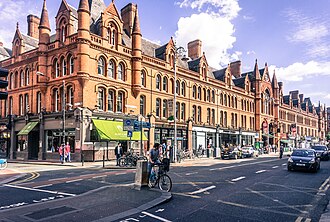
Walk Aungier Street after dark and the city feels pared back to stone, doorways and the quiet ache of past lives. This is a short, walkable stretch in Dublin’s south city that condenses layers of urban development, tenement memory and institutional traces into a compact evening trail. The route is ideal for visitors who want atmosphere with context: verifiable social and architectural history framed for a respectful nighttime walk, and a clear separation between archival fact and the local folklore that accumulates around old streets.
Why Aungier Street after-dark?
Aungier Street sits close to the heart of Dublin but has a distinct, compact personality. After dusk, the street’s Georgian and later façades take on a different scale: window frames, doorways, side-alleys and the mute faces of repurposed institutions read more clearly without the daytime bustle. For visitors who enjoy dark-history walks that rely on documents and material traces rather than sensationalist claims, Aungier Street is a concentrated study in urban change, social housing, and the shadow-lines where public institutions met poor households.
Quick facts, practical map and timing
Length and pacing: the core Aungier Street after-dark trail is a short linear walk that can be comfortably covered in 45–75 minutes, depending on stops. Start times around civil twilight are best for mood and visibility; later-start walks are possible but check transport for return journeys.
Map note: the route is compact and easy to combine with nearby evening walks. If you’re planning longer evenings of folklore and urban exploration, consider pairing Aungier Street with a longer neighbourhood walk such as our Stoneybatter Folklore Night Walk or a different themed evening like Blackrock Park Twilight Tales for a change of pace.
Timing tips: aim to arrive 10–15 minutes early if you’ve booked a guided tour; wear sensible footwear and a weatherproof layer—the street can be blustery at night.
Documented dark history: urban development, social conditions and institutional traces
Documented history on Aungier Street is anchored in urban development records, property surveys, newspaper archives and court or civic documents that describe changing use patterns. The street evolved from planned urban expansion into a busy mixed-use quarter where Georgian domestic architecture, small businesses and public institutions stood close together.
Tenement life: archival sources and social investigations from the 19th and early 20th centuries describe crowded living conditions in parts of Dublin that included the Aungier Street area. Contemporary reports and municipal records document household overcrowding, the subdivision of larger houses into multiple small tenement units, and the efforts—often partial and slow—by local authorities and charities to improve sanitary conditions.
Institutions and civic presence: the area contains evidence of former schools, chapels and social charities whose footprints survive in altered façades, commemorative plaques or building reuses. Legal records and institutional registers provide reliable traces of these presences without resorting to anecdote: look for the larger, former institutional buildings that have been repurposed as offices, cultural spaces or private enterprises.
Architectural change: physical fabric tells a parallel factual story. Remaining Georgian doorcases, shopfronts, and later Victorian insertions reflect economic shifts. Where façades have been altered, city planning files and conservation records record when and why change occurred.
Trail highlights: what you’ll see on an Aungier Street after-dark walk
Georgian doorways and fanlights: these survive in fragments and are easiest to read when the street is quieter. Door furniture and stone steps tell of domestic hierarchies and the later partitioning that created tenements.
Repurposed institutional buildings: some larger buildings once bore civic or charitable functions; tonight they stand as pubs, offices or community buildings. Observing scale, entrances and blocked windows helps you read their past lives.
Hidden laneways and service entrances: Aungier Street’s side passages and small lanes reward a slow pace. These narrow divides were the service arteries of the street—where deliveries, sculleries and outbuildings were once accessed—and in the evening they carry echoes of past comings and goings.
Markers and plaques: while not every former site has a visible plaque, municipal markers and occasional commemorative signs point to prior uses. If you’re interested in cemetery and burial-ground lore or church-related archives, follow up the walk with our guide to the Huguenot Cemetery or the St Bride’s Church spectral lore page for related contexts.
Folklore, ghost stories and oral tradition
Folklore and legend belong in their own column. Local oral tradition attaches apparitions, footsteps and cries to cramped tenement histories and to the sites of institutions that once managed poverty and illness. These stories are culturally significant even when they are not supported by archival records.
What these tales tell us: ghost stories associated with Aungier Street are often metaphorical—narratives about loss, hardship and the visibility of the poor. They reflect how communities remember difficult pasts. When you hear a tale on a guided walk, ask whether your guide is relating documented incidents or repeating local legend; a responsible guide will make that distinction clear.
Examples (as legend): visitors often hear accounts of a phantom child’s cry in a side alley, or of a figure seen near a former institutional doorway. These are presented as oral history—memories told and retold—rather than as verified events. If you want to explore corroborating records, consult local archives and newspaper collections: the links and pointers supplied on our site and on related pages (such as our budgeting guide to narrated audio tours) will help you plan that research: Budgeting a Narrated Audio Ghost Tour in Dublin.
Practical tips for walking after dark
Safety and lighting: Aungier Street is urban and generally well-lit, but side lanes and courtyards can be darker. Carry a small torch or use your phone flashlight when exploring alleys, and keep to public paths. Avoid entering private property.
Transport: the street is a short walk from central transport hubs and is served by multiple city bus routes. If you plan a late evening, check the last services or have a taxi app ready for the return journey.
Accessibility: pavements in older parts of the city can be uneven and may include steps or narrow thresholds. Visitors with mobility needs should contact us to discuss an adapted route or a daytime alternative. Private group bookings allow us to tailor start points, pace and lighting to accessibility requirements—see the private group booking option below.
Best times to visit: early evening (shortly after dusk) is ideal for combining atmosphere and safety. Weekend evenings are lively but may include greater pedestrian and traffic noise; midweek evenings are quieter if you prefer a more introspective experience.
Join a guided experience with Haunted Hidden Dublin
A Haunted Hidden Dublin Aungier Street after-dark tour brings documentary context to what you see. Guides focus on documented social history, architectural reading and the local oral traditions that have grown around particular corners. A typical guided walk includes measured stops at surviving Georgian features, discussion of tenement life drawn from municipal and press records, and an explanation of how legends developed in the shadow of real hardship.
Group bookings and private walks: if you are visiting with a private group, we can adapt the route, add photographic stops and include indoor interpretation where available. Arrange private tours here: Private group bookings — Haunted Hidden Dublin.
Visit responsibly: reading what remains
The most rewarding after-dark experience balances atmosphere with attention to fact. Look for material traces—doors, blocked windows, scale of buildings—and listen for the local stories that grew up around them. If a guide mentions a documented event, they should cite the type of record it comes from (e.g. a municipal register or newspaper report); if they tell a ghost story, it will be labelled as folklore or oral tradition. If you want to trace claims back to primary sources, local archives and the city library are the right next step.
FAQ
How long is the Aungier Street after-dark trail and how much time should I allow?
Allow 45–75 minutes for the core trail at a relaxed pace with a few stops for explanation and photos. Guided tours typically run to about an hour. If you plan to pair this walk with other nearby evening activities, give yourself extra time to move between sites.
Is the route safe and suitable for solo travelers or families after dark?
The route is in an urban, centrally located area and is generally safe, but travellers should exercise normal city caution. Families and solo walkers will find the neighborhood suitable at early evening hours; stay on public streets, avoid poorly lit alleys on your own, and consider joining a guided walk if you prefer company and interpretation.
Do I need to book a guided Haunted Hidden Dublin walk in advance or can I do a self-guided visit?
You can walk Aungier Street on your own, and many enjoy a self-guided evening. For richer context, interpretive detail, and safety in narrow lanes, booking a guided walk is recommended—especially at peak tourist times. Book here: https://www.hiddendublintours.com/tours/.
Are there accessibility considerations or alternatives for visitors with mobility needs?
Yes. Pavements can be uneven and some lanes include steps or narrow thresholds. If mobility is a concern, contact us to arrange an adapted route or a private group walk where we can tailor the pace, start point and stops to suit mobility requirements: Private group bookings.