
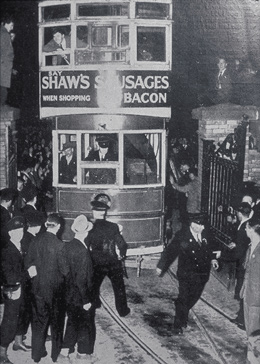
Phantom trams of old Dublin: History, Hauntings & a Walkable Route
The rumble of wheels, a ghostly ring of a bell, and the memory of carriages cutting lines through Dublin’s streets: the phantom trams of old Dublin remain an evocative part of the city’s soundscape, even where the rails themselves have long gone. This guide traces the material history of Dublin’s tram network, separates documented incidents from folkloric echoes, and offers a short, walkable route for visitors who want to follow the traces—literal and remembered—left behind.
Introduction: Why Dublin’s trams still capture the imagination
Dublin’s tram network once threaded the city, linking harbours, suburbs and markets. For many residents, trams were not only transport but daily companions: their timetables ordered life, their accidents made headlines, and their depots shaped neighbourhoods. When trams were phased out in favour of buses and cars, those grooves in the pavement, widened kerbs and repurposed buildings remained as prompts for stories. Over time, sound memories—late-night echoes, the creak of an old gate—were folded into tales of phantom wheels and spectral conductors. It is this layered past—rail infrastructure, newspaper records, oral memory and myth—that makes a walking approach useful: you can see what remains, read what’s recorded, and understand how legends were born.
Book the Phantom Trams walk with Haunted Hidden Dublin — see dates & tickets: https://www.hiddendublintours.com/tours/
The real story: The rise, operation and decline of Dublin’s tram network (what’s documented)
Documented history shows a gradual expansion of tram services as the city industrialised and suburbs grew. Lines linked termini, docks and commercial centres, and depots and workshops clustered where lines converged. Trams were adapted over time—from horse-drawn to mechanically powered vehicles—and were run by different companies and, later, municipal authorities. Maintenance yards, waiting shelters and distinctive rails embedded in cobbles or set into tarmac are the material traces historians look for.
The decline of the network was likewise a matter of record: changes in urban transport planning, the rise of motor buses and cars, and decisions by civic authorities led to phased closures and the eventual dismantling of many lines. Where a tram route once ran, streets were resurfaced, kerbs raised or lowered, and depots were sold or converted for new uses. These are verifiable changes in the urban fabric rather than the stuff of legend.
Documented incidents and newspaper reports: Accidents, unusual occurrences and service closures (distinguishing record from rumour)
Contemporary newspapers and municipal minutes record the sorts of events you would expect with a busy transport network: collisions, mechanical failures, track repairs and occasional service suspensions. Some reports describe dramatic crashes or injuries; others note simple operational problems such as signal faults or weather-related delays. These accounts are useful when separating what actually happened from later embellishment.
Newspaper coverage also created the scaffolding that folklore later climbed. A dramatic headline about a late-night derailment, widely discussed at the time, can feed decades of retelling—even when the factual record is straightforward and not supernatural. For researchers and curious walkers, the key is to look for the contemporaneous record: if an event was reported in official logs or newspapers, it’s documented; if the only source is oral memory or later retellings, treat it as folklore unless corroborated.
Folklore vs. fact: How phantom tram tales developed — common motifs and likely explanations
Phantom tram stories typically share motifs: a lonely witness hearing a bell or wheels where there are no rails; a fleeting shape that disappears at the edge of streetlight; or accounts of a conductor who vanishes, leaving a bewildered passenger. These narratives often echo older motifs linked to itinerant workers, watchmen or abandoned infrastructure.
Likely explanations for phantom tram sensations are physical and psychological rather than supernatural. Sound can travel surprisingly far along urban corridors; traffic noise, echoes off building facades, or the clatter of modern vehicles can be misinterpreted as an old tram. Memory blends sensory details with personal expectations—if you learn that a street once had trams, you are more likely to recall or imagine tram-like sounds there. Urban change also plays a role: gaps in the built environment, empty lots and repurposed depots create a sense of absence, which invites stories that try to fill it.
That said, folklore performs social work. Phantom-tram tales often express a community’s nostalgia, anxieties about change, or a fondness for vanished rhythms of daily life. Comparing the documented record with oral accounts helps reveal what is demonstrable and what is cultural memory.
A Phantom Trams walking route: Key sites where tramlines, depots or traces remain and what to look for
This short walking route links several places where the memory of trams is tangible, even if the rails are not immediately visible. It is designed as an easy, urban stroll you can complete in an afternoon.
- Broadstone / Phibsborough corridor — Look for repurposed industrial buildings, widened forecourts and subtle changes in paving where tracks were once laid. These areas preserve the sense of an operational hub.
- Rathmines stretch — Rathmines has a lively tradition of evening legends; pairing a walk here with local history brings together material traces and story. For more on Rathmines after dark, see our piece on Rathmines After-Dark: Legends, History and an Evening Walk.
- Connolly Station approaches — The city-side approaches and adjoining streets retain an atmosphere of movement and arrival. For tales centred on rail ghosts, including porter sightings, read Connolly Station phantom porter stories.
- Dún Laoghaire harbour edge — A former terminus atmosphere survives in the harbour’s layout. Combine a harbour walk with local apparition lore at Dún Laoghaire Harbour Apparitions.
- Iveagh Gardens and surrounding streets — Parks and garden edges can carry unexpected sound qualities; the Iveagh Gardens area is also rich in local sighting stories—see Iveagh Gardens Ghostly Sightings for more context.
As you walk, look for physical cues: inset grooves in old cobbles, vaults in building facades that once housed electrical equipment, and buildings with the proportions of depots. These are less theatrical than a standing tram but they are the real fingerprints trams left on the city.
On the walk: What visitors will experience (sensory notes, best times, accessibility and safety)
Expect a mixed urban sensory palette: the snap of present-day traffic, the smell of rain on stone, occasional echoes in narrow streets and the hush of parks where sound carries differently. Twilight and early evening can amplify a sense of the past as fewer engines drown out quieter noises, but daytime offers clearer viewing of architectural traces and interpretive plaques.
Accessibility: the route uses pavements and city streets with some gentle inclines. Parts of the walk pass cobbles and uneven kerbs—wear sensible footwear. If you have limited mobility, contact us to discuss a tailored route or shorter options.
Safety: be mindful of traffic, particularly at junctions where historical tracks once crossed roadways. Follow local signage and keep to marked crossings. Where a route passes near private property, observe boundaries and do not enter fenced or restricted areas.
Responsible curiosity: Respecting private property, residents and living history
Investigating the past should not disturb the present. Many former tram buildings are now homes, businesses or community spaces. Do not trespass, do not disturb residents, and avoid loud behaviour in quiet neighbourhoods. When photographing, be mindful of people’s privacy. If you encounter local historians or residents willing to talk, treat their memories as valued perspectives—sometimes the best stories come from those who grew up with the trams.
Where to learn more and how to join a guided tour
If you want deeper context, our guided walks combine documentary detail with on-the-ground observation and a sense for how folklore develops. Haunted Hidden Dublin runs regular walks that place phantom-tram tales alongside verifiable history and physical traces. Book the Phantom Trams walk with Haunted Hidden Dublin — see dates & tickets: https://www.hiddendublintours.com/tours/
For private groups, custom routes and corporate bookings please contact our group bookings team: https://www.hiddendublintours.com/group-tours-dublin/
FAQ
Are the phantom tram sightings documented or purely folklore?
Most phantom tram accounts belong to local folklore and oral tradition. Some sensory experiences—sounds or sightings—have plausible, non-supernatural explanations. Where an incident was reported in contemporary newspapers or official records (for example, an accident or a late-night derailment), it is part of the documented history; however, the overlay of ghostly interpretation is usually a later cultural addition.
Can I still see physical remnants of Dublin’s tram network today?
Yes, but rarely as intact tramcars or long stretches of operational track. Look for subtle traces: repurposed depots, unusual building proportions, inset grooves in old paving and street geometry that hint at former lines. Our walk highlights places where these traces are concentrated and interpretable.
Is the Phantom Trams walking route suitable for families or limited mobility visitors?
The standard route is family-friendly and takes place on public pavements and parks. There are cobbled sections and minor gradients, so families with very young children should plan accordingly. Visitors with limited mobility should contact us in advance to arrange an adapted route or alternatives that avoid uneven surfaces.
How do I book a guided Phantom Trams walk or arrange a private group tour?
To see available dates and buy tickets, visit: https://www.hiddendublintours.com/tours/. For private groups and bespoke itineraries, use our group bookings page: https://www.hiddendublintours.com/group-tours-dublin/.