
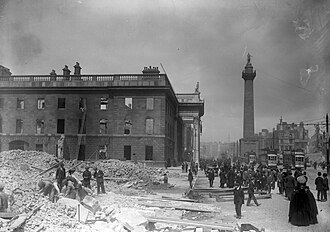
GPO Dublin Hauntings: The Ghosts of the General Post Office and the 1916 Rising
The General Post Office (GPO) on O’Connell Street is one of Dublin’s most instantly recognisable façades: a classical portico that witnessed intense urban combat during the 1916 Easter Rising. For many visitors the GPO’s stone columns and repaired bullet marks are not just history—they are the setting for stories of footsteps in empty corridors, sudden temperature drops and figures glimpsed in second‑floor windows. This article examines how the violence and trauma of 1916 have seeded modern ghost stories, carefully separating documented history and eyewitness testimony from later folklore, and offering practical guidance for visitors who want to experience the site respectfully on a Haunted Hidden Dublin walking tour.
Introduction: Why the GPO inspires hauntings and public memory
The GPO served as the headquarters for the proclamation of an Irish Republic and as the centre of the Rising’s fighting in Dublin. It was shelled, burned in parts and became a makeshift hospital and command post. Buildings that endure dramatic, violent events often become focal points for public memory; the physical traces of damage, plaques and memorials keep those memories visible. That visibility, combined with the human tendency to tell stories about loss and unfinished business, helps explain why the GPO still attracts ghost stories more than a century later.
The GPO in 1916 — documented history
On Easter Monday 1916, the GPO was occupied by leaders of the Rising and became a central stronghold for rebel forces. Commanders used its offices as a headquarters for issuing orders and publishing the Proclamation. The building was subjected to sustained artillery and rifle fire as British forces moved to reclaim the city. The resulting damage was extensive: the interior suffered fires and structural collapse in places, and the surrounding streets were scenes of house‑to‑house fighting.
Contemporary newspaper reports, military dispatches and personal memoirs from participants and observers describe explosions, smoke, injured combatants and civilians sheltering among the ruins. The names of some leaders—such as Patrick Pearse and James Connolly—are historically tied to the GPO and the Rising. Those connections are part of why the site is commemorated with plaques and ceremonies; the physical and documentary record links the building directly to a violent and public episode in Dublin history.
Eyewitness reports and later sightings
Eyewitness testimony from 1916 focuses on the battle itself: the soundscape of gunfire, cries and improvised triage in damaged rooms. Accounts that explicitly describe supernatural phenomena are sparse in contemporary sources. Most ghost stories associated with the GPO appear in later decades, passed along by residents, soldiers, postal staff and, more recently, tour guides and visitors.
Common modern claims include the sense of being watched, footsteps in empty corridors, voices and occasional apparitions resembling figures from the early twentieth century. Staff working in the GPO or nearby businesses have sometimes reported unexplained cold spots or lights behaving oddly after hours. These accounts tend to surface in oral tradition, newspaper human‑interest pieces and ghost‑tour narratives rather than in official records.
It is important to note the pattern of these reports: many emerged long after 1916, often coinciding with renewed public interest—anniversaries, films, novels and commemorative events. Memory is a shifting thing; collective retelling can amplify small, ambiguous experiences into fuller‑blown legends.
Separating fact from folklore
When we look at the GPO’s hauntings, three distinct forces shape what people believe: documented history, eyewitness testimony and later folklore. Documented history is anchored in archival material, contemporary reporting and the physical damage the building sustained. Eyewitness testimony consists of first‑hand descriptions from 1916 observers and from people who lived through the decades that followed. Folklore grows when narratives are repeated, embellished and absorbed into cultural conversation.
Memorials, literature and tourism play a major role in shaping ghost stories. Plaques and visible repairs keep the event present; novels and films supply atmospherics; and ghost tours provide a ready audience and narrative framework. This is not to say that all sightings are easily explained away—individual accounts may reflect genuine personal experiences—but the provenance of those stories should be tracked. Are they contemporaneous with the event, recorded shortly after, or are they decades‑old retellings influenced by later cultural products?
For comparative context, our work at Haunted Hidden Dublin also explores other Dublin sites with a layered past, such as Viking Dublin and its Norse‑era stories, or the burial‑ground legends that grow around plague pits. See Viking Dublin: Norse-Era Spirits, Myths and Where to See Them and Dublin plague pits and burial ground legends for how different kinds of history give rise to different kinds of legend.
Where to see and sense the GPO today
The GPO remains an active postal building and a major public monument. For respectful observation, some of the best viewpoints are across O’Connell Street (for an uninterrupted view of the façade), from the River Liffey promenade to the north, and from the widened pavements near the Spire for a closer inspection of repaired masonry and plaques.
Early morning and late evening provide calmer moments to appreciate the building’s atmosphere. Light at dusk can make weathered stone and darkened windows look particularly evocative, but remember that the GPO is a working facility; public access is limited to permitted areas.
Visitors hoping to ‘sense’ the site should temper expectations: ghost stories are often subjective and can be influenced by group mood and suggestion. If you are interested in wider haunted walking routes, our Glasnevin–Mount Jerome Cemetery Trail is a place where history and memory are also palpable, and it pairs well with a city centre visit.
Respect, preservation and responsible dark‑tourism at war memorial sites
Sites of conflict demand a particular kind of attention. The GPO is not only a haunted landmark for some; it is a site of sacrifice and public memory for many more. That means visitors should approach with respect. Avoid loud behaviour, do not climb on memorials or attempt to access restricted areas, and leave no trace.
Preservation matters: scarring on stonework and the conservation of plaques help future generations understand the past. Responsible dark‑tourism balances curiosity with reverence. If you visit on a tour, follow the guide’s instructions, keep to public paths, and be mindful when photographing memorials or monuments.
How Haunted Hidden Dublin presents the GPO on our tours: what we include and why
On Haunted Hidden Dublin walks we present the GPO with three clear distinctions: verified history, recorded eyewitness testimony, and later legend. We begin with the documented facts of the building’s role in 1916 and point out visible physical evidence. We then share contemporary eyewitness impressions from participants and observers when they are on reliable record. Finally, we explore how ghost stories evolved in the decades that followed, making sure guests understand which claims are supported by contemporary testimony and which have developed through folklore and retelling.
Our guides contextualise atmospheric stories—such as reported footsteps or unexplained noises—within the social history of memory and commemoration. We also link the GPO’s stories to larger Dublin narratives, from Norse‑era tales to cemetery legends, so guests see how the city’s layered past produces different kinds of haunting. If you want to join a themed walk, Book a Haunted Hidden Dublin walking tour to experience the GPO’s history and reported hauntings—https://www.hiddendublintours.com/tours/
Practical visitor information: access, guided‑night options, group bookings and safety tips
The GPO is accessible to the public from the street. Interior access is restricted; guided visits inside the building are rare and must be arranged through official channels. Night walks that pass the GPO are legal and common; they typically stay on public pavements and avoid disrupting business operations. Guides in Dublin often carry basic safety kits—lights, first aid items and communication devices—and you can read practical suggestions in our Low-Cost Safety Kit Checklist for Dublin Night-Walk Guides.
If you plan a private group visit, we can tailor a walk that respects privacy and commemoration requirements—please contact our group bookings page for details: Private and group bookings — Haunted Hidden Dublin.
Safety tips: wear sensible footwear for uneven pavements, keep a small torch for night walks, and be aware of traffic on O’Connell Street. Dress for the weather—Dublin evenings can be damp and chilly—and maintain decorum at memorial sites.
FAQ
Are the GPO hauntings based on documented eyewitness accounts from 1916?
Direct supernatural claims originating from 1916 documents are rare. Contemporary records describe combat, injury and damage, which are factual. Many ghost stories attributed to the GPO surfaced decades later. We therefore separate the wartime eyewitness record from later anecdotal reports when presenting the site.
Can visitors go inside the GPO and see the areas linked to ghost stories?
The GPO remains a working postal building and interior access is generally restricted. Public observation is possible from the exterior and nearby public spaces. If you hope to enter, you should seek official permission; most ghost‑tour experiences focus on the exterior and historical context rather than unsanctioned interior exploration.
Are guided night walks at the GPO legal and safe?
Yes. Guided night walks that remain on public pavements and respect local regulations are legal and commonly offered. Choose an experienced operator who follows safety protocols, carries appropriate equipment and observes respectful behaviour around memorials.
How should I behave at the GPO to respect the site and its memorials?
Keep noise to a minimum, do not climb or lean on monuments, refrain from intrusive photography during ceremonies, and follow any guidance from staff or guides. Treat the site as both a historical landmark and a place of remembrance.