
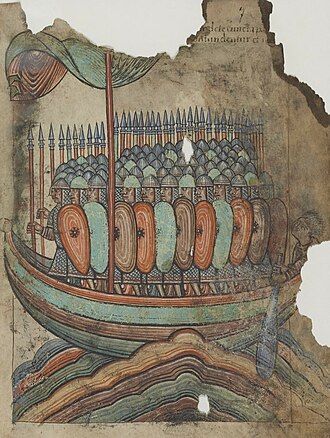
Dublin’s Viking past is both tangible and imagined: fragments of Norse craftsmanship and street-names sit beside tales of ghostly raiders, sea-gods, and uncanny runestones. This guide separates what archaeology and primary records tell us about “Viking Dublin” from the later folklore that grew around those facts, points to surviving places in the city where Norse influence is visible, and suggests routes and practical tips for visitors who want to experience these stories responsibly and enjoyably.
Book a Viking-era guided walk with Haunted Hidden Dublin
Viking Dublin — a brief history and how myth grew from the past
Documented history shows a Norse presence in Dublin during the early medieval period: settlers established trading bases, ports, and communities that left material traces in the ground and in place-names. Archaeology uncovers metalwork, imported goods and the outlines of riverside settlements that confirm sustained contact across the Irish Sea.
Folklore developed later. Over generations, stories of raiding, trade, marriage and conflict blended with Celtic myth, Christian storytelling and later national narratives. Where the historical record is thin, imagination filled the gaps: Norse figures were folded into local legends, sometimes becoming supernatural agents in their own right. Separating these layers—what is documented, what is likely memory, and what is outright invention—helps visitors enjoy the atmosphere without mistaking every tale for verified fact.
Where Norse Dublin left its mark: buildings, streets and archaeology to visit
Many of Dublin’s oldest street patterns and place-names trace back to Norse-era activity. Look for riverfront sites where longphort-style settlements would have been anchored, and for street-names that preserve Old Norse roots.
Key visible marks include medieval churches built on earlier Norse sites, fragments of Viking-age metalwork displayed in museums, and archaeological finds occasionally revealed during development work. While few standing “Viking buildings” survive intact, the city’s layout and museum collections make the Norse imprint readable if you know where to look.
For visitors interested in burial-ground stories and how the dead are remembered in Dublin folklore, see our discussion of Dublin plague pits and burial ground legends: Separating history from folklore. Cemetery routes that explore later layers of haunted memory are also relevant; compare Viking-era death customs with later narratives on the Glasnevin–Mount Jerome Cemetery Trail.
Norse-era spirits, gods and mythic motifs found in Dublin folklore — legend vs documented history
Documented Norse religion centred on gods like Odin and Thor and included rituals attested in Old Norse texts; however, direct evidence of Norse pagan practice in Dublin is sparse in the archaeological record. What we do find are objects and imported motifs that suggest cultural exchange, not a detailed catalogue of ritual practice preserved in situ.
Folklore, on the other hand, preserves a richer roster of supernatural figures associated with the sea, with raiding, and with thresholds such as shorelines and bridges. Many “Viking” ghosts in Dublin stories are more likely to be later literary or oral inventions, shaped by dramatization in the 18th–19th centuries and revivalist storytelling in modern times.
When reading tales that mention runes, horned helmets, or cinematic battle-scenes, treat them as cultural motifs rather than history. These motifs tell us about later generations’ perceptions of the Norse rather than about Norse Dublin itself.
Examples of Norse-associated ghost stories and how to judge their origins
Popular ghost stories often place Norse figures at water’s edge, on old quays, or in the ruins beneath modern streets. A common pattern is a spectral longboat or a lone warrior seen at night near the river. Such narratives typically post-date the Norse presence by centuries and reflect romantic or moral storytelling more than eyewitness history.
To judge origins, ask three questions: does the story appear in older written sources or only in modern retellings? Does it connect to a documented event or archaeological find, or does it rely on general “Viking” imagery? And how has the story been adapted by tourism, literature or local identity politics?
Practical examples: a tale of a cursed hoard discovered during modern construction may have a kernel in an actual metal find, but the “curse” language is often later embellishment. Similarly, sightings of “Norse warriors” in subterranean passages are frequently theatrical devices used to animate historic settings for visitors.
Suggested walking route: a one- to two-hour Viking-themed tour of Dublin
This compact route layers documented sites with atmosphere and interpretive stops. Start at a riverside point to discuss longphort settlements and the practicalities of seaborne trade and raids. Move to a nearby medieval church sited over earlier activity, then pass through streets with Norse-derived names and end near a museum display of Viking-age finds.
Along the route, pause to point out place-name evidence, discuss material culture on display, and narrate both the documented history and the later legends associated with each stop. Interpretive storytelling should clearly mark speculation and folklore so that visitors can appreciate the mood without conflating it with the archaeological record.
Practical visitor tips: best times, what to look for, accessibility and photographic advice
Best times: mornings and early afternoons are quieter for photography and for appreciating archaeological markers without crowds. Twilight adds atmosphere but can reduce visibility of fine details; consider accessibility and safety if you choose evening walks.
What to look for: street-names with Norse roots, river-front contours that suggest old quays, museum labels describing provenance, and any visible medieval foundations that overlie earlier layers. When photographing, seek textures—stonework, signage, museum displays—and respect signage prohibiting flash in galleries.
Accessibility: central Dublin is relatively compact but includes uneven cobbles, steps and occasional narrow alleys. If mobility is a concern, plan a route around level pavements and confirm accessibility with museums ahead of time.
For night guides or those preparing a self-guided evening walk, the Low-Cost Safety Kit Checklist for Dublin Night-Walk Guides is a practical companion resource.
Responsible storytelling: cultural sensitivity, avoiding sensationalism, and local interpretation
When presenting Viking-era tales, separate clearly what is documented from what is folklore. Avoid sensational labels that exoticize Norse people or reduce complex historical contacts to caricature. Be mindful of post-colonial dynamics: Norse settlement was one strand in a wider story of migration, trade and cultural exchange.
Local interpretation matters. Many Dubliners value nuanced narratives that acknowledge multicultural pasts rather than promoting myths of invaders and victims alone. Responsible storytelling respects archaeological evidence, acknowledges uncertainty, and credits local sources and scholarship where available.
For intersections of hospital lore and uncanny stories—another facet of Dublin’s haunted landscape—see Rotunda Hospital Uncanny Stories: History, Legends & Visiting Guide to understand how medical history and ghost stories can intertwine with other local folklore.
How to join a guided Viking-era walk with Haunted Hidden Dublin (what to expect)
A Haunted Hidden Dublin Viking-themed walk blends documented history with folklore, clearly marking which elements are archaeological and which are later stories. Expect short, accessible routes peppered with artifacts-in-context, atmospheric readings, and opportunities to ask about evidence and interpretation.
Guides provide interpretive tools—maps, museum recommendations and context for place-names—and emphasize safety and accessibility. If you have a private group, school booking, or corporate event in mind, you can arrange tailored experiences; for group bookings see our private tours page.
Book a Viking-era guided walk with Haunted Hidden Dublin
If you need a private or school-focused tour, visit our private booking page: Book a private Viking-themed walk for groups or schools.
FAQ
Are there documented Viking sites in Dublin I can visit today?
Yes. While few intact Viking buildings remain, archaeological finds, museum collections and certain medieval sites preserve evidence of Norse activity. Look for riverfront locations, museum exhibits of metalwork and objects identified as Norse in origin, and place-names that record Old Norse roots. Museums and interpretive plaques are the most reliable points of access for verified material.
Are Viking ghosts or spirits a genuine part of Dublin folklore?
Viking-themed ghosts appear in Dublin folklore, but many of these stories are later creations layered onto earlier memory. They are genuine as folklore—as expressions of local imagination and identity—but they are rarely direct continuations of Norse belief. Treat them as part of Dublin’s narrative landscape rather than as evidence of a living Norse religious tradition.
Is a Viking-era walking tour suitable for children or family groups?
Yes. Tours can be adapted for families: guides will simplify complex history, emphasize tangible finds and provide age-appropriate storytelling. Note that some locations involve uneven ground or narrow alleys; contact the tour operator ahead of time to discuss accessibility and content suitability for younger children.
Can I book a private Viking-themed walk for a group or school?
Yes. Haunted Hidden Dublin offers private and school-oriented walks tailored to group needs, learning objectives and accessibility requirements. Visit our private tours page to arrange a bespoke itinerary and to discuss pricing and safety arrangements.