
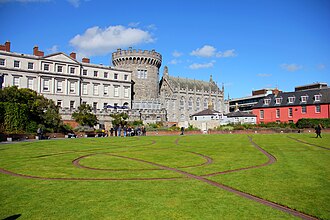
Dublin Castle’s dimly lit corridors and shadowed staircases hold a peculiar grip on visitors’ imaginations: they are at once the product of layered political history and the stage for local stories that refuse to go away. This guide walks you through what is documented in the archives, what belongs to folklore, and how to experience the castle’s atmospheric spaces responsibly—whether you are a curious visitor, a photographer seeking mood, or a ghost-hunter looking for leads.
Book a Haunted Hidden Dublin tour and explore Dublin Castle’s shadowed corridors — join a guided walk that blends archival context and storytelling so you can see, hear and interpret the places where history and legend overlap.
Documented history: Construction, uses, and key historical events tied to the castle
What is beyond dispute is that Dublin Castle has been a central administrative and military site for many centuries. The castle’s fabric reflects successive phases of construction and reuse: a surviving medieval tower anchors it, and later additions created formal state apartments, a chapel, and service wings. Across eras the complex served as a fortress, a seat of government, and a place where official ceremonies and legal processes took place.
Because of its long state role, parts of the castle were used for detention, record keeping, and administration. Those institutional uses tend to leave a layered human record—lists of officials, legal proceedings, and the everyday comings-and-goings of thousands of people—that provide a firm archival basis for understanding the site’s past. That documented history is the foundation on which later stories and folklore built themselves.
The architecture of shadow: Which wings, staircases and chambers create the atmospheric corridors
The castle’s physical character explains much of its reputation. Narrow service passages, vaulted undercrofts, public state rooms and older stone towers meet later Georgian and Victorian interiors. The contrast between cool, low-ceilinged medieval masonry and the high-ceilinged, paneled state apartments produces sudden changes in light and acoustic qualities—ideal conditions for a haunting atmosphere.
Key architectural features that visitors often mention are the medieval tower and adjoining stonework, the vaulted lower chambers beneath older sections, and the transition zones between formal public rooms and back-of-house passages. These liminal spaces—stairwells, service corridors, and doorways that open from light into dimness—are where sights and sounds are most likely to be noticed and remembered.
Reported sightings and encounters (anecdotal)
Local guides, oral histories and occasional modern accounts describe a range of experiences: brief glimpses of figures at the edge of vision, unexplained footsteps in quiet wings, feelings of a presence, and sudden cold spots in otherwise temperate rooms. These reports often cluster around the older masonry and stairwells where the environment itself encourages close attention to small details.
Patterns in these accounts are important to note, but they are anecdotal: many come from personal retellings shared on tours, in local media, or via social conversation. They describe sensations more often than clear, repeatable phenomena—an impression, a sound, or a silhouette rather than a fully articulated apparition with a steady description. That variability is typical where personal memory, context and expectation shape an experience.
Folklore developed around these reports—stories passed from one generation of Dubliners to the next. Some narratives connect to the castle’s institutional past, imagining spirits of those who worked, petitioned, or were detained there. Others are more generic “shadow-person” tales that fit well with atmospheric corridors and low lighting. These stories have cultural value, but they should be presented and heard as folklore unless supported by archival evidence.
Separating fact from fiction: What archival records confirm and what remains legend
Recorded history confirms the castle’s official roles and many of the events that make it a focal point in Dublin’s civic life. Administrative records, architectural surveys and museum collections document who used the space and how it was altered over time. Those documents explain why the castle feels like a place of authority and high stakes—and why narratives of suffering, power and secrecy might attach to it.
What remains legend are the more specific supernatural claims. When a story about a particular apparition cannot be traced to a documented person, event, or reliable contemporaneous account, it belongs to oral tradition. That does not make such tales worthless—on the contrary, folklore often reveals how communities remember and interpret fraught pasts—but it does mean treating sensational accounts with skepticism and noting their cultural origins rather than presenting them as archival fact.
For practical research, pairing onsite observation with published records and reputable institutional information is the best way to separate verified history from later embellishment. For advice on how projects balancing history and interpretation have been funded and managed, see our guide to Grant Sources for Dublin Dark Heritage Projects, which is aimed at tour operators and groups working with dark heritage.
Practical visiting guide: access, tickets, guided-tour options, best times for atmosphere, photography rules and safety
Access to Dublin Castle is regulated: certain public areas and exhibitions are open to visitors during regular hours, while other spaces are reserved for official events, staff, or conservation work. Ticketing and guided-tour options vary depending on the time of year and any special ceremonies taking place in the State Apartments or Chapel.
For atmosphere: the transition periods around opening or late afternoon (when interior light changes and guided visits thin) often feel most evocative. However, always follow official opening hours and any staff instructions—never enter restricted areas in search of atmosphere. Respecting the site preserves it for everyone and keeps you safe.
Photography: casual photography for personal use is usually permitted in public areas, but flash and tripods may be restricted in conservation-sensitive rooms. If you are photographing for publication or using professional gear, check permissions in advance. Safety: stone steps can be uneven, lighting may be subdued in historic wings, and some corridors have narrow clearances—good footwear and attention to signage are essential.
Suggested walk route & vantage points for atmosphere without trespassing
Begin at the outer courtyard to take in the castle’s scale, then move toward the public state rooms where architecture shifts from formal to intimate. Pause at the transition zones—doorways, stair landings and any visible vaulted lower chambers—to observe how light and sound change. Avoid forcing access into behind-the-scenes areas; much of the mood can be experienced from permitted vantage points.
If you want to extend your walk in the neighbourhood, nearby sites such as St Michan’s Church (known for its crypt and stories) offer complementary atmospheres; our visitor guide to St Michan’s Church Crypt Whispers provides practical details for planning that stop. Other nearby dark-heritage locations worth visiting include the Dorset Street Workhouse and the Baldoyle Estuary stories, each of which is explored in their own visitor guides on our site.
How to experience it with Haunted Hidden Dublin: tour options, group bookings and what to expect
Haunted Hidden Dublin offers guided walks that place Dublin Castle within a broader map of the city’s shadowed past. Tours mix on-the-ground observation, archival context and folklore in an atmospheric yet evidence-minded style. Expect grounded storytelling, opportunities for photography at legal vantage points, and clear guidance on where you may not go.
Group bookings are available for private events, research outings, and educational groups. If you are organizing a group with specific access needs or a focus on dark heritage interpretation, contact our private bookings team to discuss options and tailored routes. You can find practical tips for promoting and running low-cost dark-tour experiences in our guide to Low-Cost Digital Marketing for Dublin Dark Tours.
Book a Haunted Hidden Dublin tour and explore Dublin Castle’s shadowed corridors. For private groups and tailored tours, please visit our private bookings page to discuss options and arrangements: Private group bookings — Haunted Hidden Dublin.
Responsible visiting and final notes
Approach Dublin Castle as a historic site first and a setting for stories second. Respect the boundaries set by staff, be mindful of preservation needs in older rooms, and treat folklore as a living cultural conversation rather than proved fact. This balanced approach lets you appreciate both the documented history and the compelling tales without conflating the two.
If you are interested in how community projects can responsibly interpret and care for dark heritage, our page on Grant Sources for Dublin Dark Heritage Projects explains funding approaches and practical considerations for operators and groups working with sensitive histories.
FAQ
Is Dublin Castle actually haunted or are the stories mostly folklore?
Short answer: most claims are best understood as folklore and personal testimony rather than proven supernatural events. The castle’s long institutional use and atmospheric architecture make it a fertile site for stories. That said, personal experiences are meaningful to those who report them, and they form part of Dublin’s cultural memory.
Can visitors enter the shadowed corridors mentioned in reports, or are they off-limits?
Some corridors and chambers are open to the public during scheduled tours and visiting hours; others are restricted for official use or conservation. Always follow signage and staff instructions. Guided tours—such as those offered by Haunted Hidden Dublin—will take you to permitted vantage points where atmosphere can be safely experienced.
Are there any documented historical events that might explain the sightings?
Documented history shows the castle’s role as a center of government and administration, which included detention, record keeping and formal ceremonies—conditions that often generate stories. Where specific sightings are linked to named historical figures or incidents, look for corroborating archival records; many popular supernatural narratives are later embellishments rather than contemporary reports.
How do I book a Haunted Hidden Dublin tour that focuses on Dublin Castle and nearby dark-history sites?
To book, visit our tours page and choose the Dublin Castle-focused or dark-history route: Book a Haunted Hidden Dublin tour and explore Dublin Castle’s shadowed corridors. For private or group bookings tailored to your needs, see our private groups page: Private group bookings — Haunted Hidden Dublin.