
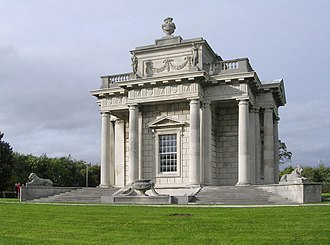
Casino at Marino whispering rooms Dublin: Acoustics, Legends & Visitor Guide
The Casino at Marino has become a magnet for visitors chasing a small, perfectly formed piece of Dublin’s neoclassical architecture and the persistent idea that it contains ‘whispering rooms’—corners where voices bend, footsteps linger and a low secret seems to pass through stone. This article separates observed experience from recorded history, explains the likely acoustic causes, and gives visitor-minded practical advice so you can decide how to test the claim for yourself.
Casino at Marino and the whispering-room legend — what visitors report
Visitor accounts are consistent in tone even when they differ in detail. People describe standing in a small room or a stairwell and hearing a whisper, a laugh or a voice that seems much closer than the speaker actually is. Some say sound travels between rooms where there are no visible doors; others report an odd focusing of sound on particular spots on a floor or balcony. Experiences are often brief and fragmentary: a phrase heard across a courtyard, a murmur that seems to follow a visitor down a stair.
What people mean by ‘whispering rooms’ — common descriptions and variations
“Whispering rooms” is a loose label that covers several related phenomena. In one version, an elliptical or domed chamber concentrates faint speech so someone standing at one focus can hear a whisper spoken at the other focus. In another, narrow staircases and stone corridors act as sound channels so a voice carries farther than expected. A third explanation people use casually is sound transmission through cavities, flues or thin masonry that links physically separate chambers.
Alongside these acoustic effects sit psychological factors: expectation (if you have been told to listen for whispers you are more likely to notice them), group suggestion (one visitor mentions a sound and others confirm what they expected to hear), and memory bias (uncertain sounds are recalled more vividly as a ‘whisper’ than they were).
Documented history and original purpose of the Casino — what the records say
It is important to separate the building’s well-documented architectural history from the ghost stories that grew up later. The Casino at Marino is a small neoclassical garden pavilion built in the 18th century as an ornamental retreat and display of taste. The name “Casino” in this context means a little house, not a gambling hall.
Historical descriptions and conservation records emphasise the building’s clever, compact plan and classical detailing. Architects and conservators note that much of the structure is deliberately intricate: façades, columns and windows are composed to create classical harmony on a very small footprint, and the interior contains a sequence of tight rooms, staircases and concealed service spaces. These design choices are architectural and aesthetic, not supernatural.
Architectural features that can create whispering or echoing effects — practical acoustics for visitors
Buildings like the Casino are a good case study in how architecture produces unusual sound behaviour without invoking the paranormal. Several features commonly found in small, historic pavilions can create the whispered sounds visitors report.
Shape and geometry: curved walls, alcoves, stair wells and small vaulted ceilings can focus or trap sound. An elliptical shape can carry a whisper from one focal point to another; narrow cylindrical stairwells and corridors can channel sound like a pipe.
Hard surfaces: stone, plaster and timber reflect high-frequency sounds. In a compact room any reflected sound will reach the listener with little absorption, making even a quiet voice noticeable and sometimes oddly amplified in certain positions.
Hidden cavities and service spaces: older buildings often have chimney flues, voids behind panelling, thin separating walls, or ceilings with gaps. These create paths for sound to travel where you might not expect it, so a voice from an adjacent room or a distant conversation can be audible in places that appear isolated.
Low ambient noise: in a quiet museum-like setting, the human ear is extremely sensitive to small sounds. The hush of other visitors and the drop in traffic noise make whispers and footsteps stand out more than they would on a busy street.
Human perception: direction-finding of sound is less precise in enclosed spaces. Reflections can mislead your sense of where a sound originated, so you might feel a whisper came from a corner when it actually came from above or through a fissure in a wall.
Folklore, anecdote and the limits of the evidence — separating story from documented fact
Folklore grows where gaps in formal records meet powerful sensory experiences. The Casino’s picturesque smallness and secluded setting invite stories; a single vivid anecdote can seed a legend that many visitors then repeat. While anecdotes have value—especially when collected and compared—they are not the same as controlled acoustic tests or documentary evidence.
There is no convincing, documented scientific study published about “whispering rooms” at the Casino. That does not invalidate personal experiences, but it does shape how we interpret them: as interesting phenomena worth observing, not as proof of the supernatural. Distinguishing story from documented fact means recognising the different kinds of claim and treating each on its own terms.
How to experience the Casino as a visitor: best times, what to listen for, and photographic tips
Best times: if you want to hear subtle sounds, choose a weekday morning when the park is quieter. Avoid the busiest guided-tour windows when voices and footsteps make it harder to detect faint acoustic effects.
Where to stand: experiment. Try the centre of small rooms, the top and bottom of stairwells, and near alcoves. Pause and listen for several minutes rather than expecting an instant demonstration. If in a group, ask others to be silent for a period so you can judge ambient sound levels.
What to listen for: low-frequency rumble from outside, high-frequency sibilant whispers, and any instance where a sound seems to come from a direction that doesn’t match the visible source. Note time of day and weather—wind and distant traffic change what you will hear.
Photography and recording: interiors are compact and light can be low. Use a fast lens or raise ISO rather than relying on flash, which can be restricted for conservation reasons. If you plan to record audio, use a simple directional microphone to reduce ambient noise, but always check rules about audio equipment with staff before you set up.
Access, conservation and safety: entry rules, preservation concerns and respectful visiting
Access arrangements can vary. The Casino is a historic structure, so parts of the interior may be open only at certain times or under guided supervision to protect fragile fabric. Check official opening information before you travel.
Conservation is a live concern: do not touch decorative plasterwork, carvings or painted surfaces; avoid leaning on balustrades and refrain from loud behaviour. Historic buildings respond poorly to vibration and abrasive contact.
Safety: watch your step in older stairways, take care in low light and supervise children closely. Follow any instructions from staff or signage—these exist to protect both visitors and the building.
Planning a dark-history route that includes the Casino — sample sequence and tour tips
For a compact dark-history route that balances architecture, library whispers and larger urban drama, consider this sequence: begin at Marsh’s Library to enjoy its spectral-reader stories and bookish atmosphere, move to the Casino at Marino for the acoustic curiosity and neoclassical oddity, then include larger civic sites like the GPO for revolutionary-era echoes, and finish with an atmospheric stroll down Grafton Street after dark for urban shadows and late-night stories.
Tie-ins: Marsh’s Library spectral reader stories, Dublin — Visitor Guide & Sightings is an excellent nearby stop for readers interested in bookish hauntings. The GPO 1916 After-Hours Apparitions guide adds civic history that contrasts well with the Casino’s intimate scale. For late-night ambience, Grafton Street After Dark: Late‑Night Shadows, History & Night Walk Tips helps you plan safe, evocative after-dusk sections. If you want an out-of-town castle visit with a classic ghost story, see Malahide Castle Lady in White: Legend, History & Visitor Guide.
Practical tip: plan your route to minimise backtracking—historic interiors are best appreciated with time, not hurry. If you’re organising a small private group looking for a focused experience, consider specialised logistics and equipment; our guide on Budget lighting & audio gear for Dublin night walks — practical guide is a useful checklist.
For private groups, tailored routes and closed‑group bookings, contact our team via the private groups page: Book a Hidden Dublin walking tour to hear the stories, visit the Casino at Marino and other dark-history sites — reserve your spot today.
Conclusion
The Casino at Marino’s “whispering rooms” are best approached as a blend of sensitive architecture, plausible acoustic pathways and layered storytelling. The building’s design creates conditions where faint sounds can be heard in surprising ways; folklore and suggestion amplify those moments into memorable experiences. If you go armed with a little understanding of how sound behaves in small historic spaces, you’ll find the visit both more instructive and more eerie—exactly the tone many people come to Dublin’s darker corners to enjoy.
FAQ
Are the whispering rooms at the Casino at Marino a real phenomenon or just a legend?
There are real acoustic effects that can produce whisper-like sounds in small historic buildings. The “whispering rooms” label mixes these plausible physical explanations with folklore and anecdote. There is no definitive scientific study proving paranormal activity at the Casino.
Can visitors go inside the Casino at Marino to test the acoustics?
Access varies by season and conservation rules. Parts of the interior may be open only at scheduled times or to small guided parties. Check on-site information or official opening notices before visiting and respect any restrictions.
Is there any documented evidence of hauntings linked to the Casino?
There is no robust, documented evidence of hauntings in the scholarly sense. Anecdotes and local stories circulate, and they form an important part of visitor experience, but they are distinct from archival records or scientific proof.
What’s the best way to include the Casino at Marino on a dark-history walking tour of Dublin?
Combine the Casino with nearby atmospheric sites for contrast: bookish Marsh’s Library for interior eeriness, the GPO for civic drama, and an evening stretch along Grafton Street for urban atmosphere. Consider guided tours for access and context, and plan quieter times for acoustic exploration.