
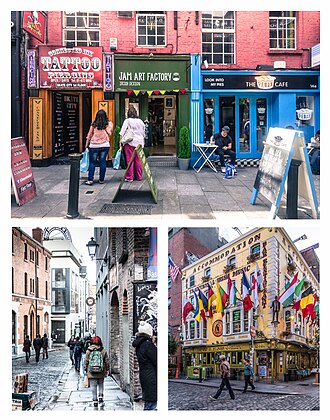
Temple Bar’s Hidden Alleys: Ghost Stories, Folklore & a Walking Guide
Temple Bar is famous for live music, neon signs and busy cobbles, but step away from the main streets and the neighbourhood opens into a matrix of narrow lanes, service passages and tucked‑away courtyards where oral traditions, pub tales and occasional historical incidents accumulate. This guide leads you through those lesser‑known alleys, pairing the ghost stories locals tell with what is documented in archives, and offering a practical, timed walking route for curious visitors—whether you go alone or join a Haunted Hidden Dublin tour.
Book a Haunted Hidden Dublin walking tour to experience Temple Bar’s alleys with a guide who balances folklore, documented history and a safe, atmospheric route after dark.
Setting the scene — Temple Bar in history: maps, markets and crime
Temple Bar started as a dense urban district defined by markets, small workshops and riverside trade. Historical maps and municipal records show its narrow street pattern and the concentration of small trades and lodging houses. Market activity and the mix of commerce and housing made the area lively but also prone to petty crime; local charges and court reports historically note theft, disorderly conduct and, at times, more serious offences.
That documented background explains much of the neighbourhood’s folklore. Places with high turnover—inns, boarding houses and market stalls—tend to generate stories about missing items, sudden deaths or unexplained noises. Over the centuries these accounts folded into ghost stories and pub yarns that are still told today.
Collected alley ghost stories
Below are the types of stories you’ll hear on the streets. Where appropriate, each entry notes whether it is an oral tradition, a documented incident or a mixture of both.
Neighbourhood tales: the lingering shopkeeper
Oral tradition: Visitors often hear of a long‑dead shopkeeper who returns to check the shutters at night. The tale is told in many variations, usually describing a faint figure seen through a back window or a smell of tobacco and stale soap where no one should be.
Documented context: The area did contain long‑running family businesses and boarding houses whose proprietors lived above the shop. Sudden closures or deaths in lodgings were reported in local notices and can spark retellings that become ghost stories.
Pub spectres: a bar stool that never cools
Oral tradition: Numerous pubs in and around Temple Bar have their own ghost story—an invisible patron who pulls a barstool, a glass that topples for no reason, or cold spots behind the back bar. These are compelling storytelling devices and commonly used by publicans to add atmosphere.
Documented context: Pubs are sites of real incidents—late fights, accidental deaths or sudden illnesses. Some pubs have parish or coroner records that confirm an unexpected death on the premises, which then becomes the seed for a spectral tale. Where such documentation exists, guides will point it out; where it doesn’t, the story remains a local legend.
Recurring motifs
Many alley stories share themes: a figure who walks without casting a reflection, the sound of footsteps where no one stands, and a sense of being watched from a doorway. Those motifs travel easily between neighbourhoods and are as much part of the oral storytelling tradition as they are part of Dublin’s ghostly imagination.
Separating fact from folklore
If you want to verify an alley story, there are reliable ways to check. Local archives, parish registers, newspaper records and property maps are the primary documentary sources. Coroner reports and court records can confirm violent or accidental deaths.
What to expect when you check: some tales will have a factual seed—a recorded death, a robbery or a building collapse. Others are purely oral, with no archival trace. Neither is less valuable for the visitor: documented incidents provide concrete context, while folklore reveals social memory and how communities process change.
Suggested walking route: a timed loop through five hidden alleys
This loop is designed as a 45–60 minute walk at a relaxed pace, starting from the main Temple Bar area and keeping to public thoroughfares. Times assume brief stops for story fragments and photographs.
Stop 1 — The narrow passage behind the square (5–10 minutes)
Begin at the edge of Temple Bar Square and slip into the narrow service passage that runs behind the busy frontage. This kind of passage was historically used for deliveries to market stalls and pubs. Listen for the pub tales about cold spots and unseen patrons—stories rooted in the building’s long service life.
Stop 2 — A lane off Essex Street (8–12 minutes)
Move to a quiet lane that branches from Essex Street. Lanes here were often the approach to small workshops or tenement backyards. Look for worn flagstones and patched walls. Local oral traditions speak of late‑night footsteps; archival context points to the lane’s use for trades and the comings and goings of workers.
Stop 3 — Passage linking a side street and a courtyard (8–10 minutes)
Find the narrow connector that leads into a hidden courtyard. Courtyards often housed shared amenities and were places where disputes and accidents occurred—events that later formed the backbone of ghost tales. Take a moment to consider how communal living shapes storylines about lost belongings and sudden noises.
Stop 4 — The service alley behind a long‑standing pub (10–12 minutes)
Most pubs in Temple Bar have forgotten back alleys used for storage and staff access. These alleys produce the classic pub spectre stories. If you pause here, note architectural details like old signage, patched brickwork and service doors—physical evidence of long usage that supports many tales.
Stop 5 — The steps and covered passage near the river side (5–8 minutes)
Finish at the steps or covered passage that leads toward the riverside. This threshold between the hectic streets and the calmer quays has always suggested transition and loss—ideal conditions for haunting stories. From here you can loop back to the main square or continue along the river.
Where to pause: pubs, plaques and buildings with verifiable history
When you stop, look for built evidence: plaques, reused stone, and layers of signage that indicate a building’s long occupation. Some sites have documented connections to incidents or long‑running businesses; guides will point these out. For more structured historical ghost walks elsewhere in the city, consider pairing this walk with other themed routes such as Dublin Castle: Shadow Sightings and Strange Footsteps or the Merrion Square Georgian Hauntings walking guide.
Practical tips for visitors
Safety: Temple Bar is busy at night. Keep to well‑lit lanes, stay aware of traffic on the main streets, and watch for uneven paving. If you’re alone, prefer earlier evening hours and tell someone your route.
Best hours: Early evening—just after dusk—offers atmosphere without the peak pub crowds. Late night can be atmospheric but crowded and louder; it also reduces photographic opportunities for quiet alleys.
Photography: Use a small flashlight or phone torch to reveal textures and avoid flash indoors. Be mindful of proprietors and private doorways—ask before entering or photographing inside a pub or courtyard.
Respectful behaviour and accessibility: Remember many alleys are service routes for residents and businesses. Keep noise down, leave gates as you find them, and respect private access. Cobbles and steps may limit wheelchair access; plan accordingly and consider asking a tour operator about accessible alternatives.
How to experience it with Haunted Hidden Dublin
Haunted Hidden Dublin offers guided walks that focus on the balance between folklore and documented history. A guided tour provides the context archives sometimes lack and the atmosphere solo visits can’t replicate. Expect a group‑friendly pace, storytelling that labels legend versus record, and stops at alleys you might miss on your own.
Book a Haunted Hidden Dublin walking tour to join a scheduled walk. For larger groups or a private evening focused on Temple Bar’s alleys and legends, consider arranging a private session—details are available via the private groups page: Book a Haunted Hidden Dublin walking tour (private groups).
Further reading and related walks
If you want to expand your exploration beyond Temple Bar, our city walks link local history with ghost lore: Kilmainham Gaol After‑Dark Stories, St Michan’s Church Crypt, and the piece on Victorian Boarding‑House Hauntings all explore how documented history and folklore intersect across Dublin.
FAQ
Are the Temple Bar alley ghost stories true?
Some stories have a factual kernel—an accidental death or a historical event recorded in newspapers or parish records—while many are oral traditions with no documentary trace. Both forms are meaningful: documented incidents provide context, and folklore shows how communities remember and interpret the past.
Is it safe to walk Temple Bar’s alleys at night?
Generally yes, if you take sensible precautions: stay in lit areas, be aware of your surroundings, avoid very late hours alone, and respect private property. Guided tours add a layer of safety and local knowledge.
How long does the suggested walking route take and is it suitable for children?
The route is 45–60 minutes at a relaxed pace. It can be suitable for older children if parents supervise and avoid late hours. Some alleys have uneven cobbles and steps, so consider mobility and footwear when planning.
Do you offer private or group tours focused on these alley stories?
Yes. For private or group bookings, please visit our group tours page to arrange a tailored walk that suits your schedule and interests: Book a Haunted Hidden Dublin walking tour (private groups).