
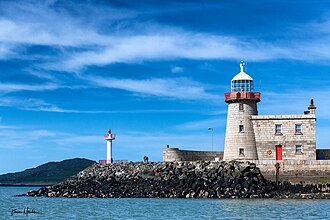
Howth Head Lighthouse Apparitions: History, Sightings & Visitor Guide
Perched on the jagged promontory above Dublin Bay, the lighthouse on Howth Head is a magnet for maritime stories and shadowed folklore. This practical guide separates what is recorded from what is told, catalogues the most persistent apparition reports, explains natural and social reasons behind sightings, and gives clear visitor advice for safely experiencing the headland after dark.
1. Why Howth Head lighthouse attracts stories: landscape, maritime history and cultural context
Howth Head commands a wide view of the Irish Sea and the shipping lanes that feed Dublin. Steep cliffs, changeable weather and a long history of coastal navigation combine to make the site dramatic and memorable. Human responses to that drama—mourning for lost sailors, fascination with lighthouses as liminal places, and the use of coastal routes by locals—create fertile ground for stories to form and persist.
Lighthouses sit at the boundary between land and sea, safety and danger. When people come to the head at dusk or in fog, senses are heightened: silhouettes, reflected lights and the constant surf all encourage narrative. That cultural context—combined with the very real maritime incidents that occurred along Dublin’s coast—helps explain why Howth Head has accumulated ghost stories over generations.
2. The lighthouse’s documented history: construction, keepers, shipwrecks and verifiable incidents
The lighthouse on Howth Head is part of the region’s maritime infrastructure and, like most lighthouses, has a documented administrative history. It was established to mark a dangerous stretch of coast and to assist navigation into Dublin Bay. For much of its working life the light was maintained by resident keepers and their families before automation and remote management became the norm.
Verifiable records for coastal areas typically include construction and maintenance logs, keeper rosters, and reports of shipwrecks or rescues filed with maritime authorities. Those documents confirm that the headland has been the location of navigational incidents and occasional wrecks—facts which have directly contributed to local memory and commemorations. Where I refer to “recorded” events below, I am referring to this sort of archival material rather than oral reports.
It is important to separate those administrative facts—existence of keepers, the lighthouse’s role in navigation, and documented maritime incidents—from the stories that grew around them. The former can be corroborated by official logs; the latter belongs to community memory and folklore.
3. Reported sightings and local legends
Local tradition offers several recurring apparition motifs connected to the lighthouse. These should be read as folklore unless tied to a contemporaneous record.
Phantom keeper on the cliff
One common tale describes a solitary figure seen pacing the cliff-top near the light, often imagined as a former keeper still watching the sea. This account appears in oral tradition and local storytelling; it is folklore rather than a documented sighting. The figure is sometimes said to vanish when approached.
The white-clad woman
Another persistent legend involves a woman in white, often linked in storytelling to a lover lost at sea. Such “white lady” motifs are widespread in coastal communities and are better described as legend shaped by grief and imagination than as verifiable phenomenon.
Phantom ships and drifting lights
Reports of ship-shaped lights or vessels appearing offshore and dissolving into mist are part of local maritime lore. These accounts are often collective—numerous people at different times describing similar effects—which is why they remain part of the headland’s storytelling landscape. In most cases the reports were not accompanied by official maritime records confirming a vessel in distress at that precise time.
Oral tradition plays a strong role in these narratives. Stories passed between fishermen, lighthouse families and visitors are adapted and embellished over time. That process is how the headland’s ghost stories have come to sit alongside documented facts.
4. Natural and human explanations
Many apparitions have plausible natural or social explanations. Atmospheric conditions produce optical effects—refraction, mirages and light scattering—that can make distant objects appear closer, distorted, or ghostly. Fog and low cloud often catch and spread lighthouse beams; reflected lights from vessels or shore installations can appear as isolated, moving points of brightness.
On clear nights distant ships, fishing boats and harbour lights can be mistaken for phantom vessels, especially when waves and haze obscure hull lines. Bioluminescent sea events can make the water itself seem to glow. Human factors—such as expectation, anticipation, alcohol, fatigue, or the power of suggestion within a group—also shape what people report.
Psychological phenomena like pareidolia (seeing patterns in random stimuli) and memory consolidation play a part too. When a mournful tale or local legend exists, observers are more likely to interpret ambiguous visual cues as confirmation of it.
5. Where to view safely: recommended vantage points on Howth Head
If you want to observe the lighthouse and the coast responsibly, choose established paths and official viewpoints rather than improvising near cliff edges. Public paths around the headland offer framed views of the light and the bay; these are the safest places to stop and take in the scene.
Access to the headland is via Howth village and the network of maintained trails. Look for designated parking areas within the village and follow signed footpaths. Avoid walking on eroded edges, and respect any fencing or warning signage. Local residents and land managers ask visitors to keep to paths to protect both people and breeding wildlife.
Cliff safety guidance is straightforward: stay well back from unstable edges, keep children and dogs under close control, wear suitable footwear, and be aware that rocks can be slippery when wet. If you want a prolonged view after dark, position yourself in an area with room to stand clear of foot traffic and avoid shining bright lights toward oncoming walkers.
6. Best times to visit and what to bring
For atmospheric conditions aim for clear nights with a calm sea for distant light visibility, or misty conditions for a more eerie mood. Autumn and winter often bring dramatic weather and lower sun angles, but they are also colder and windier. For darker skies, choose a new-moon night or when the moon is low; for silhouette views, arrive shortly before sunset.
Practical kit for a night visit: warm, layered clothing; a reliable headlamp or torch with a red-light mode to preserve night vision and to avoid dazzling others; waterproof outerwear and sturdy shoes; a charged phone; and a small first-aid kit. Bring binoculars if you want to study offshore activity from a distance, and always check tide and weather forecasts before you go.
7. How a guided tour adds value
A guided Haunted Hidden Dublin tour offers several advantages for visitors curious about Howth Head’s coastal legends. Guides bring local knowledge that separates archive-backed facts from folklore and storytelling, and they can point out safe, accessible viewpoints that maximise the landscape’s atmosphere without compromising safety.
Tours provide context—linking the headland’s maritime history to wider Dublin ghost narratives. If you want a longer experience, our walks weave together coastal stories with city-based legends such as the Phantom Trams of Old Dublin, Connolly Station phantom porter stories, and Dún Laoghaire Harbour Apparitions to create a fuller picture of Dublin’s dark-history landscape.
For private groups or tailored experiences we offer customised outings that can include Howth Head as part of a coastal dark-tourism route. These private options are ideal for groups wanting a focused experience with dedicated safety supervision and bespoke storytelling.
8. Responsible visiting, local contacts and nearby sites for a longer dark-history walk
Responsible visiting starts with respect for residents, wildlife and the landscape. Keep noise down, take all litter away, avoid disturbing nesting birds, and follow posted guidance from local authorities. If you encounter someone in difficulty on the cliffs, contact local emergency services or the coastguard rather than attempting a risky rescue yourself.
For visitors interested in extending a haunted or historical itinerary around Dublin, consider pairing a trip to Howth Head with other well-known local narratives. For harbour-related apparitions see Dún Laoghaire Harbour Apparitions. For urban rail and station stories see Connolly Station phantom porter stories. For city-centre mood walks explore Phantom Trams of Old Dublin or the city gardens and neighbourhoods described in Rathmines After-Dark and Iveagh Gardens Ghostly Sightings. These linked walks help place Howth’s coastal legends within a broader map of Dublin’s haunted places.
FAQ
Are the Howth Head lighthouse apparitions based on documented historical events?
Some elements of the headland’s story—such as the lighthouse’s role in navigation, the presence of lighthouse keepers in the past, and recorded maritime incidents—are documented in official records. Apparition reports, however, generally come from oral tradition and eyewitness accounts; they belong primarily to folklore unless corroborated by contemporaneous documentation.
Can visitors safely view the lighthouse and coastal cliffs at night?
Yes, provided visitors use established paths and viewing areas, follow signage, take appropriate clothing and lighting, and stay well back from cliff edges. Guided tours add an extra layer of safety and local knowledge for night visits.
When is the best time of year or night to experience atmospheric effects at Howth Head?
Atmospheric effects can be striking in autumn and winter when weather is changeable and seas are active, but clear, calm nights also offer excellent visibility of distant lights. For dramatic skies, arrive around sunset; for true darkness, choose a new-moon night. Always check local forecasts before you go.
Does Haunted Hidden Dublin offer guided or private tours that include Howth Head and its lighthouse legends?
Yes. Haunted Hidden Dublin runs guided walks that contextualise Howth Head’s coastal legends within wider Dublin hauntings, and private group tours can be arranged to include the headland as part of a bespoke coastal route. To book or enquire, visit our tours page or contact us about private group options.