
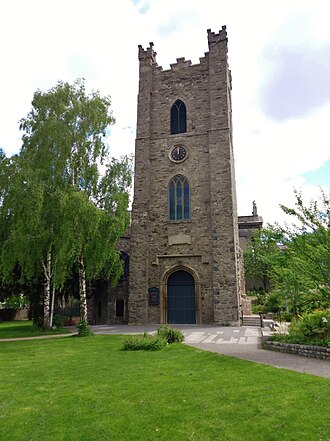
St Audoen’s Church: Unexplained Stories, History & Evening Visit Guide
St Audoen’s Church sits at the edge of Dublin’s medieval core, its weathered stone and narrow churchyard drawing curiosity when the sun dips low. For visitors and locals alike the building functions on several levels: an active place of worship, a surviving medieval landmark, and a focus for folklore and unexplained stories that gather in the twilight. This guide separates what is documented in archives from what lives in oral tradition, summarises reported incidents, and gives practical advice for anyone planning an evening visit.
Book a Haunted Hidden Dublin evening tour to hear the full stories of St Audoen’s and other haunted churches — reserve your spot now: https://www.hiddendublintours.com/tours/
Quick historical overview: documented origins, architecture and key recorded events
Documented records show St Audoen’s as Dublin’s longstanding parish church with medieval origins. The fabric of the building, its footprint and many architectural features point to a medieval foundation and later alterations that reflect centuries of continuous use. Surviving records and architectural surveys note repairs, restorations and the parish role the church has played in civic and spiritual life.
Inside, the layout and masonry tell a story familiar to many old urban churches: a blend of original work and later additions made to accommodate changing congregations and needs. Much of what we accept as fact about the church comes from wills, parish registers and municipal records held in Dublin archives, along with expert studies of the building’s fabric.
What’s documented vs. what’s legend: how to tell archival fact from oral tradition
It helps to make a clear distinction between archival documentation and the folklore that accumulates around old sites.
Documented history
Documented history is what appears in primary sources such as parish registers, legal records, architectural surveys and contemporary newspapers. These records can confirm the church’s continuous use, records of burials, repairs and official events. When researchers cite parish minutes or municipal ledgers, those are the elements you can reasonably rely on.
Local folklore and legend
Folklore consists of oral stories, popular retellings and evolving anecdotes passed between generations. These often contain dramatic details—apparitions, unexplained sounds, or moral tales—that are compelling but not always verifiable. Legends rarely appear in primary archives, and when they do, it is often as anecdotes recorded decades after the events they describe.
Practical tips for distinguishing them
Look for documentary markers: named documents, quoted registers, or contemporary reporting. Treat vivid, detail-rich accounts without documentary anchors as folklore unless corroborated. Local historical societies and published architectural surveys are good intermediate sources for cross-checking popular claims.
Reported unexplained incidents and local folklore
St Audoen’s features in a number of local stories that have circulated for decades. Common themes include unexplained noises in the churchyard at night, reports of shadowy figures seen near the tower, and accounts of fleeting cold spots experienced by visitors. These narratives are repeated in oral storytelling and occasionally in local media accounts of “odd” events.
Many of these stories draw on familiar motifs — lost souls, watchful presences among gravestones, and inexplicable lights — that appear around older churches across Ireland. Such motifs often reflect the churchyard’s role as a repository of memory and loss, and the natural atmosphere of a stone building after dark: echoes, settling noises, and the play of light and shadow.
Eyewitness accounts and credibility
First-hand testimonies are important, but they vary in reliability. Accounts recorded immediately after an event, preferably with multiple independent witnesses, are stronger than stories that surface years later. Memory is malleable; in low light and heightened emotional states people can misinterpret ordinary stimuli.
When assessing eyewitness reports, consider these factors: how soon after the event the account was recorded, whether more than one credible witness reported the same phenomenon, and whether any physical evidence (such as contemporary photographs or noises recorded on devices) corroborates the claim. Many accounts remain anecdotal and gain force through repetition rather than independent verification.
Visiting St Audoen’s after dusk: access, safety, photography etiquette and respect
St Audoen’s is still a sacred site and a part of an active community. Access after dusk may be limited and subject to parish or municipal rules, so check opening hours and restrictions before you go. Unauthorised entry into the church or graveyard is not appropriate and can be unlawful.
Practical safety advice for evening visitors: use a reliable torch, stay on paved paths, wear appropriate footwear for potentially slippery stone, and be mindful of low light around headstones. Travelling in small groups is safer and reduces the risk of accidental damage to fragile features.
When it comes to photography and filming at night, ask permission if you plan to use a tripod or lighting that could affect worship or the neighbourhood. Respectful behaviour includes avoiding loud conversations, not trampling grave markers for a “better shot,” and following any instructions from caretakers or stewards.
How St Audoen’s features on Haunted Hidden Dublin tours
On Haunted Hidden Dublin evening walks we treat St Audoen’s with both curiosity and respect. Our guides separate documented facts from folklore, signalling when an item is sourced from archival records versus when it is a local tale. Guests hear a curated selection of stories—some documented, some legendary—framed with context about why such legends arise.
Typical stops include an exterior tour of the church and churchyard where guides discuss architectural features, parish history and the oral traditions connected to particular spots. Guides also point to wider themes that tie the site to other nearby locations with similar reputations, such as Kilmainham Gaol’s after-dark legends and the haunted narratives surrounding other Dublin landmarks like Rathfarnham Castle and Malahide Castle.
Book a Haunted Hidden Dublin evening tour to hear the full stories of St Audoen’s and other haunted churches — reserve your spot now: https://www.hiddendublintours.com/tours/
Conservation and community: preserving the church while exploring its stories
Old churches require sensitive stewardship. Conservation is often overseen by the parish, supported by local heritage groups and, in some cases, municipal bodies. Community members rightly expect visitors to act responsibly: avoid touching fragile stonework, keep noise to a minimum, and follow guidance given by caretakers.
Tour operators and visitors can support preservation by following best practice for donations and contactless payments, and by consulting resources that explain respectful behaviour on night walks. For guidance relevant to Dublin night walks, consider reading Contactless Tips & Donation Best Practice for Dublin Night Walks to help minimise disturbance while contributing to local upkeep.
If you are organising a private or group visit, Haunted Hidden Dublin can arrange tailored experiences; see our private groups page for details on group bookings and bespoke tour options: Private groups and bookings.
Related places to include on your ghost-aware itinerary
St Audoen’s sits within a network of historic Dublin sites often visited on themed walks. For those extending a night of exploration, consider pairing your visit with guided walks or research into nearby haunted or historically charged places—such as visits that contrast the civic history of Kilmainham Gaol with its after-dark legends, or coastal stories at Howth Head. Useful companion reads on our site include pages on Kilmainham Gaol After-Dark Legends, Howth Head coastal ghost trail, Malahide Castle Ghost Stories and Rathfarnham Castle.
Responsible tourism helps preserve these sites for future generations. When you join a Haunted Hidden Dublin evening walk, you support guided, respectful interpretation that values both the documented history and the living traditions that surround landmarks like St Audoen’s.
Book a Haunted Hidden Dublin evening tour to hear the full stories of St Audoen’s and other haunted churches — reserve your spot now: https://www.hiddendublintours.com/tours/
FAQ
Is St Audoen’s Church actually haunted?
There is no definitive, verifiable proof that St Audoen’s is haunted in the empirical sense. The church is the focus of many oral traditions and contemporary reports of unexplained experiences. These stories are meaningful cultural expressions of the site’s atmosphere and history, but should be distinguished from documented events recorded in primary sources.
Can visitors enter St Audoen’s Church at night, and are guided night visits available?
Access at night can be limited and varies according to parish arrangements. Guided evening visits are available through organised tours such as Haunted Hidden Dublin, which operate with permission and provide context, safety and respect for the site. Always check opening times and tour availability before planning a night visit.
How do I separate folklore from documented history when reading about St Audoen’s unexplained stories?
Look for references to primary sources—parish records, architectural surveys, or contemporary accounts. Treat vivid narrative details without documentary support as folklore until corroborated. Tour guides and local historical societies can help clarify which elements are archival and which are traditional stories.
Are photography and filming allowed during evening visits to the church?
Photography and filming may be allowed during organised tours, but equipment that disturbs worship or other visitors (such as flash lighting, tripods or loud setups) may be restricted. Always ask permission from your guide or the site caretaker and follow any rules provided to minimise impact on the church and its community.