
Smithfield Market Alleys After‑Dark: Tales, History & Nightwalk Tips in Dublin
Smithfield’s market alleys after‑dark hold a particular mood: a mix of brick and cobble, low-watt lamps leaking pools of light, and the echo of a commercial past that still shapes the lanes. For visitors seeking atmosphere without sacrificing context, this guide separates what is recorded about Smithfield from the oral stories that gather in its shadows, offers a compact, safe night‑walk route with suggested pub and photo stops, and explains how to experience these alleys on a Haunted Hidden Dublin tour.
Book a Smithfield after‑dark walking tour with Haunted Hidden Dublin
Smithfield in brief — documented market and urban history (what we know)
Smithfield has long been identified as a market quarter within Dublin. Historically the area served as a focal point for trade in cattle, produce and goods, and over time its built environment evolved to include market sheds, warehouses and residential blocks tied to working life. In the modern era the district has experienced waves of change: conservation efforts preserving market structures sit alongside redevelopment projects that repurposed industrial buildings for new uses.
These broad developments are recorded in city planning notes, maps and municipal archives. If you want to pursue verifiable records, municipal archives, local libraries and the collections used by professional tour writers contain the primary material that underpins the “what we know” section of Smithfield’s history.
After‑dark atmosphere: how lighting, architecture and market remnants shape stories
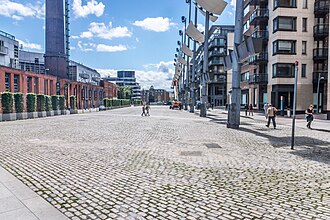
At night, Smithfield’s character is shaped by physical features more than by a single event. Narrow alleys and service lanes funnel sound; cobbles and loading bays remind you of the market trade that once dominated; brick façades, ironwork and shuttered storefronts frame sightlines that are easily misremembered or reinterpreted.
Street lighting here tends to be concentrated in the square and along major approaches, leaving some alleys in relative shadow. That interplay of dark and light heightens sensory detail: the creak of a shutter, the distant hum of traffic, reflections from wet stone. For storytellers and visitors alike, these elements create the conditions where folklore readily grows.
Tales and folklore: common legends associated with the alleys (oral tradition)
Label: oral tradition. The following are examples of local stories and visitor anecdotes commonly told about the market alleys. They are presented as folklore — passed on, embellished and shared — rather than verified history.
- Ghostly drovers: Tales of drovers and market porters returning along the old lanes, heard as footsteps and low shouting where no crowds now gather.
- Porter apparitions: Stories of a lone porter glimpsed in peripheral vision, associated with the sheds and loading bays.
- Childlike cries: Accounts of distant cries or laughter attributed to past residents and street‑working children, often heard near narrow courtyards.
- Soldier sightings: Oral reports of a uniformed figure at the edge of the square, sometimes linked in conversation to broader wartime memories.
These narratives are valuable because they shed light on community memory and the kinds of experiences visitors report. They are not, by themselves, documentary evidence; they are living stories that tell us how people relate to the place.
Separating myth from record: how to judge claims and where to find primary sources
Distinguishing folklore from verifiable fact requires simple source-checking habits. First, ask whether a claim is supported by primary records: archival newspapers, council records, parish registers or maps. Second, check whether multiple independent sources corroborate the detail. Third, be aware of common mechanisms that create or amplify legends: oral repetition, tourism storytelling, and the human tendency to fill gaps in knowledge with narrative.
To start research, consult municipal archives and contemporary newspapers for documented events. For approaches tailored to haunt histories and tour writing, see resources such as Archival Research for Dublin Haunt Histories: A Practical Guide for Tour Writers. For related local walking narratives, our archives-inspired trails — like the North Strand Evening Mysteries Trail: A Dark History Walk in Dublin — demonstrate how to balance record and story.
Practical night‑walk route: a short, safe loop with landmark touchpoints and pub stops
This suggested loop is compact, easy to follow and designed for safety and atmosphere. It assumes a starting point at Smithfield Square and returns there for a post‑walk stop.
- Start at Smithfield Square: gather here in the light and check your route. The square is a natural meeting point and is usually well lit.
- Enter the market alleys: take one of the small passageways that thread between the market sheds and mixed‑use buildings. Walk slowly; watch uneven cobbles and kerbs.
- Pause at a courtyard or arch: these are great photo spots. Shoot a few frames using slow shutter speeds or higher ISO rather than flash to retain mood and respect residents.
- Loop onto the adjoining main street: rejoin a larger thoroughfare to return to the square while seeing the area from a different angle.
- Finish at a pub near the square: choose from traditional pubs and newer bars that line the approaches. These venues make good places to debrief, warm up and ask locals for their versions of stories you’ve just heard.
Suggested photo stops: alley entrances, preserved market facades and lamp‑lit courtyard corners. Suggested pub stops: pick an establishment visible from the square or main approach so you avoid backtracking or wandering less lit lanes. Keep noise moderate and be mindful of closing times.
Visitor tips: safety, photography, accessibility and respectful behaviour
Safety: stick to lit streets and main routes when alone, travel with friends if possible, and keep valuables close. Let someone know the route if you are exploring independently late.
Photography: use a small tripod or steady your camera on a wall for long exposures. Avoid invasive flash photography in residential courtyards or inside pubs without permission. Night portraits work well with ambient lantern and window light.
Accessibility: some alleys have uneven surfaces and small steps. Many streets around the square are level and suitable for most visitors, but check in advance if you need a fully step‑free route.
Respectful behaviour: these are living neighbourhoods. Do not trespass into private courts or service ways, avoid loud music, and ask permission before filming or photographing people close up. If a doorway or gate is locked, treat it as private.
How to experience it with Haunted Hidden Dublin — tour options, group bookings and what to expect
Haunted Hidden Dublin offers guided nightwalks that pair researched facts with local folklore so you get both context and atmosphere. Tours balance documented material and oral tradition, narrated in small groups by guides trained to separate record from legend. If you prefer a public evening walk, you can join one of our scheduled tours; if you are planning for a private event, we also arrange bespoke group bookings tailored to your interests.
Expect a combination of historical background, carefully told legends, and practical guidance for safe exploration. Our guides sometimes point to comparative sites and wider city narratives — for readers who enjoy related explorations, see pieces like Phibsborough After‑Dark: Tales, Hidden Alleys & Night Walks in Dublin and the Clontarf Castle spectral legends and visitor tips for another layer of Dublin context. For landscapes further afield that blend ruin and story, consult our guide to the Hellfire Club ruin ghost guide Dublin: a visitor’s history, legends & tour tips.
Book a Smithfield after‑dark walking tour with Haunted Hidden Dublin
If you’re organising a group or a private event, we provide tailored itineraries and specialist guides — find group options here: Book a Smithfield after‑dark walking tour with Haunted Hidden Dublin (private/group bookings).
FAQ
Is it safe to walk the Smithfield alleys after dark?
Generally yes, if you follow common-sense precautions: stick to lit routes, avoid isolated yards, wear sturdy shoes for cobbles, and travel with others when possible. The guided tours operate with safety in mind and take practical routes designed for after‑dark conditions.
Are the Smithfield stories historical facts or just local legend?
Many stories are oral tradition: memorable and meaningful but not necessarily documented. Some claims are rooted in fact and can be verified through archives; others are the product of community memory, tourism storytelling and retelling. Our tours highlight the distinction between the two.
Can I join a public after‑dark walk or should I book a private group tour?
You can do either. Public tours are a great way to join other visitors and hear a range of stories; private group tours offer flexibility for time, focus and accessibility needs. Book public slots online or contact us for private arrangements.
What should I bring or avoid when doing a night tour in Smithfield?
Bring comfortable footwear for cobbles, a charged phone for maps and photos, and a small torch if you tend to feel uneasy in dim lanes. Avoid overtly valuable items on display, excessive noise in residential areas, and trespassing into private courtyards.