
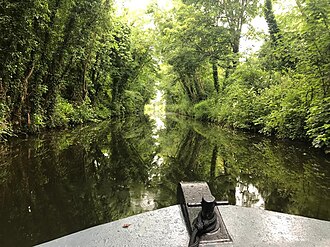
Royal Canal Eerie Crossings Trail — A Dark History Walking Guide
The Royal Canal cuts a quieter line through Dublin than the busier Grand Canal, and after dark its towpaths, locks and low bridges take on an almost theatrical stillness. This guide is for visitors who want a compact evening route that mixes industrial and social history with the local folklore that gathers around the canal’s crossings. Whether you walk alone, with friends, or later join a guided group, this piece maps a sensible route and makes clear which stories are recorded and which belong to legend.
Quick practicals: access, timing and safety
Best access points for an evening walk are where the canal meets public transport: Broombridge / Cabra side for the northwest approach and Phibsborough/Broadstone for a shorter city-centre loop. Aim to arrive after dusk but before late night for the most atmospheric light and reasonable footfall.
Transport: the Luas and local bus routes reach parts of the canal; Broombridge is served by rail. Wear sturdy shoes—the towpath can be muddy after rain—and bring a small torch with a red filter if you want minimal disruption to the ambience.
Safety: the canal is public and generally safe in well-trafficked stretches. Stick to lit routes when alone, avoid private property and fenced areas, and keep to the towpath or public bridges. If you plan a night walk, consider joining a small-group tour for local guidance and company.
A short history of the Royal Canal and its crossings
The Royal Canal was built to link Dublin to inland towns and the Shannon; its construction involved large crews of labourers, engineers and local contractors. The canal’s line through Dublin created a series of new crossings—bridges, swing bridges and locks—that became focal points for trade and neighbourhood life.
Documented records from the canal’s construction and operation show the usual hazards of heavy engineering: difficult labour, occasional accidents and the economic booms and busts that reshaped adjacent streets. As the city’s transport patterns changed, some sections fell into disuse before later restoration and amenity improvements changed the canal again into a recreational corridor.
Eerie Crossings: six must-see bridges and locks along a compact evening route
Start at the northwest edge and loop gently toward the city. For each stop below you’ll find a brief location note, the documented history and the local lore that collects there. “Documented History” highlights what’s recorded; “Local Lore” flags atmosphere, ghost stories and neighbourhood myth.
1. Broom Bridge (northwest approach)
Location: Where the canal meets the city outskirts; easy to reach by rail.
Documented History: Broom Bridge is historically notable as a longstanding crossing on the Royal Canal. It sits at a point where the canal narrows and walkers can see the towpath and waterline clearly. The bridge’s structure and the nearby embankments reflect the canal-era engineering that reshaped this part of Dublin.
Local Lore: Because of its quiet setting, locals speak of strange sounds on still nights—voices carried by water and the odd figure glimpsed beside the towpath. These tales are oral tradition rather than recorded incidents, and they often blend memories of labourers with later urban myth.
2. Broadstone Basin Bridge and depot area
Location: The basin and former depot where the canal once fed urban transport and goods movement.
Documented History: Broadstone was a working hub when the canal supported freight and passenger conveyance. The basin and nearby railway and postal depots grew up around canal traffic; today the area retains industrial arches and converted buildings that echo that past.
Local Lore: Stories here often celebrate the silhouette of warehouses at night and claim the sight of a lone worker who never makes it across the bridge. These are typical of canal folklore—atmospheric, repeating themes of loss and labour—but not traceable to single documented events.
3. Phibsborough Road Bridge
Location: Where the canal crosses under a busy road—good for contrast between traffic noise and canal hush.
Documented History: The Phibsborough crossing has functioned as a city link for decades. It illustrates how the canal had to adapt to increasing road traffic, leading to strengthened bridgework and changes to towpath access.
Local Lore: Night-walkers report an uncanny drop in temperature beneath the arch and occasional reflections that look like faces on the water. These sensations are common in canal narratives and speak more to human perception in low light than to verifiable phenomena.
4. Cross Guns neighbourhood crossing
Location: A low-arched bridge near a long-standing pub and residential streets.
Documented History: Crossings near community hubs like pubs were important meeting points; historical records show these bridges were practical crossing points for workers and families. The built environment here still shows traces of that mixed residential-trade character.
Local Lore: Legends here often involve bar-regulars and canal apparitions tied to sudden tragedies. Such tales have a kernel of social memory—fear of accidents and the canal’s role in difficult histories—but should be read as folklore shaped by storytelling rather than strict record.
5. Richmond Road / Lock area
Location: A lock or change in water level where the canal’s working mechanisms are visible from the towpath.
Documented History: Locks are technical features with well-documented maintenance histories; they were sites of labour and occasional mishap. The presence of a lock explains the change in soundscape—water flowing, planks creaking—and was central to canal operations.
Local Lore: Locks attract tales of drowned objects and unseen currents dragging at garments. These stories often reflect real hazards—strong currents and cold water—but the narrative embellishment is folklore rather than catalogued incident in municipal records.
6. Ashtown / western end crossing
Location: The western edge of the city corridor, where the canal broadens and the surroundings are quieter.
Documented History: The western crossings marked the transition from urban to rural canal use and were important for goods leaving and entering the city. Historical maps and municipal documents show how these crossings connected lanes and farm access to the canal’s trade route.
Local Lore: At the city’s edge, stories turn inward—houses watching the canal, lights moving without owners. These are part of the canal’s oral folklore, shaped by generations who lived with the water’s changing moods.
Interpreting the stories: separating folklore from recorded events
Folklore and documented history overlap around the Royal Canal because both respond to the same features: dark water, sudden drops in temperature, narrow bridges and a history of hard labour. To separate them, note this quick checklist:
- Documented History: appears in municipal records, newspapers, maps or engineering reports. It refers to construction, maintenance, legal changes and recorded accidents.
- Folklore / Local Lore: lives in oral history, repeated anecdotes and storytelling. These accounts explain atmosphere and community memory but are not formally recorded.
Understand that legends persist because they answer emotional needs—grief, wonder, caution—and because canal landscapes encourage the imagination. Respect stories as cultural material while checking claims against archives or local history resources when accuracy matters.
Photography, lighting and ambience
For moody shots bring a tripod and use long exposures; the water reflects light beautifully. Small LED lights with warm filters help light faces without washing out the scene. Never enter fenced or private areas for a shot.
Respect wildlife and local residents: keep noise down, and avoid bright flash that displaces animals or alarms people. If you plan to photograph on a guided walk, ask your guide for the best vantage points and any restrictions.
Group and private options with Haunted Hidden Dublin
Haunted Hidden Dublin runs small-group night walks that connect the canal crossings into a single narrative, balancing history and folklore. Guides point out documented incidents, explain industrial context and separate verifiable events from legend. Group tours are intentional about safety and atmosphere, keeping groups compact and moving at a pace suited to night-time walking.
For private groups and tailored walks—school groups, corporate nights or private parties—see the group bookings page to arrange a bespoke route and timing: Private group tours and bookings.
Further reading, sources and where to learn more responsibly
To deepen context before a walk, balance local storytelling with historical overviews. If you enjoyed canal lore, you might also like our pieces on other atmospheric Dublin walks, such as Grand Canal After‑Dark Secrets Trail — A Dark History Walking Guide or the city-centre statue and ghost routes like Merrion Square Statues & Ghost Stories — A Visitor’s Guide. For broader neighbourhood playbooks, see our guides to Rathmines Haunted Mansions and to other uncanny lanes such as Marrowbone Lane: Dark History and Uncanny Tales.
If you run a blog about Dublin folklore or want to drive bookings, tips that have helped our guides are collected in Bootstrapped marketing ideas for a Dublin ghost blog to drive tour bookings.
FAQ
Is the Royal Canal crossings trail safe to walk at night?
Generally yes, on well-lit, trafficked stretches. Use common-sense precautions: walk with others, keep to public towpaths and bridges, and avoid isolated or fenced areas. Joining a small-group tour adds local guidance and visibility.
When is the best time to visit for atmosphere and minimal crowds?
After dusk but before very late night is ideal—this captures the canal’s mood without the smallest hours’ risks. Weeknights tend to be quieter than weekend evenings.
Can I join a guided Haunted Hidden Dublin tour that covers the Royal Canal crossings?
Yes. Haunted Hidden Dublin offers small-group and private night walks that include the canal crossings. Bookings and schedules are available here: Book a Haunted Hidden Dublin guided walk along the Royal Canal — small-group and private options available: https://www.hiddendublintours.com/tours/
Are the ghost stories along the canal based on verified events or local legend?
Both. Many stories are oral tradition or neighbourhood legend, useful for atmosphere and community memory. Others grow from recorded events—industrial accidents or notable incidents—that have then been retold and embellished. Our guides make clear which is which during tours.