
River Poddle Ghost Walk Trail: Folklore, History & How to Explore
The River Poddle is one of Dublin’s lesser-known waterways but it has shaped the city’s industry, streets and stories for centuries. For walkers who like their history with a hint of the uncanny, tracing the Poddle offers both visible relics of Dublin’s past and a rich seam of local folklore. This guide separates what the records show from what tradition remembers, and maps a walkable ghost trail that is suitable for curious visitors and small groups.
Book the River Poddle ghost walk trail with Haunted Hidden Dublin — reserve your spot now
Poddle in the records: documented history of the river
Documented history treats the Poddle as a working river. For centuries it supplied water to mills, breweries and tanneries located where the city expanded outward from medieval streets. Engineers and civic records describe how the Poddle’s flow was diverted, dammed and channelled to power small industries and to feed parts of the city’s early water supply.
From medieval times through the industrial era the Poddle was manipulated to meet urban needs. Sections were culverted as the city densified; others ran in open channels alongside roads to serve workshops and gardens. Remnants of mill walls, old sluices and irregular street lines are the kinds of physical evidence historians point to when reconstructing its course.
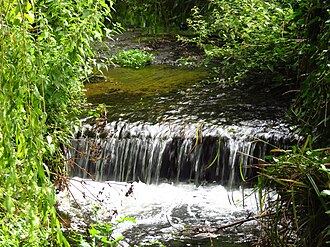
Archaeological and civic surveys make it clear: much of the Poddle now runs underground. Where it does appear above ground, the river is typically narrow and shallow — enough to have influenced place-names and property boundaries but not a great urban river in scale.
Local legends and ghost stories tied to the Poddle (Folklore)
Folklore: The river has attracted stories that are oral and atmospheric rather than part of the official record. Local tales often feature drowned figures glimpsed at dusk, spectral lights over low bridges, or voices that carry oddly along the banks. These accounts circulate in neighbourhood memory and pub conversation rather than in municipal archives.
Oral tradition tends to grow around visible thresholds: the places where a stream disappears into a culvert, or where an old weir remains. Such liminal spots invite haunting narratives because they are both familiar and secretive. In the case of the Poddle, folklore sometimes overlaps with social history — stories of accidents, drownings or tragedies are retold and darkened with each retelling.
It’s important to label these as folklore. They are meaningful for cultural history and for the atmosphere of a ghost walk, but they are not the same as verified events. Haunted Hidden Dublin frames these tales as local memory: evocative, sometimes contradictory, and often reflecting wider anxieties about city life in earlier centuries.
The River Poddle ghost walk trail: a step-by-step visitor route
This route is designed as a walking trail that follows where the Poddle is visible and where its presence is archaeologically or historically legible. Expect a 75–100 minute guided experience at a relaxed storytelling pace. The path includes short on-road sections and a few uneven surfaces; most of it is accessible on foot.
Start: St. Patrick’s precinct (meeting point)
Begin near the cathedral precinct where the Poddle’s historical course is easy to introduce. This is a convenient meeting place with public transport links and a natural place to explain the river’s role in Dublin’s early water management.
Stop 1: Open channel and culvert mouths
Walk to the nearest visible stretch or culvert mouth. Here you can show how the river turns from open channel to hidden flow. Guides typically use this stop to contrast civic records with the way locals talk about the river.
Stop 2: Industrial remains and mill sites
Continue to an area where former millworks or brewery-related architecture survives. These fragments illustrate the verified industrial uses of the Poddle. Expect to discuss sluices, mill races and how water-power shaped neighbourhood development.
Stop 3: Low bridges and threshold spots
Pause at a low bridge or where the river loops near an old street boundary. These liminal spaces are where folklore concentrates. Guides tell a selection of locally collected tales here, each clearly introduced as oral tradition rather than legal record.
Stop 4: Points where the river disappears underground
Finish at a place where the Poddle is known to be culverted beneath streets. It’s a strong concluding moment: the visible river gives way to unseen flow beneath modern Dublin, symbolising both loss and continuity.
Estimated time: 75–100 minutes. Terrain: mostly paved; some cobbles and narrow footpaths. Accessibility: the route can be modified to avoid steps, but parts are uneven. If you need accessible options, check with your guide when booking.
What you’ll see on the walk
Expect a mixture of architectural fragments, interpretive plaques, small open watercourses and street-level features that betray the Poddle’s course. Key types of sights include:
- Remnants of mill walls and industrial yards where water-power was used.
- Bridge parapets, culvert mouths and stone-lined channels.
- Plaques or local signage that reference the river’s historic role.
- Quiet domestic streets and alleys where the Poddle once defined boundaries.
Photographers will find atmospheric close-ups of waterlines, textures of old stonework and dusk shots at low bridges especially compelling. The tour also intersects themes covered in other Haunted Hidden Dublin routes — for instance, those interested in literary connections might enjoy pairing this trail with the Bram Stoker locations walk.
Safety, timing and weather
Night and dusk walks are atmospheric but require extra care. Use sensible footwear, bring a reliable torch for darker alleys, and avoid solitary exploration of secluded culvert mouths. Guides will manage group safety, keep to public paths and respect private property boundaries.
Weather in Dublin can change quickly. Dress in layers and carry waterproofs. If heavy rain is forecast the river can swell in low-lying areas; the guide may alter the route or reschedule for safety.
Respect is essential. Many of the most evocative spots are adjacent to private homes. Stay on public paths, be quiet in residential areas, and do not attempt to access fenced or locked sites.
Booking and tour options
Haunted Hidden Dublin runs small-group public departures and private guided options. Public walks are suitable for lone visitors and couples; small-group tours prioritise conversation and photography. Private bookings are also available for special events, corporate groups or tailored historical interests.
To join a scheduled public departure or to see current dates, availability and meeting points, please use the main booking page: Book the River Poddle ghost walk trail with Haunted Hidden Dublin — reserve your spot now.
If you are organising a private group, larger party or a bespoke event, we also offer tailored tours for up to small group sizes. For private bookings and group enquiries, visit our private groups page: Book a private River Poddle ghost walk for your group.
Pairing suggestions: those wanting a broader haunted Dublin experience often combine this walk with routes exploring haunted pubs, or with themed walks about darker neighbourhood histories such as the Dark History of Temple Bar. Researchers and enthusiasts planning fieldwork may also find practical advice useful in our budgeting and field research guide.
Practical tips before you go
- Arrival: Meet at the designated point near St. Patrick’s precinct 10 minutes before the start time.
- Group size: Public walks are limited to keep the experience personal; private bookings can be arranged for larger parties.
- Photography: Hand-held cameras and phones are fine. Please be mindful of residents and avoid intrusive flash in quiet residential spots.
- Children: Families are welcome, but the walk contains segments best suited to older children due to steps and low-light sections.
For a complementary atmospheric excursion on Dublin’s waterfronts, see our piece on Poolbeg Lighthouse sightings; for convivial post-walk conversation points, try our guide to haunted pubs in Dublin.
Book the River Poddle ghost walk trail with Haunted Hidden Dublin — reserve your spot now
FAQ
How long is the River Poddle ghost walk trail and how much time should I allow?
The guided trail typically lasts 75–100 minutes at a relaxed pace. Allow 90–120 minutes if you plan to take photographs, ask questions or linger at stops. Exact timings are provided at booking.
Are the Poddle ghost stories based on real events or are they folklore?
The ghost stories shared on the walk are primarily folklore — oral traditions, local recollections and atmospheric tales tied to the river’s liminal spots. The walk separates these stories from documented history and labels each accordingly during the tour.
What should I bring and wear for the Poddle ghost walk (lighting, footwear, photography rules)?
Wear sturdy, weather-appropriate footwear and layered clothing. Bring a small torch for dusk or night sections. Photography is welcome but be respectful of residents: no intrusive flash near homes, and do not access private property for shots.
Can I book a private River Poddle ghost walk for a group or special event?
Yes. Haunted Hidden Dublin offers private group bookings and bespoke walks. For enquiries and bookings for private tours, please visit the private groups page to discuss options and availability.