
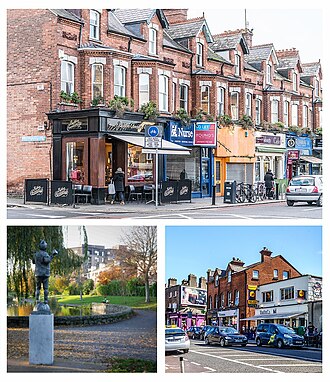
Rathmines Victorian Terrace Hauntings: A Visitor’s Guide
Rathmines is a district of Dublin where red-brick terraces and ornate bay windows recall a Victorian suburb grown from country lanes into a bustling urban neighbourhood. For visitors drawn to atmospheric architecture and local ghost stories, the terraces of Rathmines offer an evocative mix: well-documented urban development, occasional archival incidents recorded in newspapers and civic records, and a layer of folklore and eyewitness reports that has accumulated across generations. This guide separates the documented history from legend, offers a short self-guided route, practical advice for visiting, and explains how Haunted Hidden Dublin can deepen the experience with a guided tour.
Book your Rathmines ghost walking tour with Haunted Hidden Dublin
Why Rathmines? The rise of Victorian terraces and the neighbourhood context
Through the nineteenth century Rathmines transformed from dispersed rural holdings to a desirable suburb for Dublin’s expanding middle classes. Terrace houses—rows of narrow, multiple-storey dwellings with decorative cornices, iron railings and bay windows—were constructed to meet demand. The result is a coherent architectural character that reads as a stage set for history and, in the popular imagination, for hauntings.
Many terraces were designed for families with separate servants’ quarters and modest front gardens. The density of houses, combined with a long history of ordinary domestic dramas—sickness, accidents, private disputes—creates the ecological conditions where stories persist. Terrace living also means neighbours share walls and alleys; intimate knowledge spreads quickly and oral tradition thrives.
Documented history: architecture, notable residents, and archival incidents
Documented facts about Rathmines are useful context. The term “Victorian” applies broadly here to the mid-19th to early-20th century building boom. Surviving terraces display common period features—stuccoed doorcases, sash windows and decorative ironwork—that are recorded in architectural surveys and local conservation records.
Archival sources—such as city directories, property records, and contemporary newspapers—record occupants, business addresses and occasional incidents. These records show a pattern of typical urban life: births, deaths, small fires, legal inquests and property disputes. Some of these events, when they involved sudden or unexplained deaths, later became the kernel of ghost stories.
It is important to separate verifiable events from later embellishment. Where a coroner’s inquest or a newspaper report exists, it is a documented incident; where a story rests solely on oral repetition with no archival trace, it should be treated as folklore.
Reported hauntings and eyewitness accounts — what’s recorded and what’s hearsay
Stories associated with Rathmines terraces mostly fall into three categories: eyewitness accounts from residents or passersby, retellings in local oral tradition, and embellishments added by contemporary storytellers. Eyewitness reports often describe cold spots, unexplained noises, and occasional shadowy figures. These reports are valuable as lived experience but are not the same as documentary proof.
Local newspapers and community magazines have periodically published personal accounts. Such pieces capture the atmosphere and the emotional truth of haunting narratives without providing forensic evidence. In many cases, a reported sighting can be traced to everyday sources—old heating systems, drafts in period houses, or the natural play of light on ornate windows.
Folklore and legend sometimes attach a specific backstory to a terrace: a tragic death, a wronged lover, or a servant who never left. Where these claims are supported by archival records—death notices, inquests or legal documents—they gain credibility. Where they are not, they remain part of the living folklore of the street.
Self-guided short route: map, key terrace houses, timing and photo spots
This short self-guided loop is designed to be respectful and entirely public—no entry onto private property is required. Plan a 30–45 minute walk that focuses on three types of terrace settings commonly found in Rathmines: the long shopping-street terraces, intimate crescents off the main road, and small lodges or mews backing onto rear lanes.
Start in the village centre and follow the main commercial terrace to take in shopfronts with upper-floor living quarters. Walk into one of the residential side streets to view a classic row of red-brick terraces with bay windows and cast-iron railings. Finish with a stroll by a quieter back lane or mews where service entrances and narrow courtyards add a different nocturnal ambience.
Best photo spots: capture facades during the golden hour when warm light brings out brick tones; at dusk, streetlamps create long shadows and highlight ironwork; early morning offers emptier pavements and soft light through bay windows. Keep to pavements and crossings; avoid blocking driveways or standing on private steps.
When to visit: best times, streetlighting, weather and safety considerations
Late afternoon to early evening is ideal for atmosphere—long shadows, warm light and active street life. After dark the terraces take on a more cinematic quality, but be mindful: side streets can be dimly lit compared with main roads. Rathmines is generally a busy suburb, but standard personal-safety precautions apply: travel in groups if you plan to explore after dark, carry a charged phone, and let someone know your route.
Weather in Dublin can change rapidly. Bring waterproof layers, sturdy footwear for uneven pavements, and a small torch or headlamp if you plan to photograph at night. Public lighting is usually adequate on main streets; if a lane looks unlit and quiet, view it from the main road rather than approaching alone.
Practical tips: accessibility, permissions for private property, and respectful behaviour
Accessibility varies. Many terraces have steps and narrow doorways typical of Victorian design—if mobility is a concern, stay on level pavements and check access in advance. All terraces are private residences; do not attempt to enter properties, peer through windows, or trespass into gardens or courtyards.
Respectful behaviour matters. Residents live in these homes and are entitled to privacy. Avoid loud behaviour, don’t block entrances, and do not touch railings or gates that advertise private property. If you meet locals, a polite greeting goes a long way—many are happy to share a local anecdote, but others will prefer not to be disturbed.
How to experience Rathmines with Haunted Hidden Dublin: public and private tour options
For those who prefer context and storytelling guided by experienced local narrators, Haunted Hidden Dublin offers public tours that weave architecture, archival facts, and eyewitness accounts into a single evening. A guided walk helps distinguish verified history from folklore and offers an informed perspective on why certain stories endure.
We also provide private group tours for groups who want a focused exploration of Rathmines and its Victorian terraces. Private tours can be tailored to emphasize documented history, audio-led dramatization, or a balanced mix that highlights both archives and oral tradition. If you are organising a group, see our private group booking options.
Book your Rathmines ghost walking tour with Haunted Hidden Dublin
If you are organising a private event or a tailored exploration of Rathmines, consider a group booking: Book private group tours focused on Rathmines and its Victorian terraces.
Further reading and source notes — distinguishing archives, newspapers and oral tradition
If you want to dig deeper, consult three complementary sources. First, archival documents and property records provide the backbone of verifiable history: building dates, ownership, and formal incidents. Second, contemporary newspapers and civic reports sometimes contain notices of inquests, fires or court actions; these are useful for corroborating specific claims. Third, oral tradition and community storytelling give texture and meaning but are not the same as documentary proof.
For readers interested in branching out to nearby haunted sites and different formats of storytelling, we recommend exploring our related features on local hauntings and tour development. For atmosphere in a park setting, see our Iveagh Gardens guide. For tips on producing evocative audio for walks, our piece on scripting short audio dramatisations is practical and instructive. If you enjoy riverside ghost trails or micro-haunt self-guides, our Liffey Bridges and Bachelors Walk to Mountjoy Square guides offer different tonal approaches. Finally, check our seasonal pricing notes to know when tours run and why prices vary.
Iveagh Gardens Moonlit Apparitions: A Visitor’s Guide to Sightings & History
Scripting Short Audio Dramatisations of Dublin Hauntings for Walking Tours
Liffey Bridges Dusk-to-Dawn Ghost Trail — A Riverside Walking Guide
Bachelors Walk to Mountjoy Square Micro-Haunt Trail — Self-Guided Dark History Walk
Seasonal Pricing for Dublin Ghost Tours — When to Book & Why Prices Change
Whether you arrive with a sceptical eye for archival proof or a taste for spooky atmosphere, Rathmines’ Victorian terraces reward paced attention. The houses themselves are the best witnesses—architectural records tell the documented story, while the memories of residents and visitors keep folklore alive. If you want a guided, contextualised visit that separates fact from legend while delivering atmosphere, we’d be glad to lead the way.
Book your Rathmines ghost walking tour with Haunted Hidden Dublin
FAQ
Are the Rathmines Victorian terrace hauntings based on documented events or local folklore?
Both. Some stories originate from documented events—coroner’s inquests, newspaper reports, and civic records—while others are oral traditions with no archival trace. We clearly separate verifiable incidents from folklore when we discuss specific claims.
Can I do a self-guided walk to see the haunted terraces, or should I join a guided tour?
Yes, you can do a short self-guided loop to view exteriors and experience the atmosphere. A guided tour adds historical context, points out archival evidence, and helps distinguish fact from legend—ideal if you want a deeper, evidence-based narrative.
Is it safe to visit Rathmines at night to look for hauntings?
Rathmines is a lively suburb, but standard precautions apply. Travel in groups after dark, carry a charged phone and torch, stick to well-lit streets, and avoid trespassing into private property or quiet, unlit lanes alone.
Do you offer private group tours focused specifically on Rathmines and its Victorian terraces?
Yes. We offer tailored private tours that focus on Rathmines’ terraces, combining documented history, eyewitness accounts and atmospheric storytelling. For bookings and details, see our private group tours page.