
Phoenix Park Odd Legends: Strange Stories, Verified History & Visitor Tips
Phoenix Park is one of Europe’s largest enclosed urban parks and a place where formal monuments, a presidential residence, wild deer and centuries of neighbourhood memory meet. That mix—grand, public history rubbed up against lives lived at the edges—creates the ideal soil for odd legends: strange sightings, whispered tales about the park’s more shadowed moments, and local stories that stubbornly resist tidy verification. This guide pairs verifiable events and surviving structures with the odd folklore you’ll hear from Dubliners and other visitors, and gives practical walking tips so you can experience both history and story for yourself.
Quick facts & how to visit
Phoenix Park lies northwest of Dublin city centre and is accessible from multiple entrances, including the main gates at Parkgate Street and the gate near Heuston Station. It is open year-round; gates are normally unlocked from early morning until late evening, but some smaller access points may be closed at night.
Transport: tram and train links get you close (Heuston Station is a short walk away) and several bus routes pass nearby. The park is vast—plan for at least 90–120 minutes if you want to cover the highlights on foot.
Entrances to look for: the traffic-heavy Parkgate Street/Phibsborough side for quick access, the Victorian Radial Gate near the Wellington Monument, and Ashtown/Knockmaroon for quieter, more wooded sections.
Documented history with a darker edge
When separating legend from record it helps to start with the documented events. Phoenix Park’s most infamous recorded incident is the Phoenix Park Murders. In that attack two high-profile civil servants were killed in the park; the event had profound political ramifications in Ireland and Britain and remains a well-documented and studied crime in modern Irish history.
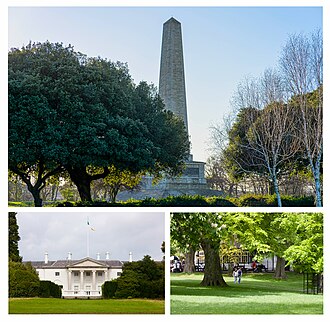
Other verifiable landmarks and events you can still see include Ashtown Castle, a restored medieval tower house that survives as a tangible reminder of earlier centuries of settlement on the park’s edges. The Áras an Uachtaráin grounds — the official presidential residence — and features like the Wellington Monument and the Papal Cross are modern markers of the park’s public life and ceremonial uses.
These are not the stuff of gossip: they leave material traces you can examine while you walk—stonework, plaques, formal avenues and boundary walls that document political, architectural and social history.
Local legends and odd sightings
Legend: the “lady in grey” at Ashtown. Folklore often clusters around old buildings and Ashtown’s tower house is no exception. Locals and passing walkers tell of a pale figure glimpsed at dusk near the ruins. These reports vary in detail and tone—some say a woman in period dress; others describe only a feeling of another presence.
Where to hear it: local guides, long-term residents and pub conversations around the park will mention the story; you’re most likely to hear it near the Ashtown area or from those who regularly walk the western paths.
Legend: strange lights near the River Liffey feeders. The Phoenix Park sits above a network of waterways and drainage that once fed Dublin. Occasional claims of odd, transient lights or reflections on small waterways are a recurring theme for walkers at dusk. These are often explained by trick-of-light, insects, or distant vehicle lights reflected in surface water.
Legend: animal presences and out-of-season deer sightings. The park’s large herd of wild fallow deer escapes easy explanation for many visitors; late-night accounts of animals appearing on formal avenues feed stories about “wild things” watching from the trees. In practice, deer are active at dawn and dusk; unexpected crossings can startle walkers but are not supernatural.
Legend: echoes of the past near Áras an Uachtaráin. Because the presidential grounds and perimeter walls are associated with national ceremony and security, they attract tall tales about unseen patrols, whispering figures and mysterious incursions. Reality here is often a mix of official activity, private security measures and public imagination.
How these stories travel: many legends persist because they function as conversation points on local walks, in pubs and on social media. They are part memory, part atmospheric interpretation and part tourist-friendly mystery.
Separating folklore from record
When you want to evaluate a story, start with physical evidence and contemporary reporting. Local newspapers and archives are good first stops for verifying major incidents; architectural surveys and museum records will confirm the age and function of buildings. For small-scale claims—sightings, lights, ephemeral sounds—ask for repeating patterns: how many independent witnesses, over what time span, and do accounts align on location and detail?
Be aware of common psychological and environmental explanations: low light, fatigue, echoing sounds and reflections on water can turn ordinary things into “odd” experiences. Cross-referencing with verified sources separates what’s historically recorded from what’s locally felt.
If you’re interested in the methodology behind researching hauntings and tours, our site includes practical pieces on fieldwork and costs—see articles like Budgeting Field Research for Dublin Hauntings and How to Price Dublin Dark Tours for operators and investigators. For other Dublin routes that combine folklore and history, the River Poddle Ghost Walk Trail and Poolbeg Lighthouse Sightings pieces offer useful models for investigation and visiting.
A short walking route to explore odd legends
This loop is walker-friendly and concentrated around the main attractions where history and stories overlap. Start at the Wellington Monument, follow the broad avenue toward the Papal Cross, loop past the Áras an Uachtaráin perimeter (view from public paths only), continue west toward Ashtown and return along the park’s northern rim. Total walking time: roughly 90–120 minutes at a relaxed pace.
Wellington Monument: the towering obelisk is a good orientation point. Look for adjacent plaques and the radial avenues that mark 18th- and 19th-century landscaping.
Papal Cross: a modern ceremonial marker that attracts stories about public rituals; listen for recollections from visitors who attended mass or civic events here.
Áras an Uachtaráin perimeter: observe the walls and gates from public paths and note how security and ceremony shape legend. Do not attempt to enter private grounds.
Ashtown: take the quieter western paths and allow extra time at the tower house. Pay attention to evening light and the sense of enclosure that encourages storytelling.
Practical visitor tips
Best time to visit: late morning to late afternoon offers the safest walking conditions and good light for photography. Dusk provides atmosphere but reduced visibility—stay on main paths and in groups if you go after dark.
Safety and respect: the park is public but parts border private residences and diplomatic grounds. Keep to public footpaths, obey signage, and keep noise levels down near houses. Deer are wild—do not feed or approach them. If you’re a photographer, use a long lens rather than approaching wildlife or private property.
Photography: the park has many open vistas and formal monuments; early morning mist can be very photogenic. Respect any temporary closures for events, security or conservation work.
Weather and gear: Dublin weather changes rapidly. Layer up, bring waterproofs, and wear comfortable walking shoes suitable for both paved avenues and grass paths.
Join a guided experience
A guided tour can make all the difference when you want context. Guides can point to documentary evidence, interpret surviving structures and separate well-attested history from local hearsay. They can also show less obvious vantage points and shorten your research time while preserving the atmosphere you came for. Book a Haunted Hidden Dublin walking tour to explore Phoenix Park’s odd legends — check available tours now.
If you’re organising a group or private visit, we also offer tailored tours for groups—consult the private groups page to discuss options and bespoke routes. Book private or group tours with Haunted Hidden Dublin.
FAQ
Are the Phoenix Park legends true or based on historical events?
Both. Some stories grow from documented incidents—the Phoenix Park Murders are a clear historical event—while many other tales are folklore: repeated eyewitness accounts, local memory and atmospheric interpretation rather than verifiable record. Treat each story on its merits and look for corroborating sources when possible.
Can I explore the park at night and see these odd sites safely?
Night visits are possible but require caution. Stick to main, lit avenues, avoid the immediate perimeter of private residences, and travel in groups. If you want a safe evening experience with context, consider a guided tour that operates after dark.
Which Phoenix Park locations are linked to the most famous stories?
Key locations include the public avenues near the Wellington Monument, the Papal Cross, the Áras an Uachtaráin perimeter and Ashtown Castle. These sites combine visible historic fabric with the kinds of spaces—towering monuments, enclosed ruins and long tree-lined drives—that encourage storytelling.
Do you offer guided or private tours that focus on Phoenix Park’s legends?
Yes. Haunted Hidden Dublin runs public walking tours that include Phoenix Park and can tailor private or group tours for deeper exploration. See available public tours at the main booking page and contact the group-tours page for private bookings.