
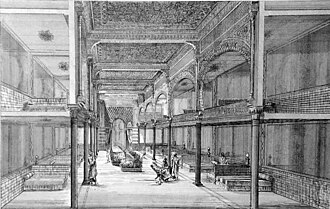
Old Dublin asylums occupy a particular place in the city’s urban memory: impressive brick buildings, high boundary walls and a complex social history that touches on care, charity, stigma and reform. This article walks you through what the archive record actually tells us about these institutions, how folklore and ghost stories grew up around them, what remains to be seen today and how to visit respectfully and safely.
Curious to explore Dublin’s darker past with an expert who separates documented history from legend? Book a Haunted Hidden Dublin walking tour to explore Dublin’s darker history with a knowledgeable guide.
Why old asylums matter: social history, urban change and why tourists should care
Asylums were more than isolated institutions: they shaped neighbourhoods, local labour markets and public health policy. They housed a diverse mix of people—those with chronic mental illness, long-term illness, the elderly without family support and people committed under social and legal pressures. Architecturally they offer a visible record of changing attitudes toward care: from small charitable houses to large purpose-built complexes with wards, laundries, chapels and infirmaries.
For visitors, these sites provide a tangible way to understand social history beyond sensational headlines. Seeing surviving buildings and their urban context helps explain why attitudes to mental health and institutional care changed over centuries.
A concise timeline of mental health care in Dublin (18th–20th century): laws, institutions and reforms — what the records show
Broadly speaking, Dublin’s recorded history of institutional mental healthcare traces three phases. In the 18th century there were charitable houses and private “pleasure” hospitals where the wealthy could be treated. The 19th century saw the development of larger public asylums intended to manage growing urban populations, combined with evolving medical language and standards of record-keeping. By the 20th century attitudes shifted: medical professionalisation, new treatments and, later, moves toward community care and deinstitutionalisation.
When reading histories, look for primary-source evidence that underpins claims: admission and discharge registers, annual reports, local newspapers, death registers and legislative records. These sources give the clearest picture of how many people were admitted, the range of diagnoses recorded at the time, staffing levels and public debate about institutional care.
What survives today: the physical remains and how to identify authentic sites versus later developments
Many former psychiatric institution buildings survive in altered form: some converted to housing, offices or educational use; others left partly derelict. Common architectural elements include long linear ward blocks, central courtyards, chapel buildings and sturdy boundary walls. Workshops, laundries and ancillary buildings can also remain, often repurposed.
To identify authentic sites, check for: historic plaques or architectural features consistent with 19th-century institutional design; layout patterns such as institutional courtyards and service ranges; and documentary evidence in local histories or archives. Beware of later developments that occupy the same site but are entirely new constructions—these may preserve a name but not the original fabric.
Common myths and ghost stories associated with asylums — how folklore formed and where historians disagree
The atmosphere of old asylums naturally lends itself to stories of haunting. Folklore often grows from a mix of partial fact, cultural anxiety about mental illness and late‑night storytelling. Common motifs include claims of secret tunnels, mass unmarked graves, or dramatic abuses that are exaggerated or misremembered.
Historians separate folklore from documented history by returning to records. For example, admission registers and hospital annual reports can confirm death numbers, causes and burial practices. Where contemporary sources are silent, dramatic claims should be treated as legend. That does not mean the past was free of wrongdoing; it means responsible interpretation requires evidence and context rather than sensationalism.
If a dramatic claim is important to a story, ask: what records support it? Have local newspapers or coroner reports corroborated a specific incident? Where archival silence persists, caution and clear labelling—“folklore” versus “documented fact”—is the right approach.
Responsible visiting: access, safety, photography, and ethical considerations when touring former care sites
Respect and safety should guide any visit. Many former asylum buildings are private property, adapted for new uses, or are on campuses with restricted access. Trespassing or attempting to enter derelict buildings is illegal and dangerous—structures can be unstable and often contain asbestos or other hazards.
Photography is generally acceptable from public ways, but be courteous. Avoid images that sensationalise suffering or exploit names and faces of former patients. If you encounter memorials or grave sites, observe them in a quiet, respectful manner.
Night visits and “ghost-hunting” activities can be distressing to local residents and descend into disrespect. For ethical engagement, prefer daytime visits, informed interpretation and guides who foreground context over thrills. Guided walks offer safe, interpretive experiences that balance atmosphere with documented history.
Where to research further: archives, museums and trustworthy sources for primary records
If you want to verify details or dive deeper into primary records, start with national and local repositories. Look for admission and discharge registers, hospital annual reports and local newspapers. The National Archives, the National Library of Ireland and university libraries hold relevant collections. Local history societies and published institutional histories can also be valuable—always check whether assertions are based on primary documents.
For a guided perspective on how tours handle evidence and storytelling, see resources such as How to Choose the Best Ghost Tour in Dublin: Routes, Stories & Practical Tips and our evaluation of the balance between history and legend in Best Ghost Tour Dublin: A Guided Walk That Separates History and Legend.
Suggested walking route and practical tips for seeing asylum sites in Dublin (transport, times, and what to expect)
Plan a daytime route that links surviving institutional buildings with nearby civic and social sites to give context to what you see: think about the institution’s proximity to historic workhouses, hospitals or railway lines, which often influenced patient movement and staffing.
Transport: Dublin’s public transport network (buses, LUAS trams and DART suburban rail where relevant) will get you close to most historic sites; central locations are usually walkable from major stops. Wear sturdy shoes and check weather forecasts—Irish weather can change rapidly.
Timing and duration: allow two to four hours for a focused route with time to pause, read plaques and consult a mobile archive or guide notes. Take water, a charged phone and a map. If you want photography beyond public thoroughfares or access to interior spaces, contact property managers in advance to request permission.
What to expect: changed landscapes. Many former asylums are integrated into mixed-use developments; others retain clear institutional character. Expect to see re-used buildings alongside new housing, with occasional interpretive signs but rarely full onsite museums.
Join a guided experience: what a Haunted Hidden Dublin tour covers and how it balances history with storytelling
Guided walks from Haunted Hidden Dublin are designed to provide accurate social and architectural history while acknowledging the power of local folklore. Tours combine documentary evidence, archival anecdotes and clearly labelled folklore so visitors can tell where the record ends and the stories begin. Guides prioritise respectful engagement, safety and a measured atmosphere rather than sensational claims.
If you want a structured approach, Most Haunted Places in Dublin: A Walking Guide Beyond the Castle provides suggestions for combining asylum sites with other dark-history stops. For castle-centred stories that apply the same evidence-first approach, see Dublin Castle Ghost Stories: A Self‑Guided Route to the Castle’s Haunted Spots and After Dark at Dublin Castle: Ghost Stories, What’s History and How to See Them.
Ready to explore with a knowledgeable guide? Book a Haunted Hidden Dublin walking tour to explore Dublin’s darker history with a knowledgeable guide. For private groups, customised routes and educational bookings, consider our group tour option: private group tours offer tailored experiences that respect local sites and community concerns.
FAQ
Are old asylum buildings in Dublin open to the public?
Some former asylum buildings are publicly accessible because they have been converted to civic uses, museums or housing developments; many are private property. Always check access permissions before attempting entry. Publicly accessible sites are usually viewable from streets or public paths; interior visits generally require permission from owners or organised guided tours.
How can I tell whether a story about an asylum is historical fact or folklore?
Look for supporting primary sources: admission registers, hospital reports, newspaper archives and official records. If a claim lacks documentary corroboration and relies on anonymous anecdotes or late retellings, treat it as folklore. Responsible tours and articles will distinguish clearly between what the archive shows and what local legend says.
Is it appropriate to visit former psychiatric sites at night or for ghost-hunting purposes?
Night visits and ghost-hunting can be disrespectful and potentially illegal if they involve trespass. They also risk promoting sensationalism over historical understanding. For ethical engagement, prefer daytime visits, guided tours and research-based interpretation that acknowledges the dignity of former patients.
Where can I find primary sources or reliable histories about Dublin’s mental health institutions?
Start with national and local repositories: the National Archives, the National Library of Ireland and university collections hold hospital records, newspapers and annual reports. Local history societies, published institutional histories and reputable academic work will help interpret primary documents. If you plan in-depth research, identify specific record series and consult catalogues at these institutions before visiting.
Old Dublin asylums occupy a particular place in the city’s urban memory: impressive brick buildings, high boundary walls and a complex social history that touches on care, charity, stigma and reform. This article walks you through what the archive record actually tells us about these institutions, how folklore and ghost stories grew up around them, what remains to be seen today and how to visit respectfully and safely.
Curious to explore Dublin’s darker past with an expert who separates documented history from legend? Book a Haunted Hidden Dublin walking tour to explore Dublin’s darker history with a knowledgeable guide.
Why old asylums matter: social history, urban change and why tourists should care
Asylums were more than isolated institutions: they shaped neighbourhoods, local labour markets and public health policy. They housed a diverse mix of people—those with chronic mental illness, long-term illness, the elderly without family support and people committed under social and legal pressures. Architecturally they offer a visible record of changing attitudes toward care: from small charitable houses to large purpose-built complexes with wards, laundries, chapels and infirmaries.
For visitors, these sites provide a tangible way to understand social history beyond sensational headlines. Seeing surviving buildings and their urban context helps explain why attitudes to mental health and institutional care changed over centuries.
A concise timeline of mental health care in Dublin (18th–20th century): laws, institutions and reforms — what the records show
Broadly speaking, Dublin’s recorded history of institutional mental healthcare traces three phases. In the 18th century there were charitable houses and private “pleasure” hospitals where the wealthy could be treated. The 19th century saw the development of larger public asylums intended to manage growing urban populations, combined with evolving medical language and standards of record-keeping. By the 20th century attitudes shifted: medical professionalisation, new treatments and, later, moves toward community care and deinstitutionalisation.
When reading histories, look for primary-source evidence that underpins claims: admission and discharge registers, annual reports, local newspapers, death registers and legislative records. These sources give the clearest picture of how many people were admitted, the range of diagnoses recorded at the time, staffing levels and public debate about institutional care.
What survives today: the physical remains and how to identify authentic sites versus later developments
Many former psychiatric institution buildings survive in altered form: some converted to housing, offices or educational use; others left partly derelict. Common architectural elements include long linear ward blocks, central courtyards, chapel buildings and sturdy boundary walls. Workshops, laundries and ancillary buildings can also remain, often repurposed.
To identify authentic sites, check for: historic plaques or architectural features consistent with 19th-century institutional design; layout patterns such as institutional courtyards and service ranges; and documentary evidence in local histories or archives. Beware of later developments that occupy the same site but are entirely new constructions—these may preserve a name but not the original fabric.
Common myths and ghost stories associated with asylums — how folklore formed and where historians disagree
The atmosphere of old asylums naturally lends itself to stories of haunting. Folklore often grows from a mix of partial fact, cultural anxiety about mental illness and late‑night storytelling. Common motifs include claims of secret tunnels, mass unmarked graves, or dramatic abuses that are exaggerated or misremembered.
Historians separate folklore from documented history by returning to records. For example, admission registers and hospital annual reports can confirm death numbers, causes and burial practices. Where contemporary sources are silent, dramatic claims should be treated as legend. That does not mean the past was free of wrongdoing; it means responsible interpretation requires evidence and context rather than sensationalism.
If a dramatic claim is important to a story, ask: what records support it? Have local newspapers or coroner reports corroborated a specific incident? Where archival silence persists, caution and clear labelling—“folklore” versus “documented fact”—is the right approach.
Responsible visiting: access, safety, photography, and ethical considerations when touring former care sites
Respect and safety should guide any visit. Many former asylum buildings are private property, adapted for new uses, or are on campuses with restricted access. Trespassing or attempting to enter derelict buildings is illegal and dangerous—structures can be unstable and often contain asbestos or other hazards.
Photography is generally acceptable from public ways, but be courteous. Avoid images that sensationalise suffering or exploit names and faces of former patients. If you encounter memorials or grave sites, observe them in a quiet, respectful manner.
Night visits and “ghost-hunting” activities can be distressing to local residents and descend into disrespect. For ethical engagement, prefer daytime visits, informed interpretation and guides who foreground context over thrills. Guided walks offer safe, interpretive experiences that balance atmosphere with documented history.
Where to research further: archives, museums and trustworthy sources for primary records
If you want to verify details or dive deeper into primary records, start with national and local repositories. Look for admission and discharge registers, hospital annual reports and local newspapers. The National Archives, the National Library of Ireland and university libraries hold relevant collections. Local history societies and published institutional histories can also be valuable—always check whether assertions are based on primary documents.
For a guided perspective on how tours handle evidence and storytelling, see resources such as How to Choose the Best Ghost Tour in Dublin: Routes, Stories & Practical Tips and our evaluation of the balance between history and legend in Best Ghost Tour Dublin: A Guided Walk That Separates History and Legend.
Suggested walking route and practical tips for seeing asylum sites in Dublin (transport, times, and what to expect)
Plan a daytime route that links surviving institutional buildings with nearby civic and social sites to give context to what you see: think about the institution’s proximity to historic workhouses, hospitals or railway lines, which often influenced patient movement and staffing.
Transport: Dublin’s public transport network (buses, LUAS trams and DART suburban rail where relevant) will get you close to most historic sites; central locations are usually walkable from major stops. Wear sturdy shoes and check weather forecasts—Irish weather can change rapidly.
Timing and duration: allow two to four hours for a focused route with time to pause, read plaques and consult a mobile archive or guide notes. Take water, a charged phone and a map. If you want photography beyond public thoroughfares or access to interior spaces, contact property managers in advance to request permission.
What to expect: changed landscapes. Many former asylums are integrated into mixed-use developments; others retain clear institutional character. Expect to see re-used buildings alongside new housing, with occasional interpretive signs but rarely full onsite museums.
Join a guided experience: what a Haunted Hidden Dublin tour covers and how it balances history with storytelling
Guided walks from Haunted Hidden Dublin are designed to provide accurate social and architectural history while acknowledging the power of local folklore. Tours combine documentary evidence, archival anecdotes and clearly labelled folklore so visitors can tell where the record ends and the stories begin. Guides prioritise respectful engagement, safety and a measured atmosphere rather than sensational claims.
If you want a structured approach, Most Haunted Places in Dublin: A Walking Guide Beyond the Castle provides suggestions for combining asylum sites with other dark-history stops. For castle-centred stories that apply the same evidence-first approach, see Dublin Castle Ghost Stories: A Self‑Guided Route to the Castle’s Haunted Spots and After Dark at Dublin Castle: Ghost Stories, What’s History and How to See Them.
Ready to explore with a knowledgeable guide? Book a Haunted Hidden Dublin walking tour to explore Dublin’s darker history with a knowledgeable guide. For private groups, customised routes and educational bookings, consider our group tour option: private group tours offer tailored experiences that respect local sites and community concerns.
FAQ
Are old asylum buildings in Dublin open to the public?
Some former asylum buildings are publicly accessible because they have been converted to civic uses, museums or housing developments; many are private property. Always check access permissions before attempting entry. Publicly accessible sites are usually viewable from streets or public paths; interior visits generally require permission from owners or organised guided tours.
How can I tell whether a story about an asylum is historical fact or folklore?
Look for supporting primary sources: admission registers, hospital reports, newspaper archives and official records. If a claim lacks documentary corroboration and relies on anonymous anecdotes or late retellings, treat it as folklore. Responsible tours and articles will distinguish clearly between what the archive shows and what local legend says.
Is it appropriate to visit former psychiatric sites at night or for ghost-hunting purposes?
Night visits and ghost-hunting can be disrespectful and potentially illegal if they involve trespass. They also risk promoting sensationalism over historical understanding. For ethical engagement, prefer daytime visits, guided tours and research-based interpretation that acknowledges the dignity of former patients.
Where can I find primary sources or reliable histories about Dublin’s mental health institutions?
Start with national and local repositories: the National Archives, the National Library of Ireland and university collections hold hospital records, newspapers and annual reports. Local history societies, published institutional histories and reputable academic work will help interpret primary documents. If you plan in-depth research, identify specific record series and consult catalogues at these institutions before visiting.