
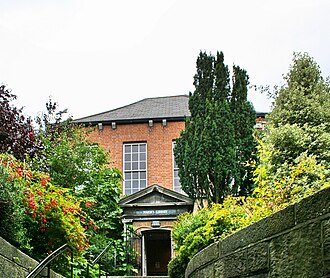
Marsh’s Library spectral reader stories, Dublin — Visitor Guide & Sightings
Marsh’s Library in Dublin has a reputation that blends the quietly scholarly with the quietly uncanny: tight book-lined rooms, old wooden desks and the persistent local tale of a ‘spectral reader’ who lingers among the stacks. This guide separates the documented history from folklore, summarises the kinds of sightings people report, and gives practical advice for visiting—whether you come for the books, the atmosphere, or as part of a haunted walking tour.
Book a Hidden Dublin haunted walking tour — include Marsh’s Library on your route
Why Marsh’s Library draws ghost stories: atmosphere, architecture and the ‘spectral reader’ hook
Atmosphere is the first magnet for ghost stories. Marsh’s Library is compact and book-filled: narrow corridors, high bookcases and wooden reading desks create pools of shadow and quiet that reward close attention. In low light, a silhouette between the stacks or a shifting shadow on a gallery can prompt imaginations shaped by centuries of storytelling.
Architecturally, historic libraries often feel liminal—part museum, part place of study—where time seems layered. When a site retains original fittings and furniture, every creak of floorboard and slit of daylight feels aged. The ‘spectral reader’ hook is simple and compelling: a figure said to be quietly reading at a desk, seen from the doorway or the gallery, who disappears when approached. It fits both the setting and the human tendency to tell stories about places of concentrated history.
Documented history of Marsh’s Library: founding, collections and significance (what we know)
Marsh’s Library was founded in the early 18th century by Archbishop Narcissus Marsh and is one of Dublin’s oldest public libraries. Its historic bookcases, period reading desks and compact rooms remain key to the visitor experience. The collection includes early printed volumes and works that reflect the intellectual world of Dublin and beyond during the 17th and 18th centuries. As a preserved historic interior, the library is important for researchers and for anyone interested in the material history of books and reading.
That documented history—who founded the library, its purpose as a place for study, and the survival of original fixtures—is distinct from the oral culture that has grown around the building. Knowing the library’s provenance helps ground any discussion of hauntings: it tells us why the space feels old and why stories arise, but it does not, by itself, prove supernatural activity.
Origins and evolution of the ‘spectral reader’ stories: folklore, early mentions and later retellings
Stories of a ‘spectral reader’ appear in local lore and in tour-room anecdotes rather than formal historical records. Like many urban legends, the tale likely began as a remark—perhaps an eyewitness seeing a shadowy figure in the gloom—and then grew as it was retold. Oral histories, guidebook snippets and later online retellings have reshaped the story into different forms: some emphasise a melancholy scholar forever bent over a volume, others a pranksome presence moving books around.
Distinguishing legend from record means looking for corroborating evidence. There are no official archive files or institutional reports that verify a recurring supernatural presence at Marsh’s Library. Instead, what we find is human storytelling: quick personal accounts, hearsay, and the occasional dramatic retelling in guidebooks and blogs. Those retellings often serve tourism and entertainment as much as historical documentation, a point that modern writers and tour operators sometimes openly acknowledge.
Reported sightings and accounts: how stories circulate, types of claims, and assessing reliability
Reported sightings fall into a few recurring types: a perceived figure at a desk that vanishes on approach; unexplained noises—pages, footsteps or a sigh; and the sense of being watched. Many of the more specific or dramatic claims tend to circulate informally: in pub conversations, on social media, or as part of guided tours. That means the chain of transmission is often short on verifiable detail and long on atmosphere-enhancing embellishment.
Assessing reliability requires simple skepticism. Eyewitness reports in dim conditions are notoriously unreliable. Additionally, in a place that markets itself—implicitly or explicitly—as haunted, confirmation bias can encourage people to interpret ordinary happenings as supernatural. For a wider perspective on how stories become monetised or amplified in modern tourism, consider how local ghost narratives interact with online audiences and merchandise: see our piece on Monetizing Dublin Ghost Content.
What to see on a visit: rooms, reading desks, notable items and where the stories are focused
A visit to Marsh’s Library rewards close looking. Take time to examine the bookcases, original reading desks and any gallery spaces that preserve historic fittings. The ‘spectral reader’ stories most frequently focus on the reading room and the upper gallery: places where a solitary silhouette could plausibly be seen from the entrance or landing. Small details—old labels, marginalia in volumes, and the texture of the wood—are the real treasures for most visitors.
If your interest is comparative, you can combine Marsh’s Library with other Dublin sites where atmosphere meets history: a late-night stroll past Grafton Street After Dark or a stop at the GPO 1916 for a different kind of historical resonance. For a wider, leafy contrast, see our guide to Phoenix Park Midnight Apparitions.
Practical visitor advice: opening hours, tickets, photography, conduct and accessibility
Practicalities change, so check opening hours and ticketing before you travel. Marsh’s Library is a historic interior and may operate limited entry numbers to protect the collection. If you’re planning a photo-friendly visit, arrive early and ask staff about the current photography policy. Many historic libraries restrict flash and the use of tripods to protect fragile volumes; treating this as a likely rule will keep your visit smooth.
Respectful conduct is essential: the library is a working collection and a small cultural site. Keep voices low, do not handle items unless expressly permitted, and follow staff guidance. Accessibility can be limited in historic buildings—some rooms and galleries may be reachable only by stairs. Contact the venue or your tour operator ahead of time if mobility access is a concern.
Including Marsh’s Library on a haunted walking tour: recommended routes, timing, and booking group tours
Marsh’s Library works well as a short, atmospheric stop on a haunted walking tour of central Dublin. Because the interior is small, tours typically allow a restrained visit—time for orientation, a few minutes to look around, and a brief retelling of the site’s history and the spectral reader lore. Early evening visits can emphasise atmosphere without disrupting daytime researchers or school groups.
When planning a route, pair Marsh’s Library with nearby sites that each offer a different mood: the hush of the library, the urban after-dark energy of Grafton Street, or the formal hauntings associated with hotels like the Shelbourne Hotel. For larger groups or private bookings, prearrange the visit to ensure entry and to tailor the experience to your party.
Book a Hidden Dublin haunted walking tour — include Marsh’s Library on your route
Planning a private group visit? We offer tailored group tours that can include a dedicated stop at Marsh’s Library. For group bookings and bespoke routes, see our private group options: Book a private group visit to Marsh’s Library
FAQ
Is there really a ghost at Marsh’s Library?
There is no official evidence that proves a recurring supernatural presence. What exists are a number of personal accounts and local stories about a ‘spectral reader.’ These are part of oral tradition and collective memory rather than institutional record. Whether you experience something unusual will depend on conditions, expectations and the vividness of the setting.
Can I join a ghost or haunted tour that visits Marsh’s Library?
Yes. Marsh’s Library is commonly included on haunted walking tours of Dublin. Because the interior is compact, tours tend to allow limited time at the site; booking in advance through a reputable operator—such as our Hidden Dublin haunted walking tours—helps guarantee access and the best experience.
Are photography and flash allowed inside Marsh’s Library?
Policies vary by venue and can change. Many historic libraries restrict flash and the use of tripods to protect fragile materials. If photography is important to your visit, ask staff on arrival or check current guidance before you go. As a rule, non-flash, handheld photos for personal use are more likely to be permitted than professional set-ups.
Is Marsh’s Library suitable for children or visitors who are sensitive to spooky themes?
Marsh’s Library is essentially a quiet historic site, and many visitors bring children. The ‘spectral reader’ stories are mild—more atmospheric than frightening—but your decision should reflect the child’s sensitivity to spooky themes. If you or your group prefer to avoid potentially eerie interpretation, request a more history-focused experience when you book.