
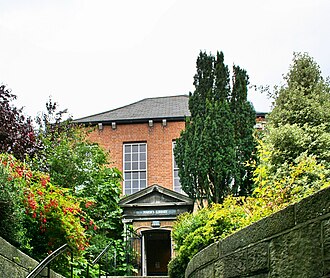
Marsh’s Library Ghost Stories: Legends, History & Visitor Tips
Marsh’s Library sits like a folded page of Dublin’s past: oak bookcases, narrow galleries and low, book-lined vaults that seem to hum with the weight of centuries. For visitors drawn to old stones and whispered histories, the library strikes a rare balance between scholarly calm and goosebump-inducing atmosphere—exactly the sort of place that spawns ghost stories and invites careful, curious exploration.
Book a Haunted Hidden Dublin tour to visit Marsh’s Library and other haunted sites
Why Marsh’s Library fascinates visitors
Atmosphere is the first draw. The library’s compact rooms are lined with shelves that still hold leather-bound titles, and narrow galleries look down on the reading room like balconies in a play. The smell of old paper and wood, the dim light in some corners and the presence of items preserved for centuries create an intimate sensory experience unusual in modern museums.
Architecturally, Marsh’s is compact and purposeful. Its design reflects an early-modern approach to private-public learning: a series of small, specialised chambers for study rather than a single vast hall. That scale encourages quiet and close observation, and those conditions—echoes, shadows, footsteps in timber galleries—are exactly what seed ghost stories.
Finally, the library’s role in Dublin’s past lends it cultural weight. It was founded to preserve books and make learning available beyond private collections. That custodial role, combined with a collection that includes esoteric works and marginalia, invites both scholarly research and imaginative storytelling.
Documented history at Marsh’s Library (what historians agree on)
Distinguishing fact from folklore is useful here. Documented history tells us who founded the library and why: it was established by Narcissus Marsh as a place to preserve books and encourage learning. The building and its bookcases, and the fact that many early printed works survive there, are part of the archival record.
Historians point to the library’s early-modern collections, its role as a repository for donated works, and its continued use as an archive and reading room. Many of the physical details that strike visitors—the chained books, the upper galleries, the small reading desks—are part of that documented fabric. These features are not invention: they are preserved and interpreted by staff and conservators.
What historians do not claim as fact are the hauntings. Library records can and do note donations, purchases, conservation and the careers of librarians and keepers. They do not, as a rule, document spirits. That is where folklore begins.
Top ghost stories and legends
Below are the most commonly told Marsh’s Library tales. Each entry makes clear whether it’s rooted in folklore, anecdote or a verifiable record.
The Silent Reader — folklore
A common tale describes a solitary figure seen in the reading room after hours: a person seated at a desk, turning pages in the lamplight, then disappearing. This story circulates among tour guides and local storytellers and is best categorised as folklore—an evocative image repeated in oral tradition rather than a verifiable event recorded in archival logs.
The Shadow in the Gallery — anecdote/folklore
Visitors and guides sometimes report a shadowy presence in the upper gallery, a movement at the corner of the eye. Such claims are usually anecdotal: personal accounts collected informally. They make compelling tour material but are not substantiated in the institutional records of the library.
Books that move — anecdote
There are stories of books found slightly out of place or opened to particular pages as if a reader left in a hurry. This is often a mix of human explanation (researchers, conservation work, cleaning) and the telling that turns an everyday occurrence into something uncanny. These are best treated as recorded anecdote rather than proof of a haunting.
Footsteps in the basement — folklore
The cellars and lower vaults, with their stone floors and echoing spaces, figure in tales of distant footsteps and muffled sounds. Again, these are typical features of oral legend: atmospheric descriptions passed from guide to guide, rich in sensory detail but lacking archival corroboration.
Notable people and rooms linked to the stories
Narcissus Marsh is the central historical figure associated with the library’s foundation. Beyond him, local tradition names various keepers and custodians whose long service has become part of the building’s living memory. Where records exist, they document employment, donations and curatorial work; where names appear only in campfire-style storytelling, treat them as part of the library’s folklore.
Rooms that attract the most stories include the main reading room, the gallery that overlooks it, and the lower vaults. Each space has a character: the reading room’s hush, the gallery’s vantage point, the vaults’ cool darkness. Those characteristics explain why specific tales cluster in particular locations.
What to expect on a visit: guided ghost walk experience
On a Haunted Hidden Dublin walking tour that includes Marsh’s Library, guides aim to balance atmosphere, history and critical perspective. Expect a mixture of archival facts—about the founder, the collections and the architecture—and carefully labelled folklore: stories framed explicitly as local legend or anecdote.
Guides typically tone the presentation to the group’s interests. History-minded guests hear more about proven provenance and the library’s role in Dublin’s intellectual life. Those on a storytelling-focused walk might hear longer retellings of the Silent Reader or Shadow in the Gallery, with dramatic pauses and an emphasis on mood.
Because the library is a functioning historic institution, interior access is sometimes limited. A visit will often prioritise quiet, short stops and respectful observation over theatrical staging. If you’re interested in broader haunted routes, the walk may also pass sites like Christ Church Crypt, Dublin Castle and the Hellfire Club—each with its own layers of documented history and legend.
For guides who photograph during tours or sell night images, see our practical guide on night-photography for tour guides to understand how to approach low-light shooting and prints responsibly: How to Sell Night‑Photography Prints from Dublin Ghost Walks: A Guide for Tour Guides.
Practical visitor tips
Access and ticketing: Marsh’s Library is a working heritage site. Opening times and ticketing policies can change, so check ahead with the library or your tour operator before you go. Small group sizes are common to preserve the atmosphere and protect the collection.
Photography and filming: Policies vary. Historic libraries often request low-impact photography—no flash, no tripods and no handling of materials. Always ask staff before photographing. If you plan to shoot commercially or for prints, get written permission in advance and follow conservation requirements.
Etiquette and preservation: Do not touch books or archival materials. Keep voices low and mobile phones on silent. Many of the objects are fragile and any handling accelerates deterioration. If you have mobility concerns, check accessibility in advance: older buildings frequently have narrow stairs and limited lift access.
What to ask before you go: confirm opening hours, whether guided visits include an interior stop, any photography restrictions and whether there will be a chance to speak to a librarian or conservator. If you are bringing a group, clarify group size limits and booking requirements.
How to include Marsh’s Library on a Haunted Hidden Dublin tour or book a private group experience
If you want Marsh’s Library to be part of your haunted-walk itinerary, book early—entrance and interior access can be limited and sometimes require coordination with the library. Our public Haunted Hidden Dublin tours aim to include Marsh’s Library when possible and prepare guests with a clear distinction between archival history and local legend.
For private groups or tailored itineraries, we offer bespoke tours that can prioritise interior experiences where access permits. Learn more about private booking options, costs and what to expect here: Private Ghost Tour Dublin: What to Expect, Costs & Booking Tips. You can also review general private tour information at our booking page and request specific sites in advance.
Book a Haunted Hidden Dublin tour to visit Marsh’s Library and other haunted sites
FAQ
Is Marsh’s Library really haunted or are the stories just legends?
There is no institutional proof of ghosts in Marsh’s Library. The building’s atmosphere, age and acoustic qualities naturally encourage ghost stories. Many accounts are oral tradition or anecdote rather than verifiable documentation. That said, personal experiences reported by visitors and staff are part of the library’s living folklore and make it a compelling stop on a haunted walk.
Can I visit the inside of Marsh’s Library on a public walking tour?
Sometimes. Interior access depends on the library’s opening hours, conservation work and staff availability. Our Haunted Hidden Dublin tours include Marsh’s Library when interior visits are allowed; otherwise we stop outside and recount the history and legends. Always check your tour details or contact us before your visit.
Are photography and filming allowed inside Marsh’s Library during a tour?
Photography policies differ from site to site. Many historic libraries ask visitors not to use flash or tripods and to avoid photographing fragile materials. Ask library staff or your guide for permission before taking photos. For those interested in selling prints from night shoots or commercial photography, consult the guide for tour photographers and secure written permission in advance.
How can I arrange a private Haunted Hidden Dublin tour that includes Marsh’s Library?
Private tours can be tailored to include Marsh’s Library if interior access is available. Contact us early to arrange dates and to coordinate with the library. For detailed guidance on private bookings, visit our private tour information page: Private Ghost Tour Dublin: What to Expect, Costs & Booking Tips, or book directly on our main tours page.