
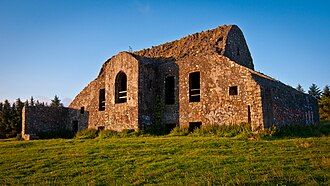
Hellfire Club Dublin History: Origins, Legends & Visitor Guide
The Hellfire Club ruin on Montpelier Hill is one of Dublin’s most intriguing landmarks: a windswept pile of masonry that sits above the city and carries a reputation for scandal, secrecy and the supernatural. For visitors it matters both as a genuinely old building with a clear social history and as a place where folklore and sensational reporting have layered myths on top of facts. This guide separates what we know from what people have imagined, and gives practical advice for anyone planning to see the site in person.
Book a Haunted Hidden Dublin walking tour to explore the Hellfire Club with an experienced guide who combines archival detail, folklore context and safety-minded route planning for groups and independent visitors alike.
Why the Hellfire Club matters: a short introduction for visitors
The ruin is an evocative focal point for conversations about 18th‑century social life, later rural decline, and the ways stories become amplified over generations. As an object, it tells a clear story of elite recreation and architectural fashion; as a symbol it highlights how communities retrofit meaning onto visible ruins. Visitors get both tangible history and the chance to see how cultural memory works.
18th-century origins: the building, patrons and social context
Documented fact: the structure on Montpelier Hill began life in the early 18th century as a hunting lodge. It was connected to William Conolly, one of Ireland’s wealthiest landowners and Speaker of the Irish House of Commons. The lodge sat in a landscape used for sport by Dublin’s Protestant ascendancy — hunting, gatherings and country entertainments were an established part of elite life.
The architecture bears the hallmarks of a mid‑18th‑century country building adapted for leisure rather than continuous habitation. Contemporary records and estate papers indicate the site’s original function clearly: a rural retreat and vantage point, not a permanent manor house or a dedicated meeting-house for secret societies.
Documented incidents: what contemporary records and historians confirm
Where the historical record is strongest is in land ownership, building accounts and the lodge’s abrupt transition from maintained building to ruin. Estate ledgers note construction and upkeep costs, and later accounts record a damaging fire and subsequent abandonment. Local government and estate correspondence show the site falling out of regular use during the later 18th century and thereafter being left to weather.
Historians emphasise that the term “Hellfire Club” does not appear in contemporary administrative records tied to the building in a manner that proves organised, frequent or formal activities of the sort described by later storytellers. In short: the lodge was a real, documented place used by elites; many of the more lurid activities associated with it come from later sources.
From ruin to legend: how folklore, newspapers and popular culture shaped the myth
Once the building became a ruin, its visual drama encouraged storytelling. Over the 19th and 20th centuries local oral tradition, sensational newspaper items and popular books gradually attached themes of devil-worship, black masses and occult gatherings to the site. These stories were often repeated without documentary proof, and each retelling layered new details onto older claims.
Popular culture further amplified the site’s reputation. Literary and tourist accounts seeking the dramatic often foregrounded the most lurid versions of events. That process — imaginative retelling, attraction-seeking journalism and the human appetite for the uncanny — is the primary engine behind the Hellfire Club legend in Dublin.
Ghost stories vs. evidence: distinguishing oral tradition and sensational accounts from verifiable history
It helps to separate three categories when you listen to or read about the Hellfire Club: documented history (building records, ownership, fire and abandonment), oral tradition (stories passed locally and often changing over time) and sensational reporting or fiction (newspaper copy, tourist anecdotes, and modern ghost tourism narratives).
Some of the most famous tales — satanic rites, a black altar stone, demon sightings — originate in oral tradition and 19th‑century press accounts, not in primary archival files. That does not make them worthless; they tell us about social anxieties and the ways communities process ruin. But if your interest is in verifiable history, rely on estate records and scholarly summaries rather than dramatic retellings.
Visiting today: access, safety, best times, and photography tips
Access: the ruin is reached by a short walk from a nearby parking area and well‑used local paths. The terrain is open and often exposed to wind and weather. There is no visitor centre on site and facilities are minimal.
Safety: the ruin is unstable in places. For your own safety and legal reasons do not enter fenced-off areas or climb on unstable masonry. Stick to maintained paths, watch for livestock if fields are grazed, and keep children and pets under close control.
Best times: daylight visits are recommended. Sunrise and late afternoon offer dramatic light for photography, but avoid visiting after dark unless you are with an organised operator who has local knowledge and appropriate permissions.
Photography tips: use a wide-angle lens for the building against sky, and carry a tripod for dawn or dusk. Pay attention to wind — long exposures can blur grasses but can also add atmosphere to wide landscapes.
How Haunted Hidden Dublin presents the Hellfire Club on tour: what to expect
Our Haunted Hidden Dublin walking tour treats the site with respect for both its archival record and its place in folklore. Guides explain the documented 18th‑century origins, outline what is known from estate records, and clearly label folklore and later sensational accounts so you can judge for yourself.
Tours prioritise safety: we plan routes that avoid unstable areas, we brief groups on access and conduct, and we time visits to maximise daylight and photographic opportunity. Our guides also situate the ruin within a wider map of Dublin’s haunted and literary topography, connecting the site to other stops such as historic churches and the city centre.
For a deeper or bespoke visit, consider our private options — they offer tailored content, flexible timing and a guided experience designed for groups who want to combine the Hellfire Club with other themed stops. See our full information on private bookings in Private Ghost Tour Dublin: What to Expect, Costs & Booking Tips.
Practical tips for planning your visit: transport, group bookings, and seasonal considerations
Transport: many visitors combine the Hellfire Club with other nearby attractions. If you are coming from central Dublin allow time for traffic and parking; organised tours remove the parking hassle and provide local navigation. For ideas about evening walks that include other atmospheric stops, consult our suggestions in Dublin Night Tour Ideas: 8 After‑Dark Walks for History, Hauntings & Culture.
Group bookings: small-group public tours are the easiest way to see the site responsibly. If you have a private group, our tailored option can create a focused itinerary that includes extra historical detail or additional locations such as the Bram Stoker sites referenced in our Bram Stoker Dublin Locations guide. For formal group arrangements, see our private groups page for enquiries and pricing.
Seasonal considerations: summer brings longer daylight but also more visitors. Winter offers dramatic skies and quieter paths but requires warmer clothing and sturdier footwear. Always check local weather and daylight times before you set out.
Book a Haunted Hidden Dublin walking tour to join a guided visit that balances documented history and folklore while keeping safety front of mind. For bespoke group arrangements, learn more or request a private tour at our private groups page.
FAQ
Is the Hellfire Club in Dublin actually haunted?
No authoritative evidence confirms hauntings in the forensic sense. The site is rich in folklore and many visitors report spine-tingling atmosphere; these experiences are part psychology, part dramatic setting. Haunted Hidden Dublin presents ghost stories as cultural phenomena and separates anecdote from documented fact during tours.
Can I visit the Hellfire Club ruin on my own or do I need to join a tour?
You can visit independently, but there are safety and access considerations. Joining a guided tour removes guesswork about routes, provides historical context and ensures you avoid unstable areas. For those who prefer privacy, our private tours offer the same benefits with a tailored itinerary.
How do I get to the Hellfire Club from Dublin city centre and how long is the visit?
Travel time varies with traffic and mode of transport; many visitors reach the site by car or as part of an organised tour that includes transport. The on-site visit itself — the short walk, photography and interpretation — typically takes 45–90 minutes depending on group interest and route choices.
Are there safety or legal restrictions I should know about before visiting?
Yes. The ruin is unstable in places and there are sections fenced for safety. Do not enter restricted areas or climb on fragile stonework. Respect private land and signage, follow Leave No Trace principles, and consider joining a guided tour for the safest, most informative experience.
For more haunted history around the city — including church crypts and castle stories — see our guides to Christ Church Crypt Haunted? A Visitor’s Guide and Dublin Castle Ghost Stories: Haunted Histories, Legends & Visitor Tips.