
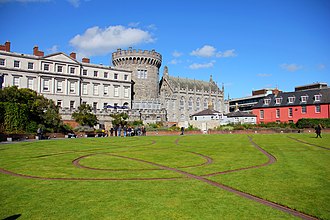
Dublin Castle sits at the crossroads of Ireland’s turbulent past and its storytelling present, a stone complex where official history and whispered folklore meet. For visitors hunting atmosphere and mystery, the phrase dublin castle ghost stories unlocks not just tales of flickering apparitions but a layered place shaped by sieges, official ceremonies and centuries of human drama. This guide separates what’s documented from what’s legendary, points you to the castle’s most reported haunted spots, and offers practical advice on visiting—by day and by lantern‑lit night—so you can explore with curiosity and respect.
Ready to join a knowledgeable local guide? Book a Haunted Hidden Dublin walking tour to explore Dublin Castle and other haunted sites and secure an after‑dark slot for the best atmosphere: Book a Haunted Hidden Dublin walking tour to explore Dublin Castle and other haunted sites.
Why Dublin Castle draws ghost hunters and history lovers
Dublin Castle has been a seat of power, a military stronghold and a civic centre at different times. Those layers attract both history lovers and ghost hunters: the older a place is and the more people it has hosted—soldiers, prisoners, governors, clerks—the more visible its past becomes in local memory.
Visitors mention a feeling of being watched in narrow stairwells, cold spots in old chambers, and the persistent oral tales that are part of everyday Dublin conversation. Because the castle is centrally located and easy to include in an evening walk, it features often on themed routes such as historic night walks and haunted pub crawls, connecting it to broader Dublin ghost lore and literary tradition (see our guide to Bram Stoker Dublin locations for more on literary ties).
A brief, documented history of Dublin Castle relevant to hauntings
Documented history explains the skeleton around which ghost stories form. Dublin Castle’s origins date back to the Norman period when a fortified administrative centre was established on the site. Over subsequent centuries it evolved: defensive walls and towers gave way to stately rooms used for administration and residence. The site has housed courts, government offices and ceremonial state apartments.
Because of those official functions, the castle records include lists of governors and visitors, architectural changes, and accounts of fires, rebuilds and renovations. These records are useful to confirm who lived or worked in particular rooms—but they rarely record hauntings. For that, researchers turn to newspapers, diaries and oral memory, which is where folklore tends to live.
The main ghost stories: the Phantom Guard, the Lady in White, and the crying child — legend vs what records show
The Phantom Guard
The Phantom Guard is usually described as a uniformed soldier or watchman seen moving through corridors or standing at a stair landing. Legendarily, he is said to be an ancient sentinel still carrying out his duty. Documented records do show a long military presence at the castle and regular night watches in older periods, so the image of a guard is rooted in real roles once carried out there.
What the records do not provide is a named individual whose death or unresolved story would anchor the apparition. That places the Phantom Guard in the category of folklore built on historical fact—the presence of guards—rather than a verifiable ghost tied to a documented incident.
The Lady in White
The Lady in White appears in several Dublin locations as an archetypal spectral figure. At the castle she is described as gliding through the State Apartments or near the chapel, sometimes seen by late‑closing staff or night visitors. These appearances are specific in the retelling but lack supporting parish or civil records that confirm a particular identity connected to the castle’s spaces.
Because female apparitions in white are a widespread motif in European folklore, the Lady in White at Dublin Castle is best understood as a legend shaped by a familiar storytelling pattern, rather than a story grounded in a documented historical personage.
The crying child
Reports of a crying child heard within certain rooms or under staircases are more intimate and unsettling. They echo kinds of oral tale associated with old houses—lost children, unmarked burials and the emotional residue of family tragedy. Researchers have found no archival evidence of a small, nameless grave or a recorded child casualty specifically tied to the castle’s interior.
Such stories often arise from atmospherics—acoustics in stone buildings can amplify distant sounds—and from the human tendency to fill unexplained noises with narrative. In short, the crying child belongs to legend until archival proof emerges.
Notable locations inside the castle where apparitions are reported: what you can actually see
Record Tower
The Record Tower is the oldest surviving part of the complex and the most evocative space for visitors. From the outside you can see the tower’s medieval masonry; inside, guided visits sometimes allow access to lower levels and exhibits interpreting the structure’s past. It’s a place where atmosphere is palpable—narrow stairs, low light and thick walls—so it’s often the focus of ghostly accounts.
State Apartments
The State Apartments are the more public, ceremonial rooms used for events. Visitors can tour parts of the apartments during opening hours and will see richly decorated halls, portraits and furnished chambers. Because these rooms host official functions, they are well documented in records, but they also produce many modern sighting reports simply because they’re dramatic, ornate spaces where shadows and reflections play tricks at dusk.
Chapel Royal and nearby ecclesiastical spaces
The chapel and other former religious spaces in and near the castle are natural focal points for stories. Even if the chapel itself is not open at all times, you can usually view elements from public areas or join a guided visit. If you’re exploring other nearby haunted sites, consider pairing the castle visit with our guide to the Christ Church Crypt for a fuller sense of Dublin’s sacred‑space folklore.
How to tell folklore from history: sources, records, and where the stories come from
Telling folklore apart from documented history requires checking the types of sources that support each claim. Documentary evidence—official registers, court records, architectural plans and contemporaneous letters—confirms who was present, when, and what happened. Folklore emerges in newspapers, oral storytelling, memoirs and guidebook retellings, sometimes decades or centuries after events.
Look for corroboration: multiple independent contemporary accounts increase reliability. When a story appears only in late‑dated retellings or as part of a pattern (e.g., many “ladies in white” across Europe), it’s likely folkloric. Archivists, local historians and tour guides who cite specific records are useful starting points; our Private Ghost Tour Dublin: What to Expect page includes notes on sourcing when we design bespoke group itineraries.
Practical visitor advice: opening times, guided tour options, photography and what to expect on an after‑dark walk
Opening times: The castle’s public areas are generally open during daytime hours for self‑guided visits and official tours; hours vary seasonally and for state events, so always check ahead via the castle’s visitor information. After‑dark access to internal rooms is usually restricted to special events or private guided tours.
Guided options: After‑dark ghost walks are offered by specialist companies—book early in high season. A guided walk will typically cover exterior viewpoints, accessible interior rooms (if included) and contextual storytelling that separates legend from recorded fact. For more evening inspiration, see our roundup of Dublin Night Tour Ideas.
Photography and access: Photography rules differ by room—flash and tripods are often banned in state rooms to protect artworks. Expect security checks in busy periods and limited access to some staircases or towers for safety. If you hope to photograph low‑light interiors, ask your guide about permissions in advance.
What to expect on an after‑dark walk: Atmosphere is everything: colder air, quiet streets and strategic lighting amplify stories. Guides balance mood with facts—don’t expect jump scares; expect evocative storytelling, historical context and stops at the castle perimeter and visible interior areas where permitted.
Responsible visiting and safety: respecting sites, photography, and neighbouring residents
Respect the castle as both a historic site and a functioning civic space. Keep voices low in quiet areas, follow posted instructions, and avoid touching delicate surfaces. Many ghost stories circulate through local communities—respect neighbours’ privacy and avoid trespassing into restricted yards or residential areas when following trails.
Photography can be intrusive. Always follow signage and staff directions, ask permission for close‑up shots of staff or private events, and refrain from using tripods and bright flashes in vulnerable spaces. If you’re on a guided ghost walk, the guide will advise on appropriate behaviour and safety for staircases and uneven surfaces.
Wrap‑up and how to join a Haunted Hidden Dublin tour for a guided after‑dark experience
Dublin Castle is a place where documented history and living legend meet. The most compelling experiences come from understanding both: knowing which stories are anchored in records and which belong to oral tradition. Guided tours give context, point out archive‑based facts, and create atmosphere responsibly—if you want a blend of credible history and evocative storytelling, a guided night walk is the ideal choice.
Book a Haunted Hidden Dublin walking tour to explore Dublin Castle and other haunted sites and secure your place on an after‑dark route that balances history, folklore and safety. If you’re organising a private group, consider our tailored option for groups: Private Ghost Tour Dublin: tailored group bookings and planning for customised itineraries and exclusive access.
For further haunted walking ideas, pair your castle visit with a guided Haunted Pub Crawl or explore Gothic and literary connections via our Bram Stoker locations guide.
FAQ
Are the Dublin Castle ghost stories true or just legends?
Most popular ghost stories about Dublin Castle are best classified as folklore or legend. They often grow from real historical facts—military presence, official ceremonies and old, atmospheric rooms—but lack archival evidence tying a particular apparition to a documented event or person.
Can visitors enter the exact rooms where apparitions are said to appear?
Some rooms are open to visitors in daytime tours and special events; others remain restricted for security or state ceremonies. After‑dark entry to interior rooms is generally only available through authorised guided events or private bookings. Always check access with your tour operator or the castle’s visitor desk.
What is the best time to visit Dublin Castle if I’m interested in hauntings?
Evening or after‑dark guided walks create the most atmospheric experience, but interior rooms and exhibits are normally daytime visits. For authentic ambience without compromising safety, book a guided evening tour run by experienced operators.
Are Haunted Hidden Dublin tours suitable for families and older visitors?
Yes. Tours are designed to be accessible and family‑friendly in tone; guides can tailor content and pace for groups with older visitors or children. If mobility is a concern, contact the operator in advance to arrange a suitable route or private group option.