
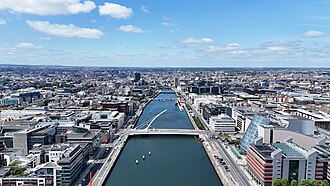
Dublin’s city centre wears many faces: Georgian elegance and lively pubs by day, a quieter, shadowed side after dusk. By the “dark side of Dublin city centre” we mean the historic places, grim civic remnants and atmospheric alleyways where recorded events, ghost stories and local folklore intersect. This guide keeps those categories clear—what is documented, what grew into legend, and what storytellers added later—while offering a practical walking route, visit tips and ways to join Haunted Hidden Dublin for a deeper experience.
Book a Haunted Hidden Dublin city-centre tour — reserve your place now
Quick map & timing
The compact city centre (roughly from O’Connell Street in the north to St. Stephen’s Green in the south, and from the Liffey to Dame Street east-west) is easily covered on foot. For a focused “dark sites” walk, plan a roughly 1–2 kilometre route and wear comfortable shoes.
Recommended times: late afternoon into early night is best for atmosphere while streets remain safe and public transport is available; after dark for mood if you are comfortable. Dublin’s public transport (DART, Luas trams and buses) serves the edges of the centre—O’Connell Street and the Luas lines are convenient start points. If coming by taxi or ride-share, ask the driver for a central drop-off such as Temple Bar or Christchurch.
Top dark-site highlights (city centre)
Below are concise entries for principal sites. For each we separate documented history from folklore or legend, and note practical visiting details and nearby connections.
St Michan’s Church (Church Street)
Documented history: St Michan’s is known for its stone vaults containing mummified remains preserved by the church’s dry environment. The vaults and the church’s medieval fabric are real historical features visitors can see on a guided visit.
Folklore and legend: Over time, stories about whispering vaults and spectral figures have grown up around the mummies. These tales enhance the atmosphere but should be treated as local storytelling rather than archival fact.
Visiting details: Entry to the church is limited and there is an admission charge to view the vaults. The site is a short walk from Christchurch and makes a good first stop.
Christchurch Cathedral and the medieval crypt
Documented history: Christchurch retains medieval architecture and an extensive crypt with archaeological remains and display material. The cathedral played a central role in city life over centuries.
Folklore and legend: Ghost stories include sightings in the crypt and tales tied to wartime events. These are part of the oral history that tour guides often recount.
Visiting details: The cathedral is open to visitors; the crypt is accessible during opening hours. It sits beside Dublinia and close to Dublin Castle.
Dublin Castle precinct
Documented history: Dublin Castle is a complex of civic and administrative buildings with a long role in governance. Parts of the complex are open to the public, including state apartments and exhibition spaces.
Folklore and legend: The castle grounds have been the setting for ghost stories and mysterious tales linked to former occupants. Interpretations vary—some stories draw on real events, others on centuries of reworking of the site.
Visiting details: The castle is central and makes a practical middle point in a walk; check opening times for interiors and exhibitions.
Temple Bar lanes
Documented history: The area now known as Temple Bar became a cultural quarter in recent decades. Narrow lanes and old buildings were long part of the city’s mercantile fabric.
Folklore and legend: Temple Bar’s atmosphere has generated many pub-based tales and ghost stories, which amplify the sense of a haunted quarter. For focused reading see our piece on Haunted Temple Bar Stories: Ghosts, History & Where to Visit.
Visiting details: Temple Bar is lively at night. The lanes are all walkable; choose quieter side alleys for mood and photos.
Smithfield and the old gaol/market quarter
Documented history: Smithfield has layers of civic history, markets and institutional uses. Some buildings retain visible reminders of difficult pasts.
Folklore and legend: Local ghost stories focus on market nights and the memory of incarceration or public punishments. For more depth, consult our visitor guide to the area: Haunted Smithfield, Dublin: A Visitor’s Guide to Ghosts, Gaols & Market Legends.
Visiting details: Smithfield is slightly northwest of the core but is an easy walk and offers broad squares for photo stops.
Merrion Square / Bram Stoker connections
Documented history: Dublin’s Georgian squares and literary heritage are well recorded. Bram Stoker had connections to Dublin and the city’s places inspire a number of literary pilgrimages.
Folklore and legend: The Dracula connection is part documented, part associative—local stories link characters and settings in creative ways. Our piece on Bram Stoker explores these threads: Dracula and Dublin: Bram Stoker’s Roots, Local Legends & Where to Visit.
Visiting details: Merrion Square is pleasant for an evening stroll; the surrounding streets include several statue and plaque photo opportunities.
Sample 90-minute walking route
This route keeps the walking manageable and maximises dark-side stops. Times are approximate; allow extra for photos and questions.
0–10 mins: Start at Christ Church Cathedral. Quick exterior photos and a short tour of the crypt if open—note the documented archaeological collection.
10–25 mins: Walk northwest to St Michan’s (Church Street). Spend time at the door and book a short vault visit if available—this is one of the few places with preserved human remains on public display.
25–40 mins: Cross back toward Dublin Castle. Pause at the castle walls for background on administrative history and the way legends cluster around civic centres.
40–60 mins: Head east into Temple Bar lanes. Take the narrow alleys for atmospheric shots and listen for local pub stories; this is where folklore often outstrips facts, so treat tales as cultural colour.
60–75 mins: Walk north-west to Smithfield square. Photo stop and a note on the area’s mixed history of markets and institutional buildings.
75–90 mins: Finish with a loop toward Merrion Square or a cosy pub depending on time. End with an optional museum stop or a relaxed drink.
Safety, accessibility & etiquette
Night visits: Dublin city centre is generally safe, but normal precautions apply—stay in well-lit areas, keep valuables secure, and avoid poorly lit backstreets alone if you are uncomfortable. Let someone know your route if you are exploring on your own.
Mobility considerations: The city centre has cobbles, uneven pavements and steps at older sites. Many interior spaces have limited accessibility; check ahead with the venue if mobility is a concern and consider taking a shorter, flatter route.
Photography and respect: Take photos where permitted but avoid flash in sensitive interiors (crypts, vaults). Respect signage and private property; do not enter restricted areas to chase a story or shot. Remember that many tales are based on human tragedies—treat sites with sensitivity.
Where to pause
Historic pubs and cafés: Temple Bar lanes house atmospheric pubs that suit the mood but aren’t necessarily confirmed “haunted” places—many of the best stories are part of the social life rather than archival fact. For a quieter pause, seek cafés on Dame Street or around Grafton Street.
Museums and galleries: The Dublin Castle complex and nearby museums provide sober context for the city’s past. The National Museum of Ireland (Archaeology) and specialist exhibitions nearby offer artifacts and interpretation that separate recorded events from later storytelling.
How to join a guided walk or book a private group
A Haunted Hidden Dublin city-centre walk blends local history, folklore and careful distinction between documented events and later legend. Expect a 60–90 minute stroll, a knowledgeable guide who points out archival facts and explains how stories developed, and stops at atmospheric locations. Tours are suitable for visitors with a curiosity about both the city’s past and how people remember it.
Group options and private events: We offer public scheduled walks and private group bookings for events, corporate outings or tailored themes. Private tours can adjust pace, start times and focus (for example, a stronger literary or archaeological emphasis).
Booking practicalities: Tours are bookable online and often fill in peak season. If you are organising a private group, contact us to discuss timing, accessibility needs and any special requests.
Book a Haunted Hidden Dublin city-centre tour — reserve your place now — or, for tailored group bookings and private events, visit our private groups page to enquire.
FAQ
Is it safe to explore Dublin city centre’s darker sites at night?
Yes, generally. Dublin’s centre is well-patrolled and frequented by locals and visitors. Still, follow common-sense precautions: stay in lit areas, travel with others when possible, and keep belongings secure.
How long is a typical Haunted Hidden Dublin city-centre walk and how strenuous is it?
Typical public walks last 60–90 minutes, covering 1–2 kilometres with some cobbled streets and steps. The pace is moderate; participants should be comfortable standing and walking for the duration.
Can I follow the suggested route on my own, or should I book a guided tour?
You can certainly follow the route on your own for a self-guided experience, but a guided tour adds context, primary-vs-folk clarity and stories you may not find in a quick read. For deeper background, see our related walks: Dublin Legends and Folklore Off the Beaten Path.
Do you offer private or group tours for events, and are they family-friendly?
Yes. Private and group tours are available and can be adapted for mixed-age groups. Some tours include darker themes that may be unsuitable for very young children—contact us to tailor the content to your group’s needs and to discuss accessibility.