
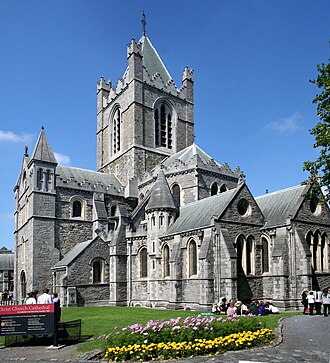
Christ Church Cathedral’s low, vaulted crypt in Dublin has been a magnet for ghost stories for generations: a dim, atmospheric space full of stone tombs, echoes and the kind of hush that invites imagination. This guide takes a skeptical but travel-friendly view—laying out what is documented about the crypt, what belongs to folklore, how the stories travel, and what to expect when you hear them told on a night walk.
Book a Haunted Hidden Dublin walking tour to hear these crypt stories in person
Why the Christ Church crypt attracts ghost stories
Crumbling stone, damp air, and visible human remains are sensory cues that prime listeners for stories of the dead. Crypts were designed to hold tombs and relics; they are physically and emotionally charged places. In Dublin, Christ Church occupies a central, layered spot in the city’s history, so it naturally accumulates tales—some purely imaginative, others attached to real objects or events.
Concise historical context: what is documented and what’s uncertain
Documented: Christ Church (the Cathedral of the Holy Trinity) has medieval origins and a substantial crypt that has long been used for burials and tombs. Archaeological work and historical records confirm phases of construction, use as a place for interment, and later restorations that altered parts of the building.
Unclear or contested: Specific accounts that tie named apparitions, precise burials of famous individuals’ hearts or bodies, or detailed, dated supernatural events often rest on later reports or hearsay. Where a story names a specific person or precise event, it is worth asking whether archival records, parish registers or contemporary newspapers corroborate it.
Five most-told crypt ghost stories
1. The Guardian Black Dog — Legend
The black dog as an omen or guardian turns up across British and Irish folklore. In the context of Christ Church, storytellers sometimes speak of a spectral hound that prowls the crypt, seen as a harbinger of death or a protector of buried treasures. There is no archival record or verifiable sighting log to substantiate a recurring canine apparition; this is a folkloric motif applied to the crypt’s atmosphere.
2. The Weeping Choirboy — Legend
A common tale claims an unseen choirboy still sings or weeps beneath the cathedral, heard as faint sobs or music in the vaults. Such stories are evocative and spread easily among visitors, but they are anecdotal. Acoustic quirks in stone chambers can produce odd echoes and tones; those natural phenomena often seed ghostly interpretations.
3. The Lost Heart or Honour of a Notable Figure — Unclear
Some narratives claim the remains or heart of a medieval lord or notable figure are entombed in the crypt and that the spirit is restless. There are documented cases elsewhere where relics or parts of bodies were interred in multiple churches, but specific claims tied to named persons at Christ Church are difficult to verify without firm documentary evidence. This is a plausible historical practice, but the supernatural appendage is folkloric unless supported by records.
4. Bones That Move or Rearrange Themselves — Legend
Visitors sometimes report that tombs look disturbed or that bone displays appear rearranged between visits. The crypt does contain human remains and burial markers; shifting stone, maintenance work, or the photographer’s angle often explain perceived changes. Claims of autonomous movement belong to oral tradition rather than physical evidence.
5. The Pale Figure in a Hooded Cloak — Unclear/Documented (as an appearance type)
Many witnesses describe a pale, hooded figure at the edge of vision in the crypt. The “hooded figure” is a recurring motif in ghost lore worldwide. While multiple independent eyewitness reports would be intriguing, memory, lighting, expectation, and the suggestive power of previous stories make such sightings unreliable as documentary proof. The presence of cloistered figures in medieval imagery can also influence what people think they see.
How and why these stories spread
Oral tradition is the first engine: a teller adds flourish, listeners repeat it, and the story grows. The Victorian era’s taste for Gothic melodrama amplified interest in haunted churches and ossuaries, turning local anecdotes into popular ghost tales. Tourism then codifies and re-spreads them: guidebooks, night walks, and social media concentrate impressions and canonicalize certain versions.
Storytellers, including those on guided walks, often use cumulative repetition. A story that appears on a dozen tours gains the patina of truth simply by frequency. That does not make it historically documented—it makes it culturally entrenched.
Evaluating the evidence: what counts as proof
Controlled, contemporaneous records are the strongest evidence: parish registers, burial ledgers, diaries, newspapers, archaeological reports and verifiable photographs or audio captured under controlled conditions. Eyewitness testimony can be powerful but is fallible; memory is shaped by expectation.
Physical artifacts—tombs, bones, inscriptions—are documented facts that can give rise to ghost stories. Distinguishing the artifact (documented) from the spirit attached to it (folklore) is the core task of a skeptical approach.
How walking tours present the crypt tales
Tour guides mix history, folklore and theatre. In walking tours, a crypt story is a narrative tool: it sets mood, connects visitors emotionally to the space, and provides a memorable hook. Expect dramatized pacing, timed silences, lowered voices, and a selective emphasis on the eerie elements.
Good guides will indicate which elements are documented and which are local legend, and they often explain how acoustics, lighting and architecture contribute to the experience. They can point out tangible things—funerary slabs, inscriptions, architectural oddities—that inspired stories, helping listeners separate observed fact from imaginative overlay.
Responsible visiting: etiquette and preservation
Respect the space. Christ Church is a place of worship and heritage with fragile stonework and human remains. Avoid loud behavior, do not touch tombs or bones, and follow signage and staff instructions. Photography policies vary; many guided experiences discourage intrusive flash photography to protect the site and other visitors’ experience.
Preservation matters: acidic skin oils, accidental knocks, and excessive foot traffic damage ancient fabric. Approach the crypt as you would any historic interior—carefully and considerately.
Where to go next: nearby haunted church-related stops and guided options
Dublin offers several places that will interest someone curious about ecclesiastical hauntings. For broader Dublin ghost history, you can compare Christ Church’s tales with those at Dublin Castle, which has its own roster of ghost stories and is a useful contrast in scale and types of legend.
If you enjoy literary associations, a walk tracing Bram Stoker’s Dublin connects gothic fiction to local sites. For a mix of hillside folklore and atmospheric ruin, the Hellfire Club on the Dublin Mountains presents a different kind of legendary accumulation—more rural and sensationalized than a cathedral crypt.
To extend your experience with a private group, consider the Private Ghost Tour Dublin options for tailored storytelling and access. For ideas on evening routes, our Dublin Night Tour Ideas list suggests after-dark walks that balance history, hauntings and city culture.
Book a Haunted Hidden Dublin walking tour to hear these crypt stories in person
If you are travelling with a group or planning a bespoke evening, we also offer tailored private tours—see our private ghost tour options for group bookings and special itineraries.
FAQ
Are the Christ Church crypt ghost stories based on historical records or later folklore?
Most ghost stories around the crypt are later folklore layered on top of documented facts. The crypt’s existence, tombs and some burials are well documented; the supernatural interpretations are primarily oral tradition and later embellishment.
Can you visit the Christ Church crypt as part of a ghost tour, and are ghost stories told inside?
Yes—you can visit the crypt on many guided walking tours, and stories are commonly told there. Guides vary in how explicitly they label material as legend or history, so ask if you want a clearly sourced account during the tour.
How can I tell if a crypt story is legend or documented history when on a tour?
Ask the guide what evidence supports a claim: is there a parish record, a contemporary account, or archaeological report? If a story rests on a single anecdote, theatrical retelling or lacks documentary anchors, treat it as legend rather than history.
Is it respectful or allowed to take photos or film inside the crypt during a visit?
Policies vary. Many sites either restrict flash photography or ask visitors not to photograph at all, particularly during services or private events. Always follow the cathedral’s rules and the guide’s instructions to preserve the site and the experience for others.