
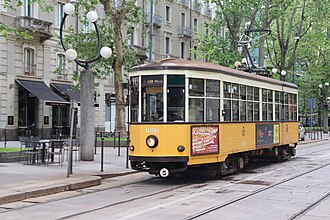
By twilight, the arteries of Dublin change: traffic softens, lamplight pools on stone and the city’s old transport lines seem to breathe again. “Phantom tram echoes” is the phrase locals use for those sudden clanks, distant bell-tones or the uncanny sense of a carriage passing where no rails remain. This guide links the documented rise and fall of Dublin’s tram network with the oral legends that grew up around it, points out physical traces you can still find, and offers an atmospheric, practical night walk for curious visitors.
Book a Haunted Hidden Dublin tramline walk or request a private group tour
Dublin’s tram history in brief
Documented history places tram transport in Dublin firmly in the urban growth of the 19th and early 20th centuries. Horse-drawn trams carried passengers across the city in the 1800s; as electricity became widespread, many lines were converted to electric trams. Over several decades in the mid-20th century the city’s tram network was largely withdrawn and replaced by buses and private transport. These are the broad, established milestones—horse-operated lines in the 19th century, electrification in the late 19th to early 20th centuries, and phased closures through the mid-20th century as public transport shifted.
There is ample archival material—maps, municipal records and period photographs—that document where lines ran, the depots that housed cars and the decisions that led to their removal. Museums and local archives hold much of that printed and photographic evidence; contemporary street plans also let researchers overlay former routes against today’s layout to confirm where trams once ran.
Where traces remain today
Although most tracks were removed when the network was dismantled, physical and visual cues survive if you know where to look.
Embedded rails and cobble shadows
Short stretches of rail—sometimes cut flush into paving or seen as odd seams in cobbled streets—turn up in places that were once main tram arteries. These fragments are often too small to recreate a line on their own, but they make sense when viewed in the context of historic route maps.
Buildings and depots
Some former tram depots and workshop buildings survive as repurposed structures. Their architecture—tall doorways, wide bays and brick façades—marks them out once you know what to look for. These buildings are important documentary signposts even when rails are long gone.
Route shadows in city layout
Wide boulevard sections, alignments of kerbs, and sweeping junctions sometimes reflect the footprint of former lines. O’Connell Street and many of the quays were major tram corridors, and the spacing of kerbs or lane widths can still hint at where trams once took priority.
Phantom tram folklore vs. recorded history
It’s important to separate verifiable records from the stories that accumulate around them. Documentation—maps, municipal minutes and photographic evidence—confirms routes, dates and infrastructure. Folklore consists of oral reports, repeated sightings and the sensory memories locals pass down.
Notable eyewitness accounts
Local newspapers, oral-history projects and interview collections contain personal accounts of “hearing a bell” or “seeing lights” in places without tracks. These accounts are valuable cultural material: they tell us how communities recount change, loss and memory. They do not, on their own, prove a physical phenomenon beyond perception and memory.
How memory and sound shape legend
Sound travels oddly in a city at night. A distant bus, a cycling bell, or the resonance of trams on modern Luas lines can be misidentified, especially when a street is quiet. Hearing a metallic scrape or a bell after dark can be suggestive rather than definitive: our brains seek patterns, and the image of a tram is an easy fit for any ambiguous auditory cue.
Evaluating claims
If you encounter a claim of a phantom tram sound, ask for context: who heard it, when, and under what conditions? Cross-reference with physical evidence—are there rails or an obvious former route? Check local archives if a historical line ran there. The best approach combines respectful curiosity with documentary questions.
Suggested evening-friendly walking route (60–90 minutes)
This self-guided loop is designed for dusk or early evening—enough light for safe navigation, and the atmosphere of the city as night falls. It stays within central Dublin, uses well-lit streets and connects places with tram history and related folklore. Total distance is roughly 3–4 km, depending on small detours; expect 60–90 minutes including stops.
Start: Rotunda Hospital / Phibsborough area
Meet near a well-known landmark that sits close to several historical tram corridors. The Rotunda area is an accessible starting point with good transit links and places to warm up before you set off. This area also has its own blend of documented nursing histories and local legend—see Rotunda Hospital Midnight Nurse Stories — History vs. Legend for context.
Stop 1: North quays and O’Connell Street
Walk down toward the quays and cross to O’Connell Street. The wide boulevard preserves the feel of a major tram artery. Look for changes in paving and any embedded rails or odd kerb alignments. This stretch is central to many historical maps of Dublin’s tram routes.
Stop 2: The Cabbage Garden vicinity
Head south toward the area known as the Cabbage Garden. This quieter pocket offers good vantage points for listening and reflection; local history here blends with quieter spectral stories—The Cabbage Garden’s Lesser-Known Spectres is a useful companion reading for the area.
Stop 3: Grangegorman corridor (optional detour)
If you have time, take the short detour toward Grangegorman. The asylum and its surrounds carry heavy after-dark lore; the intersection of institutional history and personal testimony shapes many phantom-tram stories—see Grangegorman asylum legends and after-dark lore for a fuller guide. If you prefer a shorter walk, continue instead toward the next stop.
Final stretch: Ringsend waterfront or return via inner quays
Complete the loop by returning along the quays toward Ringsend or retrace through central streets to your start point. The waterfront can feel open and strangely resonant at night—Ringsend Waterfront Night Whispers explores local atmospheric suggestions.
Transit: The route is reachable from major bus and DART/Luas interchange points; begin and end near accessible public-transport stops. Distances between major waypoints are short and suitable for a moderate evening stroll.
Practical visitor advice
Safety after dark
Stick to well-lit streets, travel with company and keep to main routes. Dublin city centre is generally safe after dark, but standard urban caution applies: watch your belongings, keep to populated sidewalks and let your accommodation know your plans if you’re walking alone.
Photography tips
Bring a small tripod or use steadying techniques for long exposures—streetlights and moving traffic can make low-light shots dramatic. Respect private property and signage; avoid trespassing on disused depots or fenced-off sites. If you encounter particularly photogenic vestiges of track or buildings, take wide-context shots as well as detail images to make later identification easier.
Permissions and access
Much of the route is public pavement and open spaces; however, some former tram infrastructure may be on private property or on sites undergoing redevelopment. Do not enter fenced or locked sites. For access to depots or archival displays, contact museums or site owners in advance.
Accessibility
Streets with cobbles, uneven paving or narrow sidewalks can be challenging for mobility-impaired visitors. The suggested loop can be adjusted to avoid cobbled lanes; plan a route that sticks to modern pavements and check transit-access points in advance.
Joining a guided experience
A Haunted Hidden Dublin tramline walk typically blends archival photographs, mapped routes and atmospheric storytelling. Expect a small-group format, a knowledgeable guide who will point out surviving traces and separate documented facts from folklore, and stops selected for both history and ambience. The pace is steady and designed for conversation and photography. Private-group options are available for tailored experiences.
Book a Haunted Hidden Dublin tramline walk or request a private group tour
If you’re organizing a private group, corporate event or a themed walk for friends, we also offer bespoke bookings. For private groups and customized itineraries, contact us at our private booking page to arrange dates, route emphasis and accessibility requirements: Book a Haunted Hidden Dublin tramline walk or request a private group tour.
Further resources and next steps
For deeper archival research consult local history centers, city archives and period newspapers that preserve route maps and municipal minutes. If your curiosity extends to neighbouring themes, consider pairing this walk with other night-focused routes: For coastal apparitions, see Howth Head Cliffside Apparitions: Sightings, Stories & Visitor Guide; for institutional legends visit Grangegorman asylum legends and after-dark lore; for waterfront folklore consult Ringsend Waterfront Night Whispers; and for cluster hauntings near the city centre read The Cabbage Garden’s Lesser-Known Spectres. Each of those pages offers focused local lore that complements the tramline stories.
Book a Haunted Hidden Dublin tramline walk or request a private group tour
FAQ
Are the phantom tram sounds documented or just local folklore?
Most references to phantom tram sounds appear in oral histories and local reports rather than formal scientific documentation. They are cultural phenomena—valuable for what they reveal about memory and place—rather than proof of a physical tram repeating its old route.
When is the best time to walk the suggested route and is it safe at night?
Dusk to early evening offers atmospheric light and a quieter city without being late into the night. Dublin city centre is generally safe after dark when you stick to well-lit, populated streets. Follow standard safety precautions and consider joining a guided group for added security and interpretation.
How long is the walking route and is it suitable for children or mobility-impaired visitors?
The suggested loop is approximately 3–4 km and designed for 60–90 minutes with stops. It can be adapted for children with shorter legs by shortening the route. Mobility-impaired visitors should plan an adjusted path that avoids cobbles and uneven surfaces; private tours can be customized for accessibility needs.
Can I book a private guided Phantom Tram Echoes tour for a group?
Yes. We offer private and bespoke group tours with tailored routes, timing and interpretive focus. Please use the private-groups booking page to request dates and special requirements: Book a Haunted Hidden Dublin tramline walk or request a private group tour.