
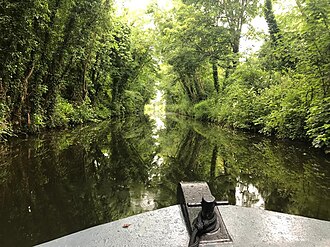
The Royal Canal Night Whispers Trail is a compact, atmospheric after-dark walk that follows a quiet stretch of Dublin’s Royal Canal, mixing recorded Victorian and industrial history with the city’s slower, local folklore. This guide is practical first: it maps an easy evening route, names the stops you’ll make, and clearly separates archival fact from the popular stories you’ll hear on the towpath after sunset. Whether you’re visiting Dublin for one night or plan to join a themed walk, this article will help you know what to expect, how to stay safe, and how to get the most from the experience.
Historic backbone
Documented history gives the Royal Canal its backbone: it was built as a major inland waterway to carry goods and passengers between Dublin and the wider midlands and northwest. The canal’s construction spanned years of engineering effort, and it formed a working corridor of locks, basins and bridges that supported commerce, industry and suburban growth.
By the Victorian era the canal carried coal, timber and manufactured goods and became threaded into everyday Dublin life. Industrial activity brought accidents, occasional lock failures and drownings—records of such incidents appear in period newspapers and municipal reports. Over the 20th century, road and rail reduced commercial traffic, the canal fell into disuse in places, and later restoration projects converted much of the route into a recreational greenway while preserving surviving industrial features.
Trail map and key stops
This night-walk follows a contained stretch of the Royal Canal ideal for an evening of storytelling and history. Start near the Broadstone terminus and walk westward along the towpath for roughly an easy 30–45 minute circuit, depending on stops. Below is a step-by-step route with suggested stopping points and what you’ll look for at each.
Stop 1 — Broadstone basin and terminus
Documented: Broadstone was an important canal terminus and later became integrated with rail infrastructure; surviving stonework, basin remains and warehouse structures reflect the shift from canal commerce to rail and road.
Local folklore: A number of tales cluster here about lonely bargemen and late-night voices near emptied warehouses. These are modern oral traditions tied to the area’s abandoned-feel in the mid-20th century rather than records from the canal’s working heyday.
Stop 2 — Phibsborough bridge and towpath
Documented: Bridges and lock-keeper cottages line this stretch; municipal maps and archival photographs show how the canal corridor served nearby neighborhoods as both transport route and a boundary in urban planning.
Local folklore: Walkers often report phantom footsteps or the sense of being watched near the bridge—anecdotes that grow in telling. These accounts are valuable cultural material but should be treated as oral history rather than archival fact.
Stop 3 — Grangegorman-facing stretch
Documented: This section adjoins institutional and industrial buildings; you can still see engineered canal features—stone locks, culverts and cast-iron railings—that testify to Victorian construction methods.
Local folklore: Stories here include sightings of a “watcher” on the far bank and tales of a lost parcel left on the towpath. These local narratives often reflect social memory rather than specific documented events.
Stop 4 — Broombridge crossing (turning point)
Documented: At the crossing you’ll notice how the canal intersects with later transport lines; this junction helps explain the canal’s changing role over time and its later restoration for leisure use.
Local folklore: Broombridge-area legends sometimes mention travellers who never reached the far side. Again, these are modern, oral tales—poignant and evocative, but not corroborated in municipal or press archives.
Stories and sources: how we separate fact from folklore
On the walk you will hear two kinds of material: documented facts drawn from maps, municipal records, engineering remains and period press; and folklore—stories passed down in spoken form, often embellished on successive retellings. Our guides label each account so you can tell the difference. When we use a primary source—an old map, a construction description, or a newspaper account—we say so and point out the surviving physical evidence on site.
If you’re interested in how Victorian rumors became modern ghost tales, we use the same interpretive method discussed in our short piece on the subject: How Victorian Dublin Rumors Became Modern Ghost Tales. For comparisons with canal-themed evening walks, see our reflection on the other main waterway in Dublin: Grand Canal at Dusk: A Walking Story of Dublin’s Dark History.
Practicalities for visitors
Best evenings: Clear or lightly overcast nights are best for visibility and atmosphere. Avoid heavy rain or strong winds; the towpath can be slippery and exposed.
Start time and duration: Most evening walks begin shortly after sunset and last around 60–90 minutes with stops. The route outlined above keeps the walk compact so you spend most of the time on well-travelled towpath rather than dark back-alleys.
Footwear and clothing: Wear stout walking shoes with good grip and dress in layers. Bring a small, hands-free torch or headlamp; many visitors prefer headlamps so their hands are free for railings and cameras.
Lighting and navigation: The canal path has stretches of low lighting. Guides carry supplementary lighting and reflective markers, but bring personal illumination and a charged phone.
Accessibility: The towpath is uneven in places and includes narrow bridges and low steps by some locks. Much of the walk is suitable for visitors who can manage moderate slopes; however, it is not a fully accessible route for wheelchairs across every point. Contact us for tailored private-group routes that can prioritize accessible sections.
Responsible visiting & etiquette
Respect residents: Stay on the towpath, keep noise to a minimum and avoid shining lights directly into windows. Many canal-side homes are occupied and late-night disturbance causes real harm.
Respect wildlife: The canal supports birds, bats and aquatic life. Avoid shining bright lights into nesting or roosting areas, do not feed wildlife, and leave no litter.
Respect infrastructure: Do not climb onto locks, dams or industrial ruins. These structures can be unstable and are not safe to explore after dark.
Booking and tour options
Haunted Hidden Dublin offers small-group public walks on scheduled evenings as well as private bookings for groups, corporate visits and special events. Public walks provide a guided, interpretive experience that balances documented history with local folklore and includes safety briefing and route options for different mobility needs.
For private groups we can adjust pace, start time and emphasis (for example, more historical detail for local history societies or a storytelling focus for theatre groups). For private bookings and bespoke arrangements see our group page: https://www.hiddendublintours.com/group-tours-dublin/.
Further resources and how to learn more on-site
On the route keep an eye out for plaques, surviving stonework and lock mechanics—these are the physical record of the canal’s working life. Local archives and municipal libraries hold old maps, planning records and newspapers that expand the documented story if you want to dig deeper.
For further reading and related walks around Dublin’s darker corners, see our compilation of walking accounts: Stoneybatter Shadow-Walk Accounts, and for a night-walk in another historic neighbourhood consult The Liberties After‑Dark Lore Collection — Night‑Walk Guide to Stories & Stops. If you run a guesthouse or are interested in hospitality around themed tourism, our practical note on guesthouse management may help: How to Set Room Rates for Haunted Dublin Guesthouses: A Practical Guide.
Responsible photography and recording
Photography is welcome but be mindful of long-exposure flash and noise that can disturb wildlife and residents. If you plan to record interviews or publish audio, secure consent from anyone recorded; the walk mixes documented history with living oral tradition, and contributors deserve credit and control over their stories.
FAQ
How long is the Royal Canal Night Whispers Trail and how much of it is walked after dark?
The compact route described here is planned as an evening loop of around 30–45 minutes of walking between stops, with the whole experience including commentary typically lasting 60–90 minutes. Most of the trail is experienced after sunset on our scheduled evenings; start times are set so the walk proceeds under evening light for maximum atmosphere.
Are the canal stories true — how do you tell legend from documented history on the tour?
We distinguish clearly between documented history (drawn from maps, construction features, archives and period reporting) and folklore (oral accounts, local anecdotes and modern legend). Guides label each story type during the walk and point to physical evidence or archival context when a claim is documented. Many legends are meaningful as social memory even when they lack archival corroboration.
Is the route suitable for children, older visitors, or people with limited mobility?
The route is family-friendly but includes uneven towpath sections and low bridges. Children should be supervised at all times. Older visitors who are steady on foot can usually manage the trail; those with limited mobility should contact us about an alternative, more accessible route or a private booking that adapts the itinerary.
Can I book this trail for a private group or corporate event and what does a private booking include?
Yes. Private bookings can tailor the start time, pace and interpretive emphasis, and may include a focused historical briefing, extended Q&A, or an adjusted route to minimize steps. For private-group enquiries visit: https://www.hiddendublintours.com/group-tours-dublin/ or make a public or private booking at: https://www.hiddendublintours.com/tours/.