
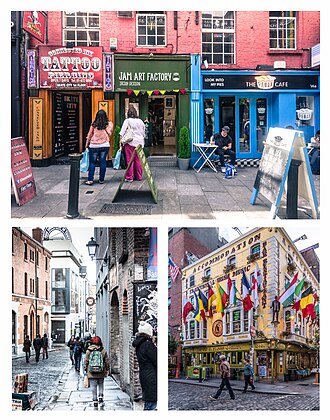
Dublin Medieval Lanes Ghost Trail: Alleys After Dark — Walking Guide
Dublin Medieval Lanes Ghost Trail: Alleys After Dark — Walking Guide
When daylight thins and the lamps throw long pools of amber across cobbles, Dublin’s medieval lanes reveal a different city: narrow, layered, and full of echoes. The alleys clustered around the old civic core—where merchants once shouted, guilds met, and fires reshaped streets—make a compact, atmospheric route for an evening walk that pairs verifiable urban history with the folklore that grew up around it.
Prefer a guided experience that balances research-based storytelling with the right tone for an after-dark walk? Book a Haunted Hidden Dublin walking tour — explore medieval alleys after dark to join a small-group or book a private night walk tailored to your pace and interests.
Why Dublin’s medieval lanes make a compelling ghost-trail setting
The city centre still preserves the footprint of a medieval street plan: tight plots, narrow passageways and lanes that funnel sound and light differently to modern boulevards. That physical continuity creates a sensory setting ideal for an evening walk—the scale is intimate, shadows fall quickly, and a few surviving medieval structures punctuate the route.
Atmosphere alone does not make history. The lanes feel older than they are because later generations layered stone, signs and stories on top of earlier layouts. Appreciating both the tangible and the imagined makes for the most rewarding walk.
Documented history of Dublin’s medieval alley network
Documented history emphasises function: many lanes were practical connectors between markets, guildhalls, churches and river quays. Records show merchants, coopers, fishmongers and tavern-keepers clustered in specific streets; some passages were maintained as right-of-way routes tied to property plots.
Over centuries, reconstruction after fire, redevelopment and street-widening altered surfaces and sightlines. Where romantic guidebooks later describe “unchanged medieval lanes,” the truth is usually that surviving fragments sit within layers of later masonry and 18th–19th century repairs. Use primary records and measured surveys when you want to separate continuity from later invention.
Notable lanes to include on an alleys-after-dark walk
Fishamble Street
Documented history: Fishamble Street lies close to the old market areas and was historically associated with fishmongers and adjacent trade. The street’s broad medieval market function later narrowed into the lanes and courts around it.
Legend: Nighttime stories sometimes place theatrical or spectral figures on or near Fishamble—partly a reflection of the street’s proximity to performance sites. If you want reading on nearby nocturnal scholar legends, see our piece on Trinity College late-night scholar spectres.
Winetavern Street
Documented history: Winetavern Street takes its name from the many taverns recorded here in early modern accounts. Its position near quays and markets made it a hub for drink and social exchange.
Legend: Tales of phantom diners and spectral hostelry scenes circulate, fed by the street’s tavern past. For a related example of phantom dining lore, consult the account of the Powerscourt Townhouse Phantom Diners, which shows how dining-related ghost stories often attach to places with long hospitality histories.
High Street
Documented history: High Street was a principal medieval thoroughfare, closely linked to civic and ecclesiastical sites. Archaeological work and historic records place a concentration of civic trades and official functions in this artery.
Legend: Because of its proximity to surviving medieval churches, including the well-documented St Audoen’s Church, High Street accumulates various spiritual and ghostly attributions. Distinguish established record—who owned property, where markets were located—from later ghost stories that simply loop older spiritual language into modern haunt narratives.
Cook Street
Documented history: Cook Street was associated with the trades that supported households and institutional kitchens; it linked market supply with food preparation districts. Records note guild presence and periodic regulation of trades along this route.
Legend: Like many food-related lanes, Cook Street has attracted tales of lingering scents, mysterious footsteps and culinary phantoms. The pattern—practical medieval trade giving rise to convivial, then ghostly, tales—is common across the lanes.
Folklore versus documented fact
Folklore enriches a walk but is not interchangeable with documentary evidence. Where a tale names a “ghost” or a “battle” or a “witch,” ask: what source records the event, when was it written, and what motive might the writer have had? Many evocative stories originate in 19th-century romanticism rather than medieval records.
Good questions to ask before repeating an encounter claim: Is there a contemporary primary source? Is the story first recorded centuries after the alleged event? Does archaeology or municipal record corroborate the tale? When guides label something “medieval,” check whether they mean the street layout, a surviving wall, or a later commemorative plaque.
Sample 60–90 minute after-dark route
Start: Meeting point near a well-lit landmark at the edge of the medieval core so everyone can assemble easily. Aim for about 60–90 minutes on foot with short stops for context and photographs.
Suggested route (compact and flexible): approach Fishamble Street first to set context (market and performance connections), continue to Winetavern Street to discuss tavern life and later legends, pass High Street and linger by St Audoen’s for a moment of architectural reading, then move to Cook Street to close on trades and domestic life. End at a visible, staffed public space for safe dispersal.
Pacing: Allow 5–10 minutes of orientation, 10–12 minutes at each principal stop, and a few short walking segments. For 90 minutes, add a deeper stop—additional court or a churchyard. For shorter or slower groups, drop one lane and lengthen the commentary at the remaining sites.
Practical tips for night walking
Safety: Stay in groups when possible, keep to lit routes, and avoid narrow blind alleys if you feel uncertain. Inform someone of your plan and expected return time if walking self-guided.
Lighting and kit: A small headlamp or torch with adjustable beam keeps hands free and prevents harsh direct light in photos. Use a warm-coloured torch to preserve atmosphere in pictures. Good footwear is essential—cobbles are uneven and damp at night.
Group size and behaviour: Small groups (8–15) balance atmosphere and manageability. Be mindful of residents and businesses: keep voice levels moderate, avoid shining lights into windows, and close gates quietly. If a lane passes private doorways, treat the space as shared rather than public theatre.
Photography: For atmospheric nighttime shots, use a tripod or set your camera on a stable surface for 1–5 second exposures; keep ISO reasonable to avoid noise. If shooting people, get consent—local residents rarely appreciate flash or unconsented portraits at their doorsteps.
Accessibility: Many medieval lanes are narrow, uneven and not fully accessible. Check surface conditions in daylight and be ready to route around steps or tight gates. If mobility needs are present, plan a route that sticks to more level streets and lower kerb crossings.
Guided vs self-guided options
Self-guided advantages: flexibility of pace, privacy and the pleasure of exploring on your own terms. Self-guided walkers should prepare by reading reliable background material and selecting well-lit routes.
Guided advantages: A Haunted Hidden Dublin guided walk brings trained storytellers who combine research-based context with measured theatrical tone, local knowledge of which lanes are safe and permissible to enter, and the benefit of permits or access negotiated in advance. Guides can distinguish clearly between documentary fact and folklore on the spot.
Booking advice: For a standard public evening walk, reserve in advance to secure a place on a small-group tour. For private events, educational groups or corporate evenings, consider a bespoke booking so the route and content can be tailored. To arrange private or group haunted-lanes walks, see our private group options and booking details here.
If you want a guided, research-led evening that balances atmosphere, accuracy and safety, Book a Haunted Hidden Dublin walking tour — explore medieval alleys after dark. For private groups or bespoke itineraries, visit our private booking page at Private Group Tours.
FAQ
Is it safe to walk Dublin’s medieval lanes after dark on my own?
Many lanes are safe when you take sensible precautions: stick to lit and populated streets, wear good shoes, and let someone know your plan. If you’re unsure, choose a guided walk—guides know which passages are suitable for evening visits and which to avoid.
Can I bring children to an alleys-after-dark ghost trail?
Yes, but consider age and temperament. Some tales and atmospheres are better for older children. Keep groups small, maintain supervision, and select events or routes marketed as family-friendly. Ask the guide about suitability when booking.
What kit should I bring for night photography and to stay safe on narrow lanes?
Bring a small tripod or stable surface, a torch or headlamp with adjustable beam, spare batteries, and footwear with good grip. A compact camera with manual exposure options will capture low-light scenes better than a phone in many cases; if you use a phone, use a steady rest or increase exposure time carefully.
How do I book a private or group haunted-lanes walk with Haunted Hidden Dublin?
For standard public tours and small-group bookings, follow the main booking link: Book a Haunted Hidden Dublin walking tour — explore medieval alleys after dark. For private groups, educational bookings or custom itineraries, use our group booking page at Private Group Tours to request dates, group size and content preferences.