
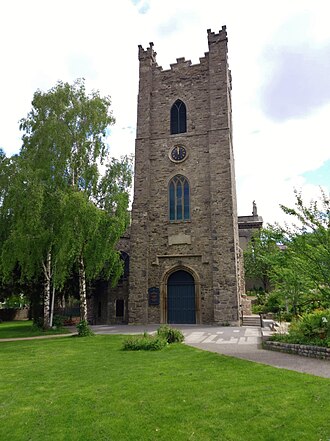
St Audoen’s Church sits tucked beside the bustle of modern Dublin yet feels like a doorway into the city’s medieval past. For visitors drawn to architecture, graveyard stories or the eerie edge of urban legend, the site offers both verifiable history and a stack of later folklore. This guide separates what we can reliably say about the church’s medieval role from the tales that grew around it, summarises reported sightings with honest notes on their credibility, and gives practical advice for responsibly visiting—whether independently or on a Haunted Hidden Dublin walking tour.
St Audoen’s in medieval Dublin: verifiable history and key dates
Documented history places St Audoen’s among Dublin’s oldest parish churches. Its foundation belongs to the medieval expansion of the city, when ecclesiastical and civic life concentrated inside the medieval walls. The surviving fabric of the church—masonry, foundations and certain architectural features—shows a long sequence of building and repair from the medieval period into later centuries.
What is clear and well-supported: St Audoen’s served as a parish church for generations, its graveyard was used extensively, and the building has been altered repeatedly as worship styles and parish needs changed. Where detailed dating of individual stones or fittings is required, professional conservation reports and parish records are the best sources; general histories identify the church as a continuous place of worship from the medieval era to the present.
Architecture, burial grounds and features that fuel ghost stories
The physical qualities of St Audoen’s are central to its atmosphere. Narrow lanes, a compact churchyard, weathered funerary stones and mossed walls create a setting that reads easily as medieval to modern eyes. Interior bays, old doorways and irregular stonework give the impression of layers of time—exactly the conditions that foster ghost stories.
Particular features often mentioned by visitors include the grave slabs and monuments in the churchyard, a sense of enclosure from the surrounding streets, and shadows cast by narrow windows after dusk. These are not evidence of the supernatural, but they do help explain why anecdotal reports cluster here: human imagination responds to age, decay and confined spaces.
Reported hauntings and sightings: what is documented, what is folklore
There are three categories we use when discussing the site’s paranormal reputation: documented history (church records, legal documents, archaeological reports), contemporary eyewitness accounts recorded in guidebooks or by tour groups, and folklore (oral tradition, embellished stories and later inventions).
Documented evidence: parish registers, property records and architectural surveys confirm the church’s continuous use and the presence of historic burials. These documents do not corroborate supernatural phenomena.
Eyewitness and tour reports: visitors and local guides occasionally describe sensations—cold patches, unexplained noises, or fleeting figures in peripheral vision. These accounts are anecdotal, typically recorded informally rather than in established archives. Their value is social and cultural rather than scientific: they tell us about how people experience the place and what stories circulate.
Folklore and legend: many of the most colourful tales around St Audoen’s emerged later, in the nineteenth and twentieth centuries, as Victorian Gothic tastes and local storytelling amplified everyday mysteries into full-fledged legends. These stories often lack primary documentation and should be read as part of Dublin’s living oral tradition rather than as verified events.
Notable legends linked to St Audoen’s and how they developed over time
Common motifs attached to the church include a phantom bell-ringer, a hooded figure in the graveyard, and the sense of restless parishioners returning after dark. These motifs are widespread in urban church folklore across Europe and typically develop through repetition and regional variation.
Historical forces shaped how these tales circulated. The nineteenth-century fascination with the medieval past and the Gothic aesthetic—combined with Dublin writers and local guidebooks eager for atmospheric anecdotes—helped fix some stories in print and memory. Later, twentieth-century tourism and the growth of ghost tours recycled and sometimes embellished older tales to fit new audiences.
Visiting today: access, opening hours, rules of conduct and photography
Practical access details change seasonally and with parish use. Many historic churches in central Dublin are open at restricted times or remain locked when services are not taking place. We advise checking the church’s official notices or contacting local tour operators before you travel.
Respectful conduct is straightforward: treat memorial stones and grave surfaces as fragile; stay on paths; avoid stepping on marked graves; and keep noise low. If you plan to take photographs, be mindful that some visitors come for quiet reflection—use discretion and avoid intrusive flash on people. If you are attending a quiet commemorative activity or a service, follow posted instructions and the parish’s guidance.
How we present St Audoen’s on the Haunted Hidden Dublin tour — highlights and what to expect
On a Haunted Hidden Dublin walking tour we use St Audoen’s as a case study in how history and story entwine. Our guides point out the verifiable medieval features and graveyard layout, then distinguish those facts from later folklore and tour anecdotes. We do not stage paranormal demonstrations; instead, we offer context: architectural details, parish history and the social reasons certain stories persist.
Expect a small-group experience focused on storytelling, history and interpretation. We pause at key viewpoints to listen to eyewitness-style accounts—clearly labelled as anecdote—and to discuss how Victorian collectors and modern media shaped the church’s haunting reputation. For a deeper dive into local ghost-themed experiences, our coverage of other sites—such as Trinity College late-night scholar spectres and the Midnight Custodian of St Patrick’s Cathedral—offers complementary perspectives.
Practical tips for visitors: safety, timing, nearby dark-history stops and combining visits
Best time to visit: late morning or early afternoon for straightforward access and daylight photography; dusk for atmosphere if the site is open and you are comfortable with lower light. Safety: wear sensible shoes—cobbles and uneven kerbs are common—and keep to public paths. Respecting the site matters: do not move stones or touch fragile monuments.
Combine St Audoen’s with nearby dark-history stops to build a coherent walking route. Nearby attractions often referenced on our tours include Trinity College for its night-time scholar legends, the Powerscourt Townhouse for phantom-diner stories, and St Patrick’s Cathedral for other nocturnal tales. Practical side-notes: if you enjoy immersive experiences, you may be interested in our guidance on period costume hire for Dublin events, and organisers or community projects may find creative ideas in resources about crowdfunding rewards for dark-history tours.
For visitors making a special group booking, we also offer private arrangements tailored to group size and focus, including dedicated times and bespoke routes.
Ready to plan a private group experience or ask about tailored routes? Contact us for group bookings and bespoke itineraries: Arrange a private Haunted Hidden Dublin group tour.
Responsible visiting and final thoughts
St Audoen’s rewards careful attention: the architecture and burial ground give a direct sense of Dublin’s long urban story, and the folklore surrounding the site reveals how communities remember and mythologise the past. Enjoy the atmosphere, but keep the distinction between recorded history and legend in mind. That distinction makes the stories more interesting, not less: knowing which parts are documented and which are later imaginings is how you appreciate both the medieval site and the lively local storytelling that grew up around it.
Book a Haunted Hidden Dublin walking tour to visit St Audoen’s and other historic haunts — secure tickets or arrange group bookings. For private groups, tailored tours and educational bookings, visit our group page: private group bookings and bespoke Haunted Hidden Dublin experiences.
FAQ
Is St Audoen’s Church actually haunted or are the stories just folklore?
There is no scientific proof that St Audoen’s is haunted. The church has documented medieval origins and a long social history; the hauntings are mainly part of oral tradition, guidebook anecdotes and modern tour storytelling. These accounts are culturally revealing, but they remain anecdotal rather than verifiable evidence.
Can I visit St Audoen’s at night and are there guided night tours?
Access varies. Some evenings may be possible for organised events or private tours, but the church is not guaranteed to be open to unscheduled night visits. Haunted Hidden Dublin runs evening and dusk walks that include narrative stops at exterior viewpoints; for guaranteed access after hours, ask about our private-group options.
Are there parts of the church or graveyard that are off-limits to visitors?
Yes. Certain areas may be fenced, fragile or subject to parish restrictions. Always follow signage and stay on designated paths. Do not climb on monuments or remove turf or stones from graves. If a section is cordoned off, treat that as a strict boundary for conservation and respect.
Do you allow photography during tours and are flash/photos respectful at this site?
Photography is generally permitted in exterior areas; interior access and photography depend on opening hours and parish rules. On tours, we ask visitors to be considerate: avoid flash when others are present, respect people in quiet reflection, and follow any specific instructions from your guide. Flash can be intrusive to other visitors and may harm sensitive interiors, so use it sparingly and respectfully.