
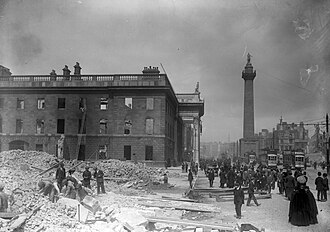
GPO 1916 After-Hours Apparitions: A Visitor’s Guide — Haunted Hidden Dublin
The General Post Office (GPO) on O’Connell Street stands at the intersection of documented history and Dublin’s rich storytelling tradition. For many visitors the building’s wartime scars, public memorials and imposing interior inspire questions about the past and, for some, after-hours apparitions. This guide separates what is documented about the GPO’s role in 1916 from later folklore, offers practical safety and legal tips for visitors, and explains how to experience responsible, bookable dark-history tours in Dublin.
Book a GPO & Dark History walking tour with Haunted Hidden Dublin
The GPO in 1916 — verified history and why the building inspires stories
The GPO is widely known as a central location during the 1916 Easter Rising. It was used as a headquarters by leaders of the uprising and was heavily affected by the fighting in the city centre. These are established facts, supported by contemporary newspapers, eyewitness testimony preserved in archives, and the building’s own visible repairs and memorials.
Because the GPO was both symbolic and physically altered by conflict, it now functions as a public memorial and working post office. That combination — historic architecture still in daily use, patched masonry, and commemorative displays — helps explain why visitors report intense emotional and sensory reactions there, especially after dark.
What people report after dark: common apparition themes and how they entered public consciousness (folklore/anecdote)
Reports attributed to the GPO at night fall into a few recurring themes. Anecdotes often mention shadowy figures in period dress, fleeting glimpses of soldiers or couriers, the imagined smell of smoke and cordite, or phantom sounds of distant gunfire.
These accounts are best classified as folklore and anecdote: personal stories told and retold in pubs, on tours, and in guidebooks. Over decades, such tales have been amplified by oral tradition, theatrical retellings, and the tourism industry. For a look at how ghost content can be packaged and monetized—sometimes blurring history and entertainment—see our article on Monetizing Dublin Ghost Content.
Separating fact from folklore: contemporary accounts and how later retellings altered perception
When separating documented fact from folklore you can rely on primary sources: contemporary newspapers, official reports, and archived witness statements. Those records confirm the GPO’s role as a command centre during the Rising and document physical damage to the building. They do not, however, record verified supernatural incidents.
Later retellings—by authors, tour storytellers and anecdotal witnesses—often add sensory flourishes that turn wartime sounds and smells into apparitions. That process is normal: memory and narrative shape collective perception. Responsible guides and historians work to be clear about what is recorded evidence versus what is atmosphere, conjecture, or a story intended to engage an audience.
How the GPO’s architecture, wartime damage and restoration shape sensory experiences and ghost narratives
Physical spaces influence what people think they perceive. The GPO’s classical façade, high-ceilinged interior, and open public areas create echoes and sightlines that make shadows and distant sounds more noticeable.
War damage and subsequent repairs leave traces—patched stonework, modern glazing inserted next to older masonry, and commemorative plaques. Lighting plays a big role too: low light in memorial zones, spotlit statues, and the contrast between busy streets and quieter interior spaces at closing time can heighten emotional responses.
All of this can be misread as supernatural activity. Understanding how architecture and sensory cues work helps visitors interpret striking experiences in rational ways without diminishing the building’s emotional and historic significance.
Practical visitor guidance: best times to view, permitted access areas, photography etiquette and legal considerations
Visiting respectfully and safely requires a few simple rules. The GPO functions as a public building and memorial; daytime hours are the best time to explore official exhibits and ask staff questions. After-hours access to interior areas is restricted and unsanctioned entry can be treated as trespass.
Photography: taking photos of the façade from public space is fine. Inside, follow posted rules—some memorial areas discourage flash photography out of respect. Avoid staging paranormal “investigations” that interfere with staff or other visitors.
Legal considerations: do not attempt to access non-public areas or climb on structures for better shots. If you want after-hours access for a legitimate purpose, arrange it through authorized channels or a licensed tour operator. Operators must carry appropriate public liability insurance and licensing—if you run tours or are curious about how tours are regulated, our Insurance & Licensing Costs for Dublin Ghost Tours guide explains practical requirements.
Responsible after-hours experiences: what to expect on a guided dark-history tour and why a guide adds context
A professionally run after-hours dark-history tour provides a safe way to experience atmosphere without trespass. Expect a guide to frame stories clearly as either documented history, plausible sensory misinterpretation, or local folklore and legend.
Guides supply context: they explain archival evidence, point out architectural features that shape perception, and distinguish between contemporaneous testimony and later embellishment. They also manage group safety and secure any required permissions for access beyond normal hours.
Good operators balance atmosphere with accuracy. If you enjoy adjacent stories in Dublin’s darker corners, consider complementary themed walks that examine similar phenomena at other city sites, such as the Phoenix Park, the Shelbourne Hotel or the bell-ringer tales at Christ Church Cathedral.
Planning your visit: safety tips, nearby complementary sites, and recommended tour options
Safety and comfort: wear sensible shoes for cobbled streets, bring a small torch if you plan to be out after dark, and keep a charged phone. Tell someone your route if you’ll be on a self-guided walk late at night, and avoid taking risky detours into poorly lit side streets.
Nearby complementary sites worth combining with a GPO-focused visit include the commemorative sculptures and plaques along O’Connell Street and the city-centre churches and museums that hold contemporary accounts of 1916. For an expanded itinerary that stays within the darker-history theme, consider booking with a knowledgeable operator rather than attempting after-hours exploration alone.
To secure a responsible, contextualised experience, Book a GPO & Dark History walking tour with Haunted Hidden Dublin. If you are organising a private group or school visit, our private tours page explains tailored options and permissions: Private group tours & enquiries.
Book a GPO & Dark History walking tour with Haunted Hidden Dublin
FAQ
Are the GPO apparitions from 1916 documented in historical records?
Documentary records from 1916—newspapers, official reports and eyewitness accounts—confirm the GPO’s role in the Easter Rising and the physical damage it sustained. They do not provide verified evidence of apparitions. Stories of after-hours sightings are part of later folklore and anecdote rather than primary-source documentation.
Can I visit the GPO at night or join an after-hours tour focused on apparitions?
Public access to the GPO after hours is restricted. If you are interested in an after-dark experience, join a licensed, insured tour operator that can obtain the necessary permissions and manage safety. Unauthorised after-hours entry risks trespass charges and is not recommended.
What should I bring or avoid when looking for paranormal activity around the GPO?
Bring sensible footwear, a charged phone, and weather-appropriate clothing. Avoid equipment or behaviour that disturbs other visitors, staff or the memorial spaces—no loud recording setups, aggressive flashlight flashing, or attempts to enter restricted areas. Respect signage and staff requests at all times.
How does a guided dark-history tour differ from exploring the stories on your own?
A guided tour offers historical context, clear distinctions between documented facts and folklore, necessary permissions for special access where available, and safety management. Solo exploration lacks these benefits and can unintentionally promote myth as fact or result in unsafe situations. A professional guide enhances understanding while preserving respect for the site.