
Haunted Bookshops: Intimate Literary Hauntings in Dublin — Visitor Guide
Bookshops and reading rooms are unusually intimate places: the hush of turned pages, narrow aisles lined with other people’s lives, and the sense that every volume keeps its own memory. In Dublin, a city whose literature and streets are tightly braided, a few book-lined corners carry stories that mix verifiable history with the softer fabric of oral legend. This guide aims to pair that verifiable literary history with the local folklore that surrounds a handful of shops and reading rooms where staff and patrons report uncanny experiences, and to give practical advice for visitors who want to explore respectfully.
Book your Haunted Hidden Dublin tour with bookshop stops: https://www.hiddendublintours.com/tours/
Method: how we separate documented history from folklore and anecdote
When a place has a long life, it accumulates two distinct things: documented facts and human stories. Documented history includes ownership records, architectural descriptions, and contemporaneous newspaper or archival references. Folklore and anecdote are the recollections, the staff stories and late-night tales that travel by word of mouth.
In this piece we label each claim. “Documented” points to verifiable features—building histories, institutional records, or known connections to writers. “Anecdote” and “Local legend” indicate reported experiences that are not established by archives but persist in oral culture. Where possible we point readers to avenues for further research (archives, library catalogues, shop histories) rather than asserting uncertain facts.
Spotlight shops and reading rooms
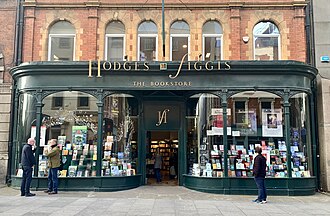
Hodges Figgis (Dawson Street) — an anchor of Dublin book trade
Documented: Hodges Figgis is one of Dublin’s long-established bookshops and a commercial lynchpin for students, writers and visitors. Its presence in the city centre is a matter of public record and its layout has changed over time with refurbishments and relocations.
Anecdote and local legend: Staff and customers have told stories of unexplained footsteps between stacks, books appearing in odd places, and a persistent feeling in certain corners. These experiences are personal accounts—repeated enough to form a recognizable pattern—but they remain oral testimony rather than archival fact. If you ask staff politely, many will share a favourite strange story; treat these as community memory rather than proof.
Marsh’s Library (St Patrick’s Close) — a rare surviving 18th‑century reading room
Documented: Marsh’s Library is a preserved historic library with original fittings and a long-standing reputation among scholars. Its collections and institutional history are documented and accessible for researchers; the building itself is an artifact of book culture in Dublin.
Anecdote and local legend: Marsh’s Library is often included in ghost tours because visitors and guides report cold spots, a sense of presence, and occasional unexplained noises between the stacks. These are consistent anecdotal reports, and they sit beside a verifiable atmosphere created by low light, wooden floors and narrow galleries—conditions that prime perception for uncanny experiences.
Antiquarian and secondhand shops — clustered charm and whispered stories
Documented: Dublin’s antiquarian dealers and secondhand sellers form a long-standing trade, often concentrated near university lanes, Temple Bar and older commercial streets. Ownership records and business listings document these businesses; many trade in rare or out-of-print editions.
Anecdote and local legend: Shopkeepers sometimes speak of books appearing on counters after hours, of patrons who swear a book called to them, or of items recovered from unexpected places. These reports vary widely by shop. Because many of these dealers occupy older buildings with cellars, it is natural that subterranean stories mingle with bookish ones—see links on cellar and vault hauntings for context.
Reading the evidence: archival traces, staff recollections and where claims remain legend
Physical evidence can be simple: a ledger showing a shop’s opening, a photograph of a reading room, or an inventory list for a collection. Oral evidence takes other forms: repeated staff testimonies, patron accounts, and local press columns.
Where both overlap—say, a documented 19th‑century reading room with recurring staff reports of cold drafts—the case for a location’s atmospheric reputation is strong. Where only oral testimony exists, the stories still matter: they shape how a place is perceived and how visitors behave, even if they do not alter the historical record.
For subterranean tales—cellar sounds, vault-located apparitions—compare bookshop reports with wider local accounts of basements and tenement cellars. Our catalogue of Cellar & Vault Hauntings beneath Dublin Tenements can help separate structural explanations from legend and is useful background reading for curious visitors.
How to visit respectfully: etiquette, photography, and buying local
Bookshops are businesses and communities. Respect staff time, obey posted rules, and remember that quiet benefits everyone. Ask before you photograph—some dealers or institutions restrict flash or photography for conservation reasons. If a shop displays a “No Photography” sign, honour it.
Buying supports the places you love. If you are tempted to linger for ambience, consider making a purchase: a postcard, a used paperback, or a donation to a historic reading room. Staff stories are often shared when rapport exists; a small purchase goes a long way toward hospitality.
When taking photos, favour non-disruptive equipment. Use a wide-angle lens sparingly; avoid tripods during busy hours. If you want to record an audio interview with staff about anecdotes, ask for permission first and explain how you will use the material.
Planning a bookshop-focused walk: routes, timing, and combining with a guided tour
Plan a loop rather than a linear march. Start at a larger shop or library where visiting rules are clear, then move to smaller dealers and finish in a café or public square. Early morning or late afternoon gives the best light and quieter aisles; midday can be busy, especially near universities.
Combine your self-guided exploration with a professional tour if you want curated context. A Haunted Hidden Dublin walking tour can include bookshop stops and provide background on architecture, literary connections and oral history—ask for bookshop-friendly routes when you book.
If you are threading your walk through different neighbourhoods, consider pairing literary stops with nearby folklore sites: Moore Street Market Folklore offers a different strand of local legend, and Mountjoy Square’s Georgian terraces surface other spectres of Dublin’s past. These combinations let you see how literary hauntings sit alongside broader urban folklore.
Commercial corner: buying rare editions, souvenirs, and booking group/private tours
If you collect, learn the basics of provenance and condition grading before you buy rare editions. Reputable dealers will provide purchase notes; be cautious of spurious attributions. For souvenirs and branded items, our ideas for tour merchandise can spark authentic purchases that support local operators and bookish culture.
Traveling with a group? You can arrange private or tailored visits that respect shop policies and give dealers advance notice. For private group bookings see our group-tour page for options and logistics: Plan a private or group tour with Haunted Hidden Dublin.
Book your Haunted Hidden Dublin tour with bookshop stops: https://www.hiddendublintours.com/tours/
For bloggers and small operators documenting visits, practical resources such as low-cost website hosting can help you share findings responsibly; see Budget Domains & Hosting for a Dublin Dark-History Blog for technical tips. If your route includes basements or vaulted spaces, review cellar and vault histories before you go so you can frame stories with structural context.
Practical checklist for a respectful, atmospheric visit
- Check opening hours and closure days before you travel.
- Ask permission for photography and interviews; respect conservation rules.
- Wear quiet shoes and keep voices low in reading rooms.
- Buy something small if you intend to spend time lingering.
- Keep notebooks or digital notes of anecdotes—label them as “reported” vs “verified.”
FAQ
Are Dublin bookshops actually haunted or are these just stories?
Short answer: mostly stories, but meaningful ones. Many reported experiences are personal and anecdotal; they form an important part of local culture even where they cannot be documented. In places with preserved interiors, low light and creaky floors make uncanny perceptions more likely, so folklore often grows from both atmosphere and repeated testimony.
Can I include bookshop stops on a regular Haunted Hidden Dublin walking tour?
Yes. Many of our regular routes can be adapted to include bookshop stops. We coordinate with shops in advance to respect opening hours and photography policies—tell us your interests when booking so we can plan a bookshop-focused route.
Are these bookshops open to visitors and do they allow photography?
Most are open to the public but policies vary. Historic libraries and some antiquarian dealers restrict photography to protect collections. Always check before you shoot; staff will explain permitted behaviour. If in doubt, ask politely and follow posted instructions.
What’s the best time to visit if I want a quieter, more atmospheric experience?
Early morning (at opening) or late afternoon tends to be quieter and more atmospheric. Weekdays outside university term times are less crowded. Evening guided tours can also provide a focused atmosphere, but confirm opening hours first if you plan to enter shops after dark.