
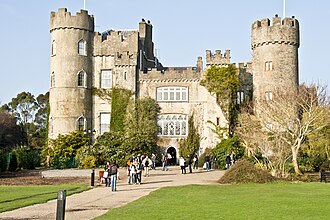
Malahide Castle Ghost Stories: History, Hauntings & Visitor Guide
Malahide Castle sits within parkland that draws visitors for its long history, well-kept gardens and the magnetic appeal of ghost stories. For visitors curious about spectres, cold spots and tales of tragic figures, the attraction is twofold: a real historic house with archival records and a body of local folklore that has grown in the retelling. This guide separates documented facts from legend, summarises the castle’s best-known ghost stories, and gives practical advice for visitors and group-bookers planning daytime or after-dark visits.
Book a Haunted Hidden Dublin tour — join our guided night and group tours
Documented history at a glance
When preparing to visit a place that attracts ghost stories, start with what is on the public record. Malahide Castle is primarily known as the long-term seat of the Talbot family and as a country house complex with layers of changes across centuries. The site you see today reflects architectural alterations, estate management and restoration carried out over generations and by public custodians.
Archival holdings for the castle and estate—including estate papers, maps and museum holdings—are the most reliable sources for events, ownership and the lives of those who lived there. On-site information panels and the castle’s museum displays also summarise verified facts about the house, its art and domestic life. Local historians and the castle’s curatorial staff can point visitors to primary records where available.
It is important to distinguish this documented record from later stories. The existence of a family connection, an untimely death or an eccentric resident may be factual; layers of motive, detail and the supernatural are typically part of folklore rather than museum catalogues.
The Lady in White and other legends
Several enduring legends have attached themselves to Malahide Castle. The most repeated is the so-called “Lady in White”: a spectral woman described in some tellings as walking the corridors or appearing in windows. In folklore terms, the Lady in White is a common motif—an archetypal figure that appears at many historic houses—and local versions typically borrow that wider motif while adding place-specific details.
Other local legends include tales of unexplained footsteps, whispering voices in empty rooms, and apparitions seen in the walled gardens or on the approach road. These stories have circulated by word of mouth, in regional folklore collections and in tourism-focused retellings; they are best labelled as folklore or legend unless tied to named, verifiable events and records.
Where possible, this article identifies folklore as such. When a story first appeared in print or oral tradition is hard to fix precisely for many of these legends; most have a long presence in local memory and were later repeated in guidebooks, newspapers and visitor accounts over the years.
Eyewitness reports vs. records
Like many places with a long history, Malahide Castle attracts eyewitness reports—some from visitors, some from staff or locals. Typical reported phenomena include shadowy figures, sensations of cold and the feeling of being watched.
How reliable are such reports? Eyewitness testimony can be compelling but is inherently subjective. Environmental factors (lighting, drafts, structural creaks), expectation (visitors hoping to experience something), and memory biases all shape accounts. Local historians and archivists often caution that oral testimonies should be cross-checked against documented events before being treated as historical evidence.
Where specific sightings have been linked to named individuals or events, responsible local commentators distinguish between a witness statement and a documentable occurrence. If you want to explore credibility, ask to see the evidence that accompanies a claim: contemporary records, newspaper reports or verifiable staff logs are the strongest support for any extraordinary assertion.
Where to see (and not see) the spooky spots
Malahide Castle’s publicly accessible areas include the visitor route through the castle’s main rooms, museum displays and the castle grounds and gardens. These are the places where most visitors experience the house and where staff can fairly manage visitor safety and conservation requirements.
Some areas commonly named in legend—attics, sub-basements, private apartments—are not routinely open to the public. Access can be restricted for conservation, safety or privacy reasons, and trespassing on managed or private sections of the estate is illegal and disrespectful.
Daytime visits are the best option for general visitors. After-dark experiences change the environment (reduced visibility, colder temperatures, restricted staffing) and may amplify sensations that some interpret as paranormal. Night-time tours organised by reputable operators will clarify which parts of the property are included and have the necessary permissions; avoid independent attempts to explore restricted grounds after hours.
Visiting tips and safety
Before you go, check the castle’s official visitor information for current opening hours, ticketing and any seasonal closures. Because policies can change, the most reliable sources are on-site notices, the castle’s official channels and museum staff.
Photography rules vary. Flash, tripods and studio lighting are often restricted inside historic houses to protect sensitive interiors and to avoid disturbing other visitors. If you plan to take photos on a night tour, ask the tour operator in advance about photography policies.
Respect conservation and personal boundaries: do not touch fragile objects, do not cross barriers, and keep to designated paths in the gardens. If a place is closed for safety or conservation, treat that restriction as definitive. On evening tours, wear suitable footwear, bring a warm layer and, where appropriate, a small torch—though follow any instructions about lights from your guide.
Tours, tickets and group bookings
For visitors who want historical context plus folklore framed responsibly, guided tours are the best choice. A guided night walk that pairs documented history with local legend offers context: guides can explain where an account comes from and whether there is documentary support. If you are planning a themed booking or a larger private experience, consider a specialist operator who coordinates permissions with the site.
Hidden Dublin Walking Tours runs after-dark and themed walks in Dublin that combine archival background with folklore and eyewitness accounts. To reserve a spot or inquire about a private group visit, Book a Haunted Hidden Dublin tour — join our guided night and group tours. For private groups and tailored bookings, see our group options page: Book a Haunted Hidden Dublin tour — join our guided night and group tours.
When booking, ask whether the night tour includes internal access, how much of the castle grounds are covered, group size limits and what evidence or sources the guide uses for historical claims. A trustworthy operator will be transparent about where stories are sourced from and whether they are folklore or archival fact.
Context and related walks
Malahide fits within a city-wide tapestry of history and legend. If your interest extends to other after-dark or history-plus-legend experiences in Dublin, consider pairing a visit with contextual tours and articles that explore similar themes: procedural and architectural histories at places like Kilmainham Gaol After-Dark Legends: Fact, Folklore & Night-Visit Guide, or quiet garden legends explored in Iveagh Gardens at Dusk. For considerations about storytelling and touring economies, see Monetising Dublin Ghost-Story Podcasts: Membership Models & Tour Perks. If you are intrigued by urban ghost stories in different settings, the survival narratives of institutional sites and disused infrastructure are explored in Victorian Workhouse Whispers and Footsteps in the Dark: Disused Railway Tunnels Beneath Dublin.
If you want a guided, balanced experience that separates documented history from local folklore while offering atmospheric storytelling, Book a Haunted Hidden Dublin tour — join our guided night and group tours. For private groups, tailored itineraries and corporate bookings, contact us via the group bookings page: Book a Haunted Hidden Dublin tour — join our guided night and group tours.
FAQ
Is Malahide Castle really haunted or is it just a legend?
Reported hauntings at Malahide Castle are part of a mixture of local folklore, eyewitness testimony and the castle’s long lived history. While many visitors and locals believe they have experienced unusual phenomena, those accounts are not the same as documented historical facts. Treat stories as part of the cultural heritage of the place and weigh personal reports against archival records if you want to separate legend from documented events.
Can I join a night-time tour of Malahide Castle or its grounds?
Night-time tours may be available through specialist operators who arrange permissions with the site. Public access at night is usually restricted for safety and conservation reasons, so book with an established tour operator to ensure you have legitimate access and an informed guide.
Where can I find the most reliable historical information about the castle and its former residents?
The castle’s museum displays, on-site interpretive materials and local archival holdings are the best places for reliable historical information. Local historians, museum curators and primary documents (estate papers, maps, registers) are the most authoritative sources. For folklore, compare those primary sources with oral histories and regional folklore collections.
What should I bring and expect on a haunted-walk or after-dark visit near Malahide Castle?
Expect cooler temperatures, reduced visibility and narrower routes than daytime visits. Wear sturdy shoes, bring a warm layer and, if your operator allows, a small torch. Follow guide instructions about photography, access and behaviour. Above all, treat the site with respect: historic sites and surrounding grounds are preserved for everyone’s benefit.