
Mountjoy Prison — Unexplained Echoes and Sightings in Dublin’s Dark History
Perched on a rise in Dublin’s north city, Mountjoy Prison draws attention for reasons that are both historical and haunted. As a functioning penal complex with a long recorded history of punishment, protest and hardship, it occupies a particular place in the city’s dark cultural imagination. For visitors interested in “Mountjoy Prison unexplained echoes and sightings,” the site offers a mix of recorded facts, architectural causes for eerie sounds, and a steady stream of folklore and eyewitness reports. This guide separates what is documented from what is anecdotal, and gives practical advice for anyone who wishes to explore these stories safely and respectfully.
Book a Haunted Hidden Dublin tour
Why Mountjoy Prison fascinates Dublin’s ghost-hunters
Mountjoy’s reputation grows from two intersecting threads: its real history as a site of incarceration and social conflict, and the human tendency to project feeling and narrative onto places linked to suffering. For walking-tour audiences, the prison is a potent focal point—its walls and yards evoke memory, and its public presence in a dense part of the city makes it easy to approach from nearby laneways and quays.
A concise history of Mountjoy Prison: construction, notable events, and its role in Dublin
Mountjoy was built during the 19th century as part of a wave of institutional building across Britain and Ireland. Its function has been consistent: to hold men sentenced by the courts and to manage prisoners during periods of political unrest. Over the decades Mountjoy has been the site of protests, prison reforms, and events that appear in the public record—court appearances, official reports, and parliamentary discussion.
Because it remained an active penal institution for generations, Mountjoy has featured in broader debates about prison conditions, legal treatment of prisoners, and the use of incarceration as a social tool. That continuing institutional life is important: it means the site is not a museum but a working prison with associated security and access constraints.
Documented incidents and tragedies
Distinguishing documented incidents from hearsay is the first step toward a credible picture. The documentary record for Mountjoy includes records of executions carried out under the law of their times, reports of hunger strikes and protests by inmates, official inquiries into conditions, and newspaper coverage of disturbances. These are the events that form the verifiable backbone of the site’s history.
Such records make it plain that Mountjoy has been a place where life-and-death decisions were sometimes made, where prisoners staged political protests, and where administrators and reformers repeatedly debated humane treatment. Those facts explain why stories of sorrow, anger and injustice have clustered there.
Echoes, acoustics and architecture: how prison design can create unsettling sounds
Many reports of “unexplained echoes” can be explained by the physical properties of prisons. Thick masonry walls, high ceilings in exercise yards, narrow stone corridors and long stairwells all shape sound in pronounced ways. Voices bounce, footsteps reverberate, and distant clanks can travel inside service ducts.
Ventilation shafts, metal staircases, and service tunnels may carry noise from one area to another, producing the impression of a voice or a footstep where there is none. Weather and temperature changes also alter how sound moves through stone and metal: damp conditions muffle, cold weather can make metal groan, and wind can force sound along unexpected paths.
Acoustic phenomena are not supernatural in themselves, but they create a sensory environment that primes visitors to interpret ambiguous stimuli as something eerie—especially when they already know the site’s grim associations.
Eyewitness reports and folklore: catalogue of reported sightings
Accounts connected to Mountjoy fall into a few repeatable categories. Witnesses often describe: fleeting figures glimpsed from the perimeter; the sensation of being watched; unexplained footsteps or voices at night; sudden cold spots near the outer walls; and more elaborate local legends that place named apparitions within the prison yards.
Many of these reports circulate orally or appear in tour anecdotes, local blogs and informal collections of “paranormal sightings.” Eyewitness testimony can be compelling, especially when multiple people report similar sensations, but such anecdotes require careful contextualisation. Memory is fallible; darkness, expectation and the power of suggestion all amplify ordinary stimuli into haunting experiences.
Separating legend from history: methods for evaluating supernatural claims
A sensible approach is to treat claims to be investigated rather than accepted. Start by asking: is the claim anchored to a recorded fact? Can the account be cross-checked with a contemporaneous source? Could environmental or architectural causes explain the experience? Are there alternative mundane explanations—lighting, reflections, shadows from passing cars, or the acoustics discussed above?
Historians and investigators look for primary documents—prison registers, court records, contemporary newspapers, and official reports—before drawing conclusions. For personal sightings, corroboration by independent witnesses, repeatability of the phenomenon, and the absence of natural causes strengthen a claim, but rarely produce irrefutable proof of anything supernatural.
What visitors can actually see today
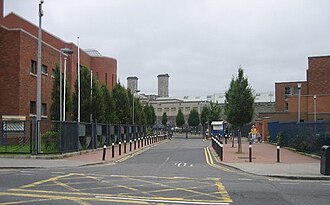
Mountjoy is an operational prison; public access to the interior is restricted. Visitors approach the site from surrounding streets and lanes, where the walls, watchpoints and admin buildings are visible from the public realm. From these exterior viewpoints you can appreciate the scale and form of the complex and imagine the interior life without entering it.
Nearby related sites and routes add context. A walking route that explores north city lanes will help situate Mountjoy within a wider urban fabric; see our Evening Walk Guide for North City Laneways: North City Laneways: Whispering Doors & Strange Shadows — Evening Walk Guide. Other city walks connect the prison to riverfront lanes and historic districts where the social history of Dublin reads across buildings and memorials.
If you are hoping for a museum-style, behind-the-walls experience, be aware that interior access is not generally available. Visits focus on interpretation from outside, oral history, and connecting the site to documented events and the urban landscape.
Practical tips for visitors and photographers, safety, and respectful behaviour
Respect and legality come first. Mountjoy is a working institution: do not attempt to enter restricted areas, do not engage guards or staff aggressively, and obey signage. Use public footways and named viewpoints. If a location is marked private or no-access, treat that restriction as fixed.
For photography, mornings and late afternoons offer softer light on the stonework. From the pavement and adjoining lanes you can use a wide-angle lens to capture the walls and administration blocks. Night photography requires particular care: do not block traffic, remain on public land, and avoid using flash that might distract drivers or staff.
Emotional safety matters too. Tours that discuss difficult episodes—executions, hunger strikes, and harsh conditions—can be intense. If you or your group are sensitive to descriptions of suffering, tell your guide in advance and ask for a toned-down version.
How tours and group visits frame the stories
Guided walks that include Mountjoy aim to contextualise: they present documented history first, acoustic explanations second, and folklore or eyewitness accounts last. This order helps listeners separate archival facts from later embellishments. If you want a guided experience that respects both historical accuracy and visitor curiosity, consider joining an expert-led walk.
Book a Haunted Hidden Dublin tour
For groups seeking a private, tailored experience that can include extended time near the area and additional contextual material, we offer private group options: Book a Haunted Hidden Dublin tour for groups.
Related walks and further reading
Mountjoy sits within a network of Dublin sites that carry dark histories and eerie stories. Walkers often pair a Mountjoy-aware route with visits to the river quays or northside seaside lore. See our walking guides to the river and the coast for complementary perspectives: Unsettling Sightings Along the River Liffey Quays: A Walking Guide and Bull Island and Dollymount: Ghostly Seaside Lore and Walking Guide. For those interested in urban ruins, our piece on Abandoned Victorian Cinemas of Dublin offers a different kind of atmospheric history.
Final notes on curiosity and respect
Mountjoy Prison’s combination of documented hardship and persistent folklore makes it a compelling stop for dark-history visitors. The most rewarding visits balance curiosity with critical thinking, empathy and adherence to legal restrictions. Audio phenomena are often explainable, sightings are best treated as anecdotes unless supported by primary records, and the human stories—recorded in registers, newspapers and testimonies—should remain the centre of our attention.
Book a Haunted Hidden Dublin tour
FAQ
Can you visit Mountjoy Prison interior as a tourist, and are ghost tours allowed inside?
No. Mountjoy is a working prison and interior access is restricted. Ghost tours do not have permission to operate inside the prison; public visits are limited to exterior viewpoints and contextual interpretation delivered from outside the secure perimeter.
Are the reported echoes and sightings documented by police or historians?
Echoes and sensory experiences are usually reported by individuals and recorded informally in oral accounts or blog posts. Historians document incidents like executions, hunger strikes and official inquiries in archives and newspapers. Police records occasionally mention disturbances if they became incidents, but most anecdotal sightings remain in the realm of personal testimony rather than formal documentation.
What are the best times and vantage points for seeing or photographing Mountjoy Prison safely?
Daylight hours—mid-morning to late afternoon—provide the best light for exterior photography from public pavements and nearby lanes. For less crowded conditions, visit on weekdays. Stay on public footpaths, do not obstruct traffic, and respect any signage or security staff instructions.
Does Hidden Dublin offer tours that cover Mountjoy Prison and its dark history?
Yes. Haunted Hidden Dublin walking tours interpret Mountjoy’s history and the surrounding folklore from exterior viewpoints as part of broader north-city and dark-history routes. To join a scheduled tour or enquire about a bespoke group walk, Book a Haunted Hidden Dublin tour or contact us about group options at Book a Haunted Hidden Dublin tour.